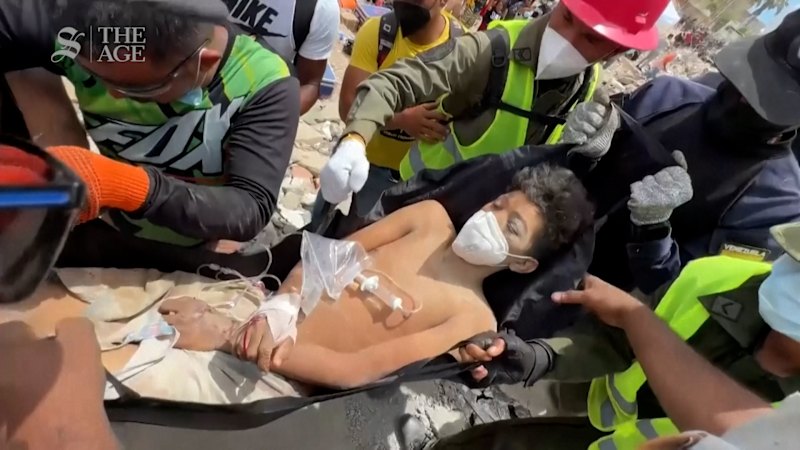
Time has officially run out for thousands trapped under the concrete slabs of northern Venezuela. The critical 72-hour golden window for locating survivors is gone. What remains on the ground is a mix of raw desperation, absolute chaos, and mounting anger toward the state government. Following the catastrophic twin Venezuela earthquakes that ripped through the nation on June 24, 2026, the unofficial number of missing persons has ballooned to nearly 70,000.
The official death toll stands at 1,430 people. Everyone on the ground knows that number is a fiction. It will climb drastically over the next few days.
People are digging through heavy rubble with their bare hands. They have to. Heavy machinery like excavators and cranes are nowhere to be found in the hardest-hit communities. If you walk through the streets of La Guaira or Lara state right now, the air is thick with the heavy stench of decaying bodies baking under a severe heatwave. Neighbors and relatives are wearing basic face masks, refusing to stop digging even as their fingers bleed. They aren't waiting for official help anymore because that help isn't coming fast enough.
The Reality of the Twin Shocks
This wasn't just a single isolated earthquake. Northern Venezuela was battered by back-to-back tremors measuring 7.2 and 7.5 magnitudes. The two massive shocks occurred just 40 seconds apart. It was a brutal sequence that left even modern structural designs in total ruin.
Disaster experts point out that the shallow depth of these twin quakes amplified the violent ground shaking across the entire northern coast. It is the most powerful seismic event recorded in the country in more than 125 years. Entire high-rise apartments, coastal resorts, and schools collapsed instantly into compact layers of concrete. The United Nations Development Programme estimates the immediate physical destruction at 6.7 billion dollars. That represents roughly 6% of the country's gross domestic product. When you calculate the long-term infrastructure damage and economic halt, the true financial blow will easily triple.
Bureaucracy is Blocking International Lifelines
International rescue operations are arriving, but they are hitting a massive wall of government red tape. Simon Bolivar International Airport has opened up some runway space for inbound emergency flights. Expert teams from Spain, El Salvador, and the United States have already touched down.
Yet, their specialized equipment is sitting idle or delayed. The Venezuelan government recently took the controversial step of completely blocking off access to La Guaira and sections of Lara state. Officials claim they are doing this to maintain public security and prevent traffic from gridlocking rescue routes. To get into the disaster zones, teams now need specific, hard-to-obtain state permits.
This bureaucratic bottleneck is infuriating locals. While officials shuffle paperwork in offices, people under the rubble are running out of air.
Local volunteers are openly crying out against the restrictions. Milady Romero, a resident working the debris piles in Caraballeda, reported that state authorities haven't even attempted to clear massive concrete structures where survivors were heard knocking. Neighbors located multiple bodies on their own, but state forces offered zero physical assistance to retrieve them. The lack of coordination means that foreign teams with acoustic listening devices and search dogs are struggling to get to the precise spots where they are needed most.
Miracles Amid Widespread Devastation
Despite the glaring lack of heavy equipment and organizational failures, a few extraordinary survival stories have emerged from the ruins.
An advanced rescue squad from El Salvador managed to locate and extract a 15-year-old girl who was trapped inside a collapsed home in Lara state. Amazingly, her companion dog was found alive right beside her. Both survived because a fallen steel beam formed a tiny, protective triangular void over them.
In a separate rescue operation, Spanish emergency personnel successfully extricated a woman pinned beneath the remnants of a seafront resort in Los Corales. U.S. search and rescue teams also reported saving an infant from a pulverized apartment building.
These incredible moments show that pockets of life still exist beneath the concrete. However, these operations require highly specialized tools to cut through rebar and lift heavy slabs safely. Without immediate deployment of heavy machinery on a massive scale, these miraculous saves will become impossible.
What Lies Ahead for the Affected Communities
The humanitarian situation is deteriorating by the hour. Northern Venezuela was already dealing with fragile public utility networks before the disaster. Right now, clean drinking water is non-existent in the impact zones. Hospitals that survived the tremors are overwhelmed, running low on basic surgical supplies, anesthetics, and clean bandages.
With over 214 recorded aftershocks rattling the region since the initial disaster, structures that are partially standing remain incredibly dangerous. Disaster management teams warn that even a minor aftershock could trigger the collapse of weakened buildings, threatening the lives of the volunteers searching the ruins.
The immediate priority for anyone looking to assist is supporting the independent humanitarian channels that have direct access on the ground. Local non-governmental organizations and international agencies like the United Nations Office for the Coordination of Humanitarian Affairs are bypassing traditional bottlenecks to distribute water purification tablets, medical kits, and basic tools.
If you want to track the ongoing situation or provide direct assistance, focus your efforts on verified international agencies that possess the logistical capacity to work inside complex regulatory environments. The coming days will transition from a chaotic rescue operation into a massive recovery phase. Getting independent supplies directly to the communities doing the heavy lifting remains the absolute most critical requirement.