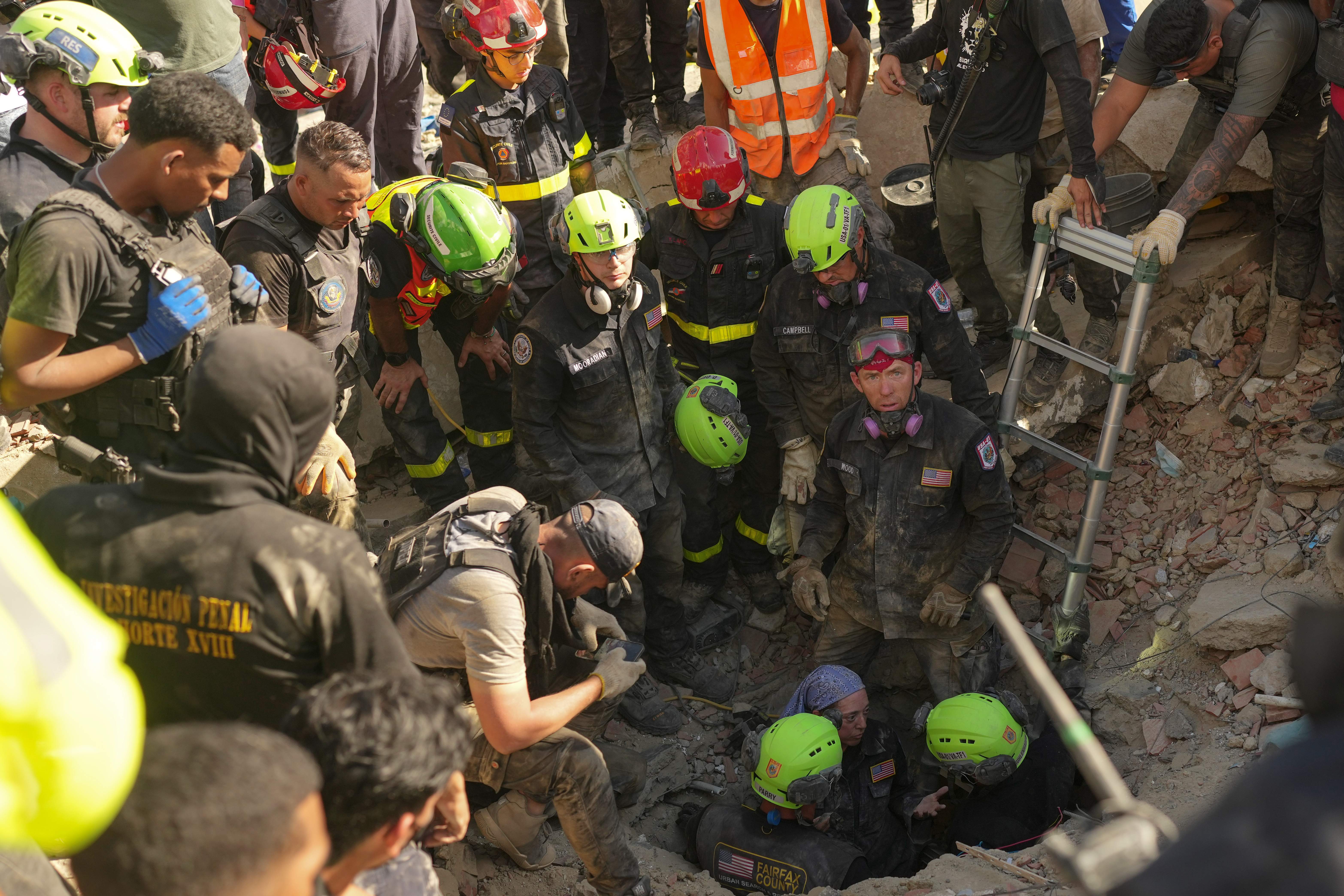
People are digging through chunks of concrete with their bare hands. They are using motorcycle helmets to carry away debris. Four days after twin earthquakes flattened towns across Venezuela's northern coast, the stark reality on the ground is far different from official television broadcasts. The state response is collapsing under its own weight, leaving ordinary citizens and international teams to handle the heavy lifting.
A 7.2 and a 7.5 magnitude earthquake struck back-to-back last Wednesday. They tore through La Guaira state, Caracas, and Valencia. The death toll has already climbed past 1,450. It climbs higher every hour. More than 770 buildings are completely destroyed or heavily damaged. Over 50,000 people are registered as missing on independent digital databases.
The immediate 72-hour window for finding survivors under collapsed buildings has officially slammed shut. Yet families refuse to leave the ruins. This disaster is not just a geological failure. It is a logistics and political disaster playing out in real-time.
The Reality of the Twin Quakes
The double shock caught the country entirely unprepared. Most regions are already suffering from a complex humanitarian crisis. Hospitals lack basic medicine. Electricity cuts out daily. When the ground shook, the fragile infrastructure crumbled immediately.
Northern states like La Guaira bore the brunt of the impact. Cities like Catia La Mar saw entire apartment blocks slide into piles of dust. Families were left out on the streets in their pajamas, clutching pets and searching for clean water. The initial response from authorities was slow. By Sunday, the government had deployed 14,000 military and police personnel to La Guaira, but their primary role has been blocking access roads and requiring special entry permits rather than digging people out.
This forced isolation has angered locals. Civilian groups are the ones actually risking their lives in the rubble. They are listening for screams and calling down into the pockets of compressed air beneath collapsed roofs.
Broken Infrastructure and Citizen Databases
Cell phone service died across the region almost immediately after the first tremor. This lack of communication crippled official emergency tracking. In response, ordinary citizens did what they always do when institutions fail. They built their own systems.
Non-governmental groups set up makeshift digital databases online. Families use whatever faint internet connection they can find to upload names, photos, and last-known locations of missing relatives. One single civilian database has logged more than 50,000 entries. It is a massive, chaotic list that shows the true scale of the missing, far outstripping any numbers provided by state officials.
Families use social media platforms to communicate with people trapped under the concrete. In some cases, tech-savvy teenagers have managed to pinpoint exactly where their relatives are buried by tracking active signals or receiving short text updates. They pass this information directly to the rescue workers on the block, bypassing the official command chain entirely.
International Aid Arrives Amid Tension
By Saturday, more than 2,200 international search and rescue experts had landed in the country. Teams from the United States, France, and Canada are actively working the grid. Specialized crews, including the Burnaby Urban Search and Rescue team from Canada, brought acoustic listening devices and search dogs.
On Sunday morning, a combined team of American and French rescuers pulled a father and his son out of a pulverized building. A massive crowd gathered in silence, watching the rescuers carefully lift the survivors onto a black tarp and carry them to a waiting ambulance. It was a rare moment of triumph in a week defined by grief.
But these international operations face severe friction. The current administration has historically viewed foreign intervention with deep suspicion. The government has caused significant delay by forcing humanitarian groups to navigate a thick web of bureaucratic approvals just to get their equipment out of the airport. Valuable hours were lost while heavy concrete-cutting saws and medical gear sat on tarmac storage pallets.
Political analysts point out that this is the worst possible environment for a natural disaster. You have an economy with almost no short-term reserves, severe shortages of trained local personnel, and a government that treats international aid as a political threat.
The Threat of Immediate Disease and Weather
The situation is getting worse. The stench of decomposing bodies has begun to spread through the coastal heat of Catia La Mar. Residents and rescuers are now wearing industrial masks and cotton cloths tied around their faces just to breathe while they work.
Local medical centers are completely overwhelmed. Doctors have treated over 3,100 injured people, mostly dealing with severe crush injuries, broken limbs, and deep lacerations. Supplies are dangerously low. Anesthesiologists at regional hospitals are relying entirely on medical goods donated by local families and international charities who bypass the centralized state warehouses.
Weather forecasts show heavy rain heading straight for the northern coast. This rain could easily trigger mudslides on the destabilized hillsides of La Guaira. Water filling the voids in collapsed buildings will also drown anyone still trapped alive inside the pockets of debris. It will turn the remaining rescue sites into unstable pools of mud, making it impossible for heavy machinery to operate safely.
What Needs to Happen Right Now
The traditional rescue phase is transitioning into a recovery operation, but the immediate needs of the living are reaching a tipping point. If you want to support the relief efforts directly or understand how recovery works in a crisis zone, focus on these critical areas.
Support Independent Logistics Channels
Donating to centralized government funds in a fractured political landscape often means aid gets trapped in warehouses. Direct your support to established international bodies on the ground like the Red Cross or World Vision, which maintain independent supply lines.Prioritize Medical and Water Supplies
The immediate demand is not just food. Field hospitals need clean water purification tablets, sterile bandages, external fixation devices for bone fractures, and basic antibiotics to prevent infection in crush wounds.Keep Data Channels Clear
For those abroad trying to help families find missing individuals, rely on the verified crowdsourced civilian databases. Do not clog active emergency communication lines in Venezuela with general inquiries. Use designated regional forums to cross-reference names.
The timeline for finding living survivors is effectively over, but the crisis for the millions of displaced residents is just starting. Thousands are sleeping in public squares and plazas with nothing but the clothes on their backs. The ground is still shaking with regular aftershocks, and the country is facing a long, bitter recovery.