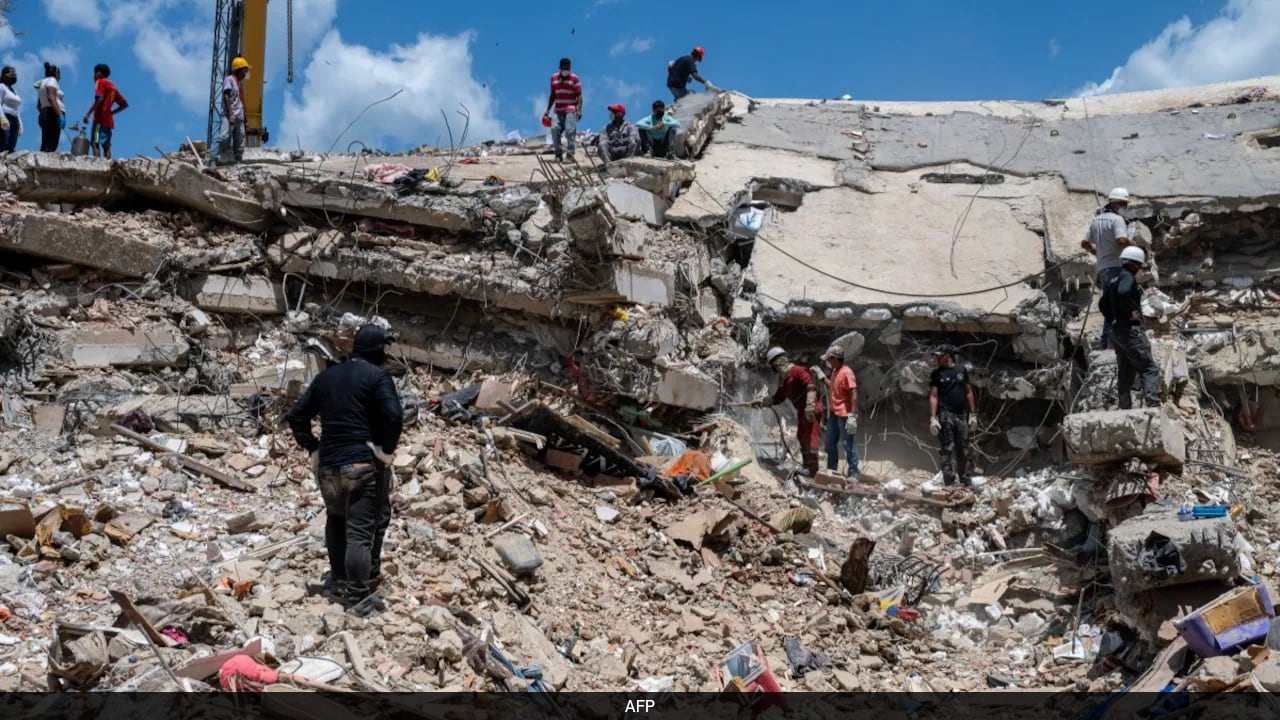
The golden hour for earthquake survival isn't just a theory. It's a brutal countdown. When twin 7.2 and 7.5 magnitude earthquakes ripped through northern Venezuela, that clock started ticking for thousands of people buried under crumbled concrete. Now, a full week since the disaster struck, reality is setting in. The official death toll has climbed to 2,295, and honesty demands we face the truth. Hope of finding anyone else alive under that rubble has essentially vanished.
If you look at the hardest-hit coastal areas like La Guaira and parts of Caracas, you see a striking visual pattern. Rescue crews are walking through neighborhoods with spray paint. They are painting a bold letter "D" on collapsed homes. It stands for deceduti or deceased. It means the dogs have sniffed, the acoustic sensors have gone silent, and the site is no longer a rescue operation. It's a recovery zone.
But the real crisis isn't just what happened when the ground shook. It's what's happening right now to the survivors who are left behind.
The Anatomy of a Dual Catastrophe
What made this disaster so incredibly lethal wasn't just one bad tremor. It was a rapid double-tap. The first 7.2 magnitude quake shattered the structural integrity of buildings that had already suffered from years of neglected maintenance. When the 7.5 follow-up strike hit shortly after, those compromised structures simply pancaked.
According to preliminary satellite data analyzed by NASA, roughly 58,870 buildings were damaged or entirely destroyed across the region. National Assembly President Jorge Rodriguez reported that more than 11,000 individuals are suffering from severe injuries, and at least 13,000 people have been left completely homeless. But the most terrifying number comes from the United Nations, which estimates that up to 50,000 people are still unaccounted for.
When you lose your home, your water supply, and your local grocery store in a matter of seconds, your focus shifts instantly from grief to pure survival.
Why the Survival Rate Drops Off a Cliff
International rescue teams have been working around the clock, but medical science gives us a very rigid timeline for crush injuries and entrapment.
- The first 24 hours: Survival rates hover around 80% if victims are freed quickly.
- The 72-hour mark: Dehydration, severe internal bleeding, and crush syndrome begin to claim the majority of trapped individuals.
- Past 150 hours: Survival becomes a matter of rare miracles.
We did see a miracle on Tuesday. A three-year-old boy was pulled alive from a collapsed building six days after the initial shock. But those stories are rare exceptions. Experienced rescue coordinators on the ground, like Javier Rodes from a Spanish specialist team, have openly stated that their search dogs are no longer catching the scent of living victims.
A Broken Infrastructure Makes Everything Worse
Let's talk about the elephant in the room. Venezuela was already buckling under a severe economic crisis long before the fault lines slipped. The state of public infrastructure meant that hospitals were already short on antibiotics, clean needles, and backup generators.
Now, those same hospitals are under what World Health Organization spokesperson Christian Lindmeier calls "extreme pressure." It's not just that there aren't enough beds for 11,000 injured citizens. The bigger threat is what happens next. Because the local water distribution pipelines are fractured, people are forced to drink contaminated water.
The risk of infectious diseases like measles and diphtheria is skyrocketing because routine vaccination programs had already lagged over the past decade. If a secondary health crisis takes hold, the death toll could easily double.
The Fight for Food and Total Social Collapse
Step away from the pile of rubble and look at the emergency shelters. It's a grim scene. Daily life has been completely erased. Young vendors and families are waiting in lines for hours under a scorching sun just to get a basic ration of food or clean water.
The distribution of supplies has been painfully slow, leading to desperate measures. Fights are breaking out at distribution points. Desperation drives people to extremes, and looting has become widespread in some neighborhoods. The justice ministry even confirmed that four police officers were arrested after being caught by local residents stealing valuables from the rubble of collapsed homes. When the law enforcement apparatus begins looting, you know the social fabric is fraying.
What Needs to Happen Instantly
The World Food Programme has put out an urgent appeal for $50 million to feed half a million people over the next three months. The UN refugee agency needs another $14.9 million just to provide basic tents and temporary shelter for the first wave of 30,000 displaced individuals.
Interim President Delcy Rodriguez declared seven days of national mourning, stating that the nation's soul is torn apart. But words don't rebuild broken water lines, and flags at half-mast don't stop the spread of waterborne bacteria.
If you want to understand what actually works in a crisis like this versus what looks good in political press releases, look at the civilian-led volunteer groups. While the official state response has been criticized by locals as sluggish and disorganized, over 10,000 volunteers organized themselves to dig with their bare hands, distribute private water jugs, and manage temporary community kitchens.
Practical Steps for Global and Local Support
If you're watching this tragedy unfold and want to know how recovery actually happens, the next steps require a hard pivot from search to stabilization.
- Prioritize Water Purification: Sending pallets of plastic water bottles is a short-term band-aid. Logistics networks are clogged. The immediate focus must be delivering industrial water purification tablets and mobile filtration units to local neighborhood leaders.
- Establish Field Clinics Outside Major Cities: The central hospitals in Caracas and La Guaira are bottlenecks. International aid groups must set up field hospitals directly in outlying coastal towns like Caraballeda to treat wounds and administer vaccines before infections spread.
- Direct Funding to Vetted NGOs: Avoid sending broad financial aid through bureaucratic state channels where it risks being mismanaged or delayed. Direct support to established international agencies like the International Organization for Migration (IOM) or local Red Cross chapters ensures funds convert directly into food and shelter.