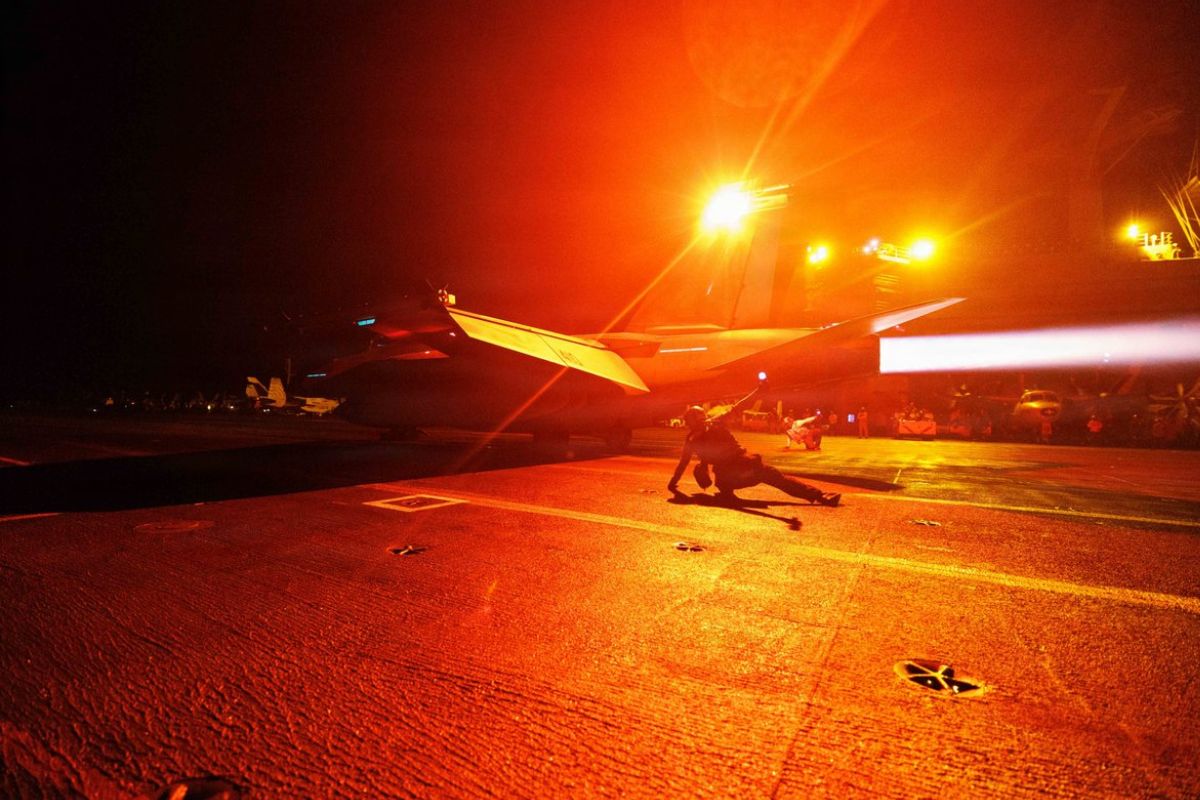
The Middle East just crossed a line that many hoped would never be reached. For eight consecutive nights, American warplanes and drones have pounded targets linked to Iran. This isn't just another standard headline about regional skirmishes. It's a direct, heavy response ordered by US President Donald Trump after an Iranian missile and drone attack killed two US service members at the Muwaffaq Salti Air Base in Jordan. A third American soldier remains missing in action.
If you're trying to make sense of why this specific escalation feels different, you aren't alone. The news cycle moves fast, but the implications of these eighth-night strikes will ripple across global security, energy markets, and international diplomacy for months. Let's cut through the noise and look at what is actually happening on the ground, why the old rules of engagement are gone, and what this means for the immediate future.
The Reality Behind the Eight Night Campaign
Most people assume military retaliation is a one-and-done event. A target gets hit, a message gets sent, and everyone backs away. Not this time. The US Central Command clarified that this multi-night bombardment serves a dual purpose. First, it directly punishes the Islamic Revolutionary Guard Corps for the lethal Friday strike in Jordan. Second, it systematically targets military infrastructure inside Iran itself.
This isn't happening in a vacuum. The latest reports show the US military focused heavily on southern Iran. Bombs fell near Sirik and Hajiabad. Blasts rocked the port city of Bandar Abbas. Even Qeshm Island, located squarely within the strategic Strait of Hormuz, became a target.
By striking these exact locations, the US military intends to cripple coastal surveillance, air defense networks, and maritime capabilities. They're trying to stop Iran from shutting down global shipping lanes. When you look at the map, you realize the Pentagon isn't just striking back. They're actively reshaping the security dynamics of the Persian Gulf.
Tracking the Human and Material Cost
We need to look at the numbers to understand the scale. According to reports from the Iranian health ministry, the death toll from the weeks of sustained American strikes has climbed to at least 50 people, with over 500 others injured. The casualties include civilians, which complicates the political fallout for Washington and its allies.
Meanwhile, the conflict spilled across borders into neighboring Iraq. A drone strike hit a base belonging to the Kurdistan Freedom Party near Erbil, wounding eight members. This shows that while the core focus remains on Iranian soil, the network of regional groups remains firmly in the crosshairs.
For American forces, the losses are mounting too. These two deaths in Jordan bring the total to 16 US service members killed in the current conflict. Earlier incidents this year saw six personnel die during an attack in Kuwait, another six lost in an aircraft crash in Iraq, and one killed at Prince Sultan Air Base in Saudi Arabia. This is no longer a shadow war. It's an active, high-casualty confrontation.
The Economic Threat to Global Shipping
The choice of targets tells you everything you need to know about the economic stakes. The Strait of Hormuz sees a massive chunk of the world's daily oil supply pass through its narrow waters. By targeting Qeshm Island and Bandar Abbas, the US is trying to neutralize Iran's ability to hold the global economy hostage.
Iran knows its leverage. Local news outlets affiliated with the state have already broadcast stark warnings to neighboring countries. They explicitly threatened that continued strikes on Iranian infrastructure would result in the forced evacuation of major civilian hubs in the United Arab Emirates, including the airports of Dubai and Abu Dhabi, alongside the ports of Jebel Ali and Fujairah.
The response from the UAE was swift and cautious. Their Foreign Ministry immediately called for extreme restraint. They openly warned against pulling the region into deeper violence. Every nation in the Gulf knows that if Dubai or Abu Dhabi gets dragged into the target list, global aviation and trade will face unprecedented chaos.
Why Conventional Deterrence Failed
For years, US foreign policy relied on hitting proxies to avoid direct confrontation with Tehran. The idea was simple. You strike a warehouse in Syria or a launchpad in Yemen, and you signal a boundary without starting a full-scale war.
That strategy failed. Iran felt emboldened enough to launch direct ballistic missiles at a major base in Jordan. By skipping the proxy layer and hitting US troops directly, Tehran forced Washington's hand. President Trump's decision to launch an eight-night campaign inside sovereign Iranian territory signals a total shift in strategy. The US is showing that the old buffer zone of using proxy groups as a shield no longer protects Iran from direct retaliation.
There are legitimate opposing views on whether this aggressive stance works. Critics argue that bombing southern Iran will only harden Tehran's resolve, push them closer to deploying hidden weapons, or trigger a desperate asymmetric attack against a vulnerable target. Supporters argue that anything less than a direct strike on Iranian soil signals weakness, inviting even deadlier attacks on American bases globally.
Direct Security Steps You Need to Consider
The escalation has triggered immediate, practical changes for global security that you need to be aware of. The US State Department issued a stark Worldwide Caution alert overnight. The security environment remains highly volatile, and the risk of retaliatory attacks against Western citizens abroad is real.
If you have upcoming international travel or manage operations tied to global supply chains, here are the immediate next steps you should take.
First, closely monitor the flight statuses and airspace closures in the Middle East. Airlines are already re-routing paths away from the Persian Gulf, which means longer flight times and sudden cancellations.
Second, if you're a citizen traveling anywhere near the region, register immediately with your local embassy's notification system. Don't rely on general news updates. You need real-time security alerts sent directly to your phone.
Third, prepare for supply chain delays. If shipping companies divert vessels away from the Strait of Hormuz to avoid the conflict zone, freight rates will spike, and delivery timelines will stretch significantly. Check your inventories and diversify your logistics routes immediately.
The situation remains fluid. The eighth night of strikes might have concluded, but the regional chess board has changed permanently. Watch the Strait of Hormuz and the diplomatic statements out of Riyadh and Abu Dhabi over the next 48 hours to gauge exactly how far this conflict will spin out of control.