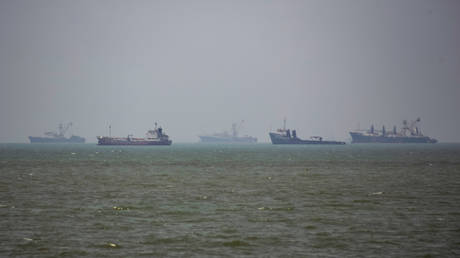
Don't let the sudden diplomatic pivot fool you. The announcement that American and Iranian teams are flying to Doha, Qatar, for emergency talks isn't a sign of sudden friendship. It's a mad scramble to stop a massive global economic disaster before it starts.
Just days ago, Donald Trump threatened to militarily complete the job in Iran. Now, he's posting on Truth Social that Tehran requested a meeting to salvage the 60-day interim peace framework signed on June 17.
The whiplash is real, but so is the danger. Over the weekend, a fragile ceasefire shattered when an Iranian drone hit a cargo ship in the Strait of Hormuz. Washington hit back at Iranian air defense and drone sites. Tehran responded by launching missiles and drones at US military installations in Bahrain and Kuwait.
By Sunday night, both sides stared into the abyss of total war and blinked. They agreed to stand down for now, paving the way for high-level meetings in Qatar. But the core dispute that triggered this flare-up remains completely unresolved.
The War Over the Chokepoint
The real issue isn't just a breakdown in communication. It's about who controls the Strait of Hormuz. Take a look at the map above. That narrow strip of water separates Iran from Oman and links the Persian Gulf to the open ocean. A huge chunk of the world's petroleum passes right through it.
Under international maritime law, the strait is an open international waterway. Ships have the right of transit passage. But Iran wants to change the rules. Tehran insists that commercial vessels must navigate through a specific corridor hugging the Iranian coast instead of using Omani waters. Even worse, they want to levy transit fees on passing ships.
Washington calls that a toll booth on global trade. Republican leaders like Marco Rubio have repeatedly stated that the US will never tolerate a toll on international shipping lanes.
Iran's logic is straightforward. They know that keeping the strait in a state of controlled friction gives them leverage. Every time a drone hits a tanker, oil prices jump. Brent crude quickly ticked up over $72 a barrel after the weekend strikes. For a cash-strapped Iranian government coping with runaway inflation, keeping the West nervous about oil supplies is their strongest card.
High Stakes and Shadowy Billions
Adding fuel to the fire is a massive dispute over money. Hours before Trump announced the emergency Doha summit, Iranian President Masoud Pezeshkian went on state television to claim a major political win. He told the Iranian public that Qatar was about to release $6 billion in frozen Iranian financial assets.
The memorandum of understanding signed earlier this month does include provisions for the eventual unfreezing of up to $12 billion in Iranian funds. However, Washington insists that money is tightly restricted. According to Vice President JD Vance, those funds can only be spent on specific humanitarian items, like soybeans grown by American farmers.
The fact that Pezeshkian is bragging about a multi-billion dollar windfall while US officials deny any money has actually changed hands shows how fragile this entire process is. Pezeshkian needs to show his domestic audience that negotiating with Trump pays off, especially as the country prepares for the public funeral of late Supreme Leader Ali Khamenei in July.
Meanwhile, senior Iranian negotiators like Kazem Gharibabadi have been trying to downplay the Doha talks, telling local media that no official technical meetings are confirmed. It's a classic diplomatic dance. Trump claims Iran is begging for peace; Tehran pretends it's business as usual while secretly dispatching envoys to the Qatari capital.
Who is Actually at the Table
This week's meetings won't just feature low-level diplomats. The White House confirmed that Trump's close advisers, including Steve Witkoff and Jared Kushner, are heading to Doha. They will be running the high-level political track while separate technical teams try to map out the granular details of a permanent treaty.
The negotiators face three massive hurdles:
- Nuclear Enforcement: Making sure UN inspectors have real, unhindered access to Iranian nuclear facilities.
- Maritime Sovereignty: Convincing Iran to drop its demands for shipping tolls and corridor restrictions in the Strait of Hormuz.
- Sanctions Relief: Timing the lifting of US oil sanctions with verifiable Iranian compliance.
Can they actually pull it off? It's highly debatable. Hardline factions within Iran, backed by figures like regional advisor Mohammad Mokhber, continue to insist that resisting American pressure is the only way forward. Across the border in Iraq, the government just set a September 30 deadline for pro-Iran militias to disarm, adding another layer of geopolitical tension to the mix.
What Happens Next
The immediate threat of an all-out shooting war in the Persian Gulf has cooled down for the next 48 hours, but the structural flaws of the June 17 peace framework haven't vanished. Commercial shipping companies aren't breathing easy just yet.
If you are tracking this conflict, keep your eyes on two immediate indicators. First, watch whether the US Treasury extends or freezes its 60-day temporary waiver on Iranian oil exports. Second, monitor whether commercial container traffic through the Strait of Hormuz returns to normal volume or continues to route defensively along the Omani coast. The answers to those two developments will tell you whether the Doha talks are a genuine path to peace or just a temporary pause before the next explosion.