Donald Trump just declared the ceasefire with Iran over. Early on Saturday, July 11, 2026, he took to Truth Social to warn Tehran that 1,000 missiles are "locked and loaded" and ready to obliterate the country if any assassination attempt is made on his life.
This isn't just typical social media bluster. It's the explosive climax of a week where a fragile, month-old interim peace deal completely buckled. The conflict re-ignited after Iranian forces targeted three cargo ships in the Strait of Hormuz, prompting two straight days of heavy U.S. airstrikes on Iranian port cities like Bandar Abbas and Kuhestak.
While regional mediators in Oman frantically try to piece the truce back together, the ground reality shows both sides are closer to full-scale war than a diplomatic breakthrough.
The Succession Crisis and the Vow of Revenge
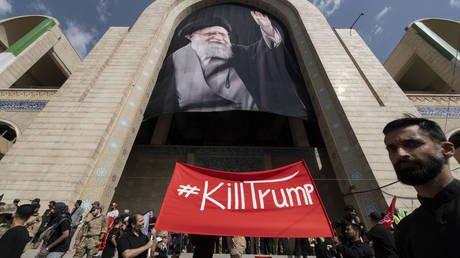
The timing of this escalation isn't accidental. The sudden outbreak of regional war earlier this year resulted in U.S. and Israeli airstrikes that killed Iran's long-standing Supreme Leader, Ayatollah Ali Khamenei. His massive funeral procession in the holy city of Mashhad concluded with his burial at the Imam Reza Shrine.
During the ceremonies, the massive crowds openly chanted for the death of the U.S. President. Banners reading "We Will Kill Trump" flew over the mourners.
Tehran’s newly consolidated leadership quickly capitalized on this fury. Mojtaba Khamenei, the late leader's son and successor, broke his post-strike silence on Saturday. Through a state television address, he vowed that avenging his father's death is the absolute will of the Iranian nation and will definitely be carried out.
Trump's response was a direct warning to the new regime. He announced he had already issued standing orders giving the U.S. military the authority to completely destroy Iran if an assassination occurs. Though national security experts point out that a president's death cannot legally trigger an automatic military chain reaction—leaving the final decision to Vice President JD Vance—the threat alone has permanently shifted the tone of negotiations.
The Trillion Dollar Choke Point
Behind the assassination threats and missile posturing lies the real geopolitical issue: who actually controls the Strait of Hormuz?
The interim memorandum of understanding signed on June 17, 2026, was supposed to guarantee safe, toll-free passage through the waterway for 60 days while permanent peace talks progressed. Instead, it exposed a fundamental disagreement about international law.
- The Iranian Position: Tehran insists the interim deal grants them the right to manage maritime traffic. They want to impose transit fees on commercial ships passing through the strait, using the channel as economic leverage.
- The U.S. Position: Washington demands that Iran make an immediate, explicit public statement confirming the Strait of Hormuz remains a free, open international waterway where commercial vessels will not face attack or taxation.
To back up its demands, the U.S. Treasury instantly revoked temporary sanctions waivers that allowed Iran to export oil, effectively cutting off the regime's primary source of revenue. The U.S. military also leveled over 90 targets inside Iran, targeting missile launchers, runways, and logistics bridges leading toward China.
Frantic Diplomacy in Oman
Despite Trump explicitly stating that the ceasefire is finished, the diplomatic backchannel isn't completely dead. Iran’s top diplomat rushed to Oman—the traditional neutral ground for Middle East mediation—to meet with regional brokers. Both Washington and Tehran have technically agreed to keep talking, but the parameters of those talks have radically changed.
Iran’s UN Ambassador, Amir Saeid Iravani, made it clear that Tehran views any Western attempts to dictate maritime rules in the Gulf as a violation of the June agreement. Commercial shipping traffic through the strait has already plummeted by more than half compared to pre-war levels, sending global energy markets into a tailspin.
What Happens Next
If you are tracking global energy markets or international security, the next 48 hours are critical. Watch these specific markers to see which way the crisis tips:
- Watch the Omani Backchannel: Look for whether Oman can broker a compromise on shipping fees. If Iran backs down on taxing the Strait of Hormuz, the U.S. may pause further air strikes.
- Monitor the U.S. Treasury Actions: The sanctions on Dubai-based financial networks supporting the IRGC are tightening. If the U.S. enforces a total naval blockade of Iranian ports, expect immediate asymmetric retaliation from Iran’s proxy networks in Kuwait and Bahrain.
- Track Shipping Freight Rates: Maritime insurance premiums for the Persian Gulf are skyrocketing. If commercial fleets completely divert around Africa, global supply chains will see immediate delays.