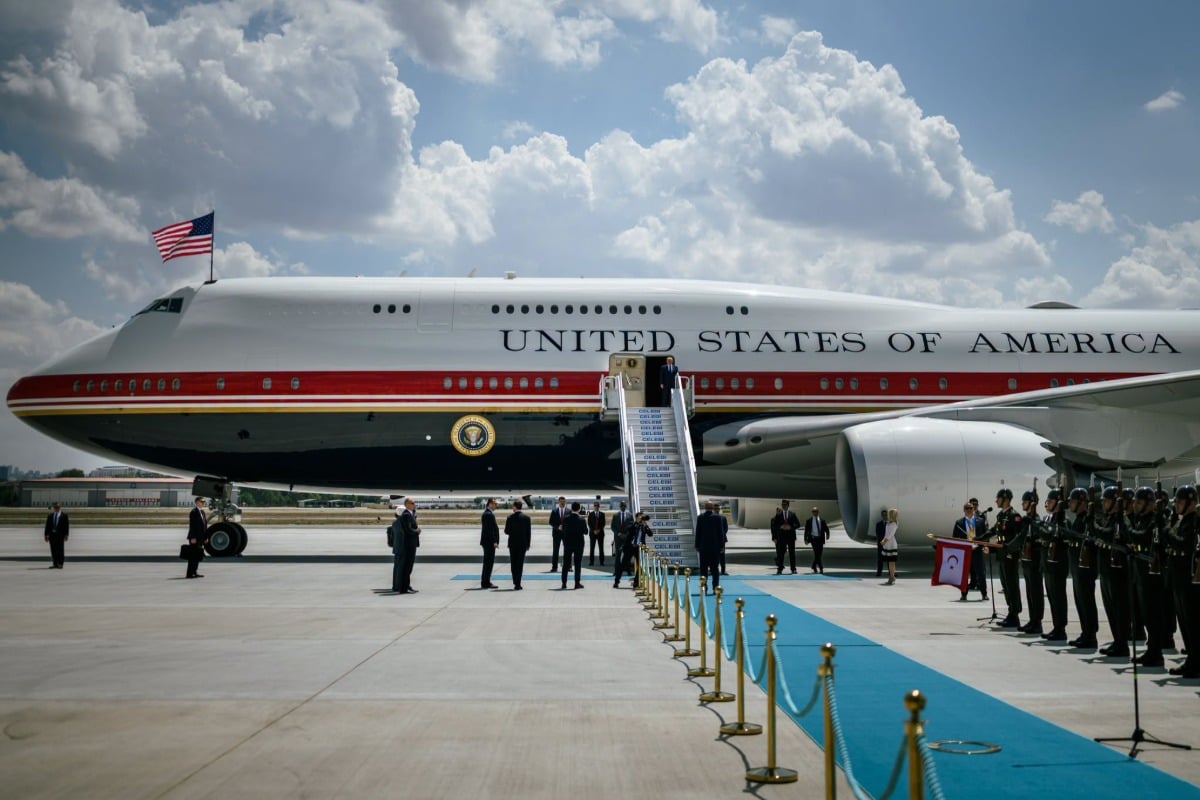
The short-lived peace between Washington and Tehran didn't even make it past the three-week mark. Standing next to NATO Secretary General Mark Rutte in Ankara on Wednesday morning, President Donald Trump looked at reporters and muttered what everyone already suspected.
"As far as I'm concerned, it's over."
He was talking about the fragile, 60-day interim ceasefire signed on June 17. The deal, brokered by Pakistan, was supposed to give diplomats a cooling-off window to sketch out a permanent end to the war that ignited back in February. Instead, the Middle East is sliding right back into heavy military exchanges. Oil prices are shooting through the roof. Ships are burning in the Strait of Hormuz. Rockets are falling near American bases in the Gulf.
If you're wondering how a signed peace agreement unravels in less than a month, the answer lies in a high-stakes game of maritime chicken, conflicting interpretations of a rushed treaty, and a massive overnight air campaign that lit up the Iranian coastline. Here is exactly what happened, why the deal died, and what this means for global security and your wallet.
The Trigger in the Strait
The immediate collapse started with three commercial oil tankers. Over a 24-hour period between Monday and Tuesday, a series of explosions rocked the Strait of Hormuz. This narrow waterway separates Iran from the Arabian Peninsula. It handles roughly 20% of the world's liquefied natural gas (LNG) and petroleum. When the February war broke out, Iran closed the strait, strangling global energy supplies. The June ceasefire was supposed to get the oil flowing again.
It didn't work out that way.
Iranian forces targeted three specific vessels. First came the Al Rekayyat, a Marshallese-flagged tanker packed with Qatari liquid gas. Then the Saudi-flagged Wedyan was hit. Finally, a drone struck the Liberian-flagged Cyprus Prosperity, sparking an onboard fire.
Tehran didn't explicitly shout from the rooftops that they pulled the trigger. They didn't need to. Iranian Foreign Ministry officials openly stated that these strikes were a reassertion of their control over the waterway.
This brings us to the first major structural flaw of the June agreement. The text of the memorandum of understanding was notoriously vague. Iran claimed the document gave them absolute administrative and security control over the Strait of Hormuz for at least 30 days from signing. They argued that the US violated the treaty by attempting to establish a new southern shipping route close to Oman without Tehran's explicit permission.
The White House saw it differently. To Washington, a ceasefire meant free, unhindered navigation. You don't get to sign a peace deal and keep blowing up commercial ships because they took a different lane.
Eighty Targets Lit Up Overnight
The American response was swift, coordinated, and incredibly destructive. On Tuesday afternoon, Washington officially revoked the temporary sanctions waiver that had allowed Iran to export its oil until August 21. That waiver was the single biggest economic carrot Tehran received for pausing the war. By ripping it up, the US essentially declared the diplomatic experiment dead before the planes even left the tarmac.
Hours later, U.S. Central Command ordered a massive retaliatory air campaign.
Throughout Tuesday night and into the early hours of Wednesday, American aircraft, drones, and naval assets pounded southern Iran. CENTCOM targeted more than 80 distinct sites. This wasn't a symbolic slap on the wrist. It was a calculated effort to dismantle Iran's asymmetric maritime capabilities.
The strikes heavily focused on coastal infrastructure. American munitions slammed into Iranian air defense networks, command-and-control centers, and coastal radar installations. Crucially, the strikes wiped out more than 60 small, fast-attack boats operated by the Islamic Revolutionary Guard Corps Navy. These small boats are Iran's primary tool for swarming and intimidating merchant shipping in the shallow waters of the Gulf.
Iranian state media reported a chain of deafening explosions across strategic coastal zones. Bombs hit Qeshm Island, the major port hub of Bandar Abbas, Sirik, and Bushehr, which famously houses Iran's only civilian nuclear power plant. While Tehran claimed most hit areas were civilian, the structural damage to their naval capabilities was undeniable. In the port of Bandar Mahshahr, an IRGC naval officer was killed by an American drone strike.
The IRGC Strikes Back at US Bases
If anyone thought Iran would back down after losing dozens of tactical boats, they severely miscalculated. Tehran's retaliation came before the sun fully rose on Wednesday.
The IRGC announced it had fired a barrage of ballistic missiles and suicide drones targeting 85 U.S. military installations across the Persian Gulf. The primary targets were facilities in Bahrain and Kuwait. These two Gulf nations host thousands of American personnel but weren't directly involved in the Tuesday night strikes.
Air raid sirens wailed across Bahrain, home to the U.S. Navy’s 5th Fleet. Panic spread through local communities as air defense systems rattled to life to intercept incoming warheads. Simultaneously, the IRGC launched a targeted drone strike against the Sheikh Isa Air Base in Bahrain.
In Kuwait, home to major U.S. Army staging bases, the military activated its missile shields. Kuwaiti defense officials later confirmed their forces intercepted two ballistic missiles and 13 explosive drones. Falling shrapnel severed several power lines, causing temporary blackouts, though no immediate military casualties were reported. Iran also claimed its air defenses shot down an American MQ-9 Reaper drone hovering over its southern coastline during the chaos.
This rapid expansion of the theater of war is a massive escalation. During the early months of the conflict, neighbor states tried desperately to keep their heads down. Now, the crossfire is spilling directly into allied Gulf territory.
Trump Blows Up the Script in Ankara
While missiles were flying in the Gulf, Donald Trump was landing at Etimesgut Air Base near Ankara, Turkey, for a high-stakes NATO summit. European leaders had spent weeks preparing for this meeting. They wanted to project a unified front and talk about continental defense spending.
Trump had other plans. He completely hijacked the news cycle.
Sitting beside NATO Secretary General Mark Rutte, Trump went on a blistering tirade against the Iranian leadership. He didn't mince words. He didn't use diplomatic pleasantries.
"They’re scum," Trump said. "They’re sick people. They’re led by sick people, and they’re vicious, violent people. Far as I’m concerned, it’s just a waste of time dealing with them. They’re liars, there’s something wrong with them. They’re cuckoo."
The president expressed deep frustration over how the negotiations had played out behind closed doors. He claimed that Iranian negotiators would look American representatives in the eye, agree to strict terms regarding their nuclear program and shipping lanes, and then walk outside to brag to the press that no such topics were ever discussed.
Trump didn't completely forbid his diplomatic team from talking. He mentioned that his core negotiators—businessman Steve Witkoff and his son-in-law Jared Kushner—could technically keep the lines open if they wanted to. But he made his skepticism crystal clear. "They can talk, but I think they’re wasting their time," he added.
The Friction Inside NATO
The collapse of the ceasefire has also exposed deep, uncomfortable fractures within the NATO alliance itself. Mark Rutte did his best to placate the American president, publicly backing the overnight airstrikes. Rutte told reporters that when an agreement is signed and one side repeatedly violates it by attacking merchant shipping, a forceful American reaction is absolutely necessary.
But Trump wasn't entirely satisfied with the verbal support. He turned his anger back on the European allies, castigating them for refusing to provide direct military assistance in the conflict with Iran. Washington views Iran as the world's primary state sponsor of terrorism, and Trump expects NATO to treat it as a collective security threat. Most European capitals, however, are terrified of getting dragged into a wider Middle Eastern war that could completely cut off their energy supplies.
To make matters more chaotic, Trump used the summit to revive his long-standing, controversial desire for the U.S. to acquire Greenland, which irritated Nordic members. He then abruptly directed Treasury Secretary Scott Bessent to cut off trade ties with Spain, publicly labeling Madrid a "terrible partner" within the alliance. Within an hour, a summit meant to showcase Western unity instead highlighted a widening chasm between Washington and its European partners.
The Economic Aftershock
The immediate casualty of Wednesday's military fireworks wasn't just the peace treaty. It was global economic stability.
Energy markets detest instability in the Strait of Hormuz. The moment Trump declared the truce dead, Wall Street and international oil desks went into an absolute frenzy. Commodity traders realized that the brief respite in global shipping costs was officially over.
International benchmark Brent crude surged by more than 5.3%, quickly jumping past $78 a barrel. In the United States, West Texas Intermediate crude shot up 5.4% to hover around $74.23. Analysts are already warning that if the IRGC mounts another wave of attacks on tankers, or if the US decides to hit Iranian oil infrastructure like the Kharg Island terminal, we could easily see oil push past the $90 or $100 mark.
This is exactly what Trump wanted to avoid. Domestically, his advisers have been deeply worried about the political fallout of prolonged energy inflation. Behind closed doors, Trump has frequently mentioned his fear of becoming a modern-day Herbert Hoover—a president whose term gets completely derailed by an economic depression triggered by international crises.
Yet, Trump felt his hand was forced. He believed that allowing Iran to collect cash from the temporary oil waivers while simultaneously harassing tankers made the United States look weak.
What Happens Next
The diplomatic track isn't completely dead, but it's on life support. Iran’s parliamentary Speaker, Mohammad Bagher Ghalibaf, fired back on social media, writing that "the era of bullying and extortion is over" and asserting that Tehran will not fold under military pressure.
We are now entering an incredibly volatile phase. The 14-point memorandum of understanding signed last month is effectively a piece of scrap paper. If you operate commercial shipping, manage global supply chains, or just worry about your local gas prices, here is what you need to watch over the coming days.
First, track the insurance rates for commercial vessels transiting the Gulf. If maritime underwriters declare the Strait of Hormuz a high-risk war zone again, shipping companies will begin bypassing the route entirely, sending transit costs skyrocketing.
Second, watch the deployment patterns of the U.S. Navy's 5th Fleet. If Washington sends additional carrier strike groups to the region, it signals that the administration is preparing for sustained conflict rather than a return to the negotiating table.
Finally, keep a close eye on regional escalation. If Iran continues to target bases in Kuwait and Bahrain, those nations may be forced to alter their security postures, dragging the entire Gulf Cooperation Council into a direct confrontation with Tehran. The brief pause in the war is over. The real conflict has just restarted.
:max_bytes(150000):strip_icc()/umiz003-58b8df575f9b58af5c90102d.jpg)