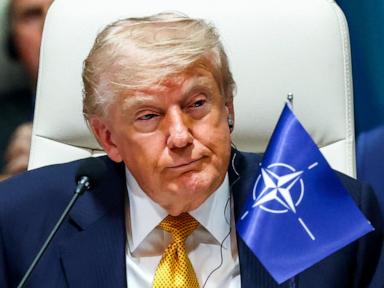
The fragile peace lasted barely three weeks. Anyone who thought a simple piece of paper could erase decades of deep hostility between Washington and Tehran was fooling themselves. Donald Trump just blew up the mid-June Memorandum of Understanding, or what everyone was calling the MoU, during a fiery exchange with reporters at the NATO summit in Ankara, Turkey.
He didn't just walk away from the table. He flipped it over.
When asked about the current state of the diplomatic agreement, Trump didn't hold back. He said that for him, the MoU is over. He doesn't want to deal with them anymore. Then he went on a classic rhetorical tear, calling Iran's leadership scum, liars, cheats, and sick people. He even called them cuckoos and insisted that trying to negotiate a permanent end to the war is a total waste of time.
This isn't just tough talk from a podium. It's the public confirmation that a major military conflict in the Middle East has reignited with terrifying speed.
Hours before Trump spoke, the sky over Iran lit up with explosions. The US military launched a massive wave of airstrikes, hitting more than 80 targets across the country. It was the most intense bombardment since the initial war broke out earlier this year. Tehran didn't sit on its hands either. They fired back almost instantly, launching waves of drones and ballistic missiles at US military bases in Kuwait and Bahrain.
The truce is dead. The war is back on. Oil prices are already skyrocketing. If you want to know how everything collapsed so fast, you have to look at the narrow, crowded waters of the Strait of Hormuz.
The Choke Point That Broke the Deal
Diplomats in Qatar spent weeks trying to hammer out a permanent peace deal under the framework of the June MoU. That agreement established a 60-day window to end the war that originally started on February 28. Under those initial terms, the US agreed to lift its naval blockade on Iranian ports, and Iran was supposed to let international shipping move freely.
It sounded good on paper. It failed completely in practice.
The core issue comes down to control over the Strait of Hormuz. About 20% of the world's daily global oil supply passes through this tiny maritime bottleneck. Iran views the strait as its ultimate economic weapon and political leverage.
Trouble started brewing when Oman proposed a new international shipping corridor that would hug the Omani coastline, moving vessels away from Iranian waters. Tehran absolutely hated this plan. Iranian officials claimed the US-backed routing changes violated the spirit of the MoU. They insisted that any ship passing through the region must coordinate directly with Iranian maritime authorities and pay a transit toll.
Washington flatly refused. The US position has always been that the strait must remain an open, free international waterway.
The dispute turned violent on Tuesday. Iranian forces launched targeted attacks against three commercial vessels transiting near the coast of Oman. One of the targeted ships was the Al Rekayyat, a massive Qatari liquefied natural gas tanker. For the White House, attacking a commercial vessel from Qatar, a country acting as the primary diplomatic mediator between the US and Iran, crossed a major red line.
Washington responded by immediately revoking the temporary sanctions waiver that allowed Iran to export its oil. The diplomatic track was officially cooked.
A Night of Blazing Skies and Retaliation
The military response from the Pentagon was swift and devastating. US Central Command directed a coordinated assault targeting Iran's critical military infrastructure.
Air strikes pounded Iranian air defense networks, command stations, coastal radar facilities, and anti-ship missile batteries. The bombardment specifically focused on the port city of Bandar Abbas, Sirik, and Qeshm Island. US officials confirmed that the strikes also destroyed more than 60 small attack boats operated by the Islamic Revolutionary Guard Corps, the IRGC. These are the fast-moving boats Iran routinely uses to harass and seize oil tankers in the gulf.
The timing of the American strikes carried a heavy symbolic weight. The bombs fell while hundreds of thousands of people gathered in Tehran for the week-long funeral ceremonies of former Supreme Leader Ayatollah Ali Khamenei, who was killed in a joint US-Israeli strike back in March.
Iran's military apparatus didn't hesitate to escalate the fight. The IRGC quickly claimed responsibility for launching a massive retaliatory strike targeting 85 distinct facilities utilized by Western forces across the Persian Gulf.
Alarms and sirens echoed through Bahrain and Kuwait as incoming waves of drones and ballistic missiles flew across the water. Bahrain houses the expansive headquarters of the US Navy's Fifth Fleet, making it a prime target for Iranian targeting systems. In Kuwait, military officials confirmed their air defense batteries were pushed to the limit, successfully intercepting two incoming ballistic missiles and 13 explosive drones before they could impact American staging areas. The IRGC also claimed to have shot down an American MQ-9 Reaper surveillance drone operating over the gulf, though the Pentagon hasn't verified that loss.
Trump Says No More Material Deals With Liars
Back in Ankara, Trump made it clear that he has zero interest in going back to the negotiating table, even if some of his staff try to keep the lines of communication open.
He told reporters that he will let his negotiators keep talking if they really want to, but he doesn't see any point in it. He explained his frustration by saying that everything he does is usually successful, but dealing with the Iranian leadership is like dealing with people from a completely different school of thought.
The president expressed deep anger that Tehran chose to launch attacks on shipping vessels right after the US granted a pause in hostilities out of respect for the former Supreme Leader's funeral. Trump noted that the US explicitly told Iran to go ahead and take care of their funeral business, but they chose to start shooting rockets at ships instead.
Trump also revealed a personal grievance driving his hardline stance. He reminded the press corps that Iranian intelligence operatives still want to take out the US leader, noting that he is actively on all of their target lists.
NATO Secretary General Mark Rutte stood right beside Trump during the press briefing and offered firm backing for the renewed military campaign. Rutte stated that when a nation violates an active ceasefire agreement, it is absolutely crucial for the United States to react with maximum force.
When reporters asked if the military campaign would continue over the coming days, Trump gave a direct warning. He stated that US forces hit them very hard last night, and they will probably hit them just as hard again tonight. He added that there isn't a single thing Iran can do to stop it.
Market Panic and the Global Economic Realities
The immediate consequence of this diplomatic collapse wasn't felt in Washington or Tehran. It was felt on the trading floors of Wall Street and London.
Global energy markets panicked the second Trump declared the truce dead. International benchmark Brent crude oil surged by nearly 8% in a matter of hours, crossing the threshold to trade over $80 a barrel. The American benchmark, West Texas Intermediate, wasn't far behind, spiking more than 7% to settle around $75 a barrel.
Global stock markets dipped simultaneously as investors reacted to the prospect of a prolonged war that could shut down energy transit through the Middle East. If the Strait of Hormuz becomes a permanent combat zone, global supply chains will suffer massive disruptions. Shipping companies are already instructing their fleets to avoid the area entirely, forcing massive container ships to take the long, expensive route around the southern tip of Africa.
This economic pressure gives Iran exactly what it wants, which is leverage over the global economy. Security analysts point out that Iran views its ability to choke off global energy supplies as its own version of a nuclear weapon. They don't need an actual bomb to terrify the West when they can simply sink a few tankers and trigger a global economic recession.
What Happens Next on the Battlefield
The temporary illusion of diplomacy has completely vanished. You should expect the conflict to intensify significantly over the next few weeks. The US is moving additional naval assets into the region to reinforce the Fifth Fleet and guarantee security for the remaining commercial traffic that dares to enter the gulf.
Iran is likely to rely on its asymmetric warfare capabilities. Rather than engaging the US Navy in a traditional head-to-head battle that they would certainly lose, the IRGC will probably use hidden anti-ship missile sites along its rugged coastline, deploy swarms of suicide drones, and utilize underwater mines to make the Persian Gulf completely impassable.
They might also call on their network of regional proxy forces to launch parallel attacks against Western interests across Iraq, Syria, and the Red Sea.
If you are tracking this crisis, watch the daily changes in oil prices and the status of commercial shipping through the region. The conflict has moved way past the point of simple border skirmishes. With Trump committed to a heavy bombing campaign and Iran refusing to yield its maritime leverage, the Middle East is staring down the barrel of a full-scale regional war.