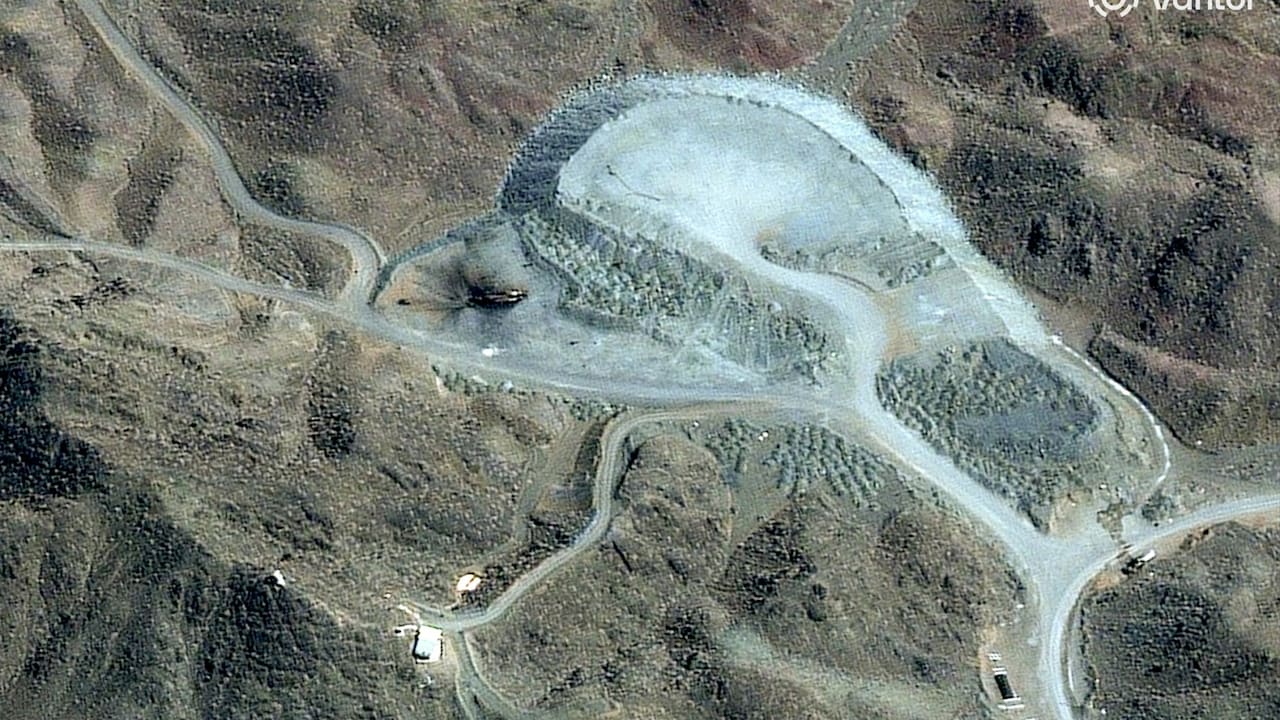
Donald Trump says the US military will target Iran's Pickaxe Mountain facility pretty soon. He called it a potential target for a big shot right through the front door.
That sounds simple on TV. Destroying a facility buried under hundreds of feet of solid granite mountain rock is a completely different story. Building on this topic, you can find more in: How India Is Sneaking Cargo Through The World's Deadliest Shipping Lane.
Military planners face a grim engineering reality in 2026. After US B-2 stealth bombers dropped fourteen 30,000-pound GBU-57 bunker busters during Operation Midnight Hammer last year, Tehran took its nuclear ambitions even deeper into the earth. They moved centrifuges and stockpiles of 60 percent enriched uranium directly under the bedrock of Pickaxe Mountain near Natanz.
Can America actually blow this place up, or is this political bluffing meeting physical limits? Analysts at Al Jazeera have shared their thoughts on this trend.
What Pickaxe Mountain Actually Is
Pickaxe Mountain, known locally as Kuh-e Kolang Gaz, sits in the Zagros range in central Iran. It isn't just a basic bunker. It's an entire subterranean complex built under 300 to 400 feet of dense rock.
Iran started digging this site around 2020. Initially, Tehran claimed it was just a replacement assembly plant for centrifuges after a sabotage attack damaged their above-ground Natanz facility. But satellite images from commercial operators like Vantor show a massive construction footprint. Engineers excavated thousands of tons of dirt, created deep tunnel entrances, and buried the core halls far deeper than the Fordow enrichment site that the US struck in June 2025.
International Atomic Energy Agency inspectors haven't been allowed inside. Iran blocked access following last year's 12-day war, leaving Western intelligence to rely on satellite imagery and signals intelligence. Recent reports from Israeli intelligence indicate that Iran transferred thousands of advanced centrifuges and a portion of its 440-kilogram stockpile of highly enriched uranium into these tunnels.
If you put critical centrifuges 300 feet under solid mountain granite, standard artillery and conventional air strikes can't reach them. The earth itself becomes the armor.
The Pentagon Weapon Designed for Deep Targets
The US military has a weapon built specifically for underground bunkers. It's called the GBU-57A/B Massive Ordnance Penetrator, or MOP.
It weighs 30,000 pounds. It carries more than 5,000 pounds of high explosives inside a hardened steel alloy casing. Only heavy bombers like the B-2 Spirit can carry it.
The physics behind the weapon are simple.
- Heavy weight combines with high terminal velocity to punch through soil and concrete.
- A delay fuse triggers the explosive payload only after the bomb stops moving.
- The blast destroys the cavern interior and collapses surrounding support pillars.
In theory, a single MOP can penetrate up to 200 feet of earth or about 60 feet of reinforced concrete before exploding. That was enough to wreck parts of Fordow and Natanz in 2025.
Pickaxe Mountain is nearly twice as deep.
Hitting the exact same spot on the mountain twice with guided munitions — a tactic known as strike pairing — can double penetration depth. The first bomb blows away topsoil and shatters the top layer of rock. The second bomb enters the fresh crater and digs much deeper into the mountain core.
Even with precise targeting, physics creates hard boundaries. Granite breaks differently than soil or concrete. It absorbs kinetic energy, deflecting shockwaves sideways rather than directing force downward.
Tunnel Entrances and Support Hardware Are Weak Links
You don't always need to crush a cavern to render a nuclear site useless. Facilities need fresh air, electrical power, communications, and transport access to operate.
Pickaxe Mountain relies on exposed infrastructure.
Air Filtration and Power Supplies
Centrifuges rotate at hyper-fast speeds. They require constant climate control and steady electricity. Heavy diesel generators and ventilation shafts must sit near the surface or connect to outside air. Smart munitions can easily target air intake valves and power substations. Without cool, filtered air, centrifuge halls overheat rapidly, crashing delicate machines.
Tunnel Entrances and Hardened Portals
Reinforced concrete doors seal the tunnels. Earth-penetrating missiles can collapse the mountain slope directly over those entrances. Trapping scientists and equipment inside halts operation just as effectively as shattering the hall itself.
Heavy equipment transport vehicles seen in satellite images from June and July 2026 show ongoing construction at the tunnel mouths. Hardening those entrances takes time, and soft construction gear remains vulnerable to precision strikes.
The Political Risk of Striking Pickaxe Mountain
Threatening a strike is easy. Managing the aftermath is complicated.
If the US attacks Pickaxe Mountain and fails to destroy the deeply buried centrifuges, it risks driving Iran's nuclear program completely out of view. Tehran has already restricted international oversight. An incomplete strike gives Iranian leadership an immediate pretext to break away from non-proliferation treaties entirely and weaponize their existing 60 percent uranium stockpile.
Iran's military command has threatened immediate retaliation against American assets across the Middle East and shipping routes in the Strait of Hormuz if nuclear sites come under fire again. Regional escalations in 2025 showed that military strikes rarely remain isolated events.
There's also the question of chemical and radioactive contamination. Blowing up underground storage holds risks releasing hazardous materials into regional water tables or surrounding air currents, creating environmental hazards for nearby civilian populations.
What Happens Next
Watch satellite feeds of the Zagros Mountain range over the coming weeks. Pay attention to three specific indicators.
- Vehicle traffic density along the access roads surrounding Natanz and Pickaxe Mountain.
- Air defense deployments, including long-range surface-to-air missile batteries moving into Isfahan province.
- Diplomatic statements regarding IAEA access and inspector visas from Tehran.
Military force can destroy surface buildings and bury tunnel entrances for months at a time. Breaking the physical bedrock over Pickaxe Mountain requires an aerial bombardment campaign larger than anything seen since the Gulf War. Deciding whether to press that trigger comes down to an assessment of whether temporary delay is worth long-term regional instability.