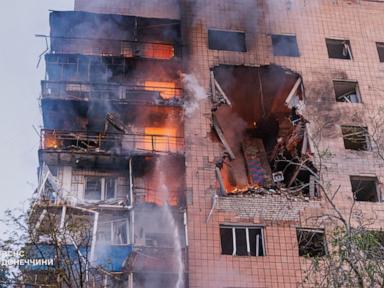
Ukraine just sent a clear message to the Kremlin. Sending over 400 drones screaming toward Moscow isn't just about striking targets deep within Russian territory. It is a high-stakes play to shift the narrative of a war entering its fifth brutal year. Overnight, explosions rocked industrial zones outside the Russian capital, hitting logistics hubs and sending plumes of smoke from oil infrastructure.
But while skies lit up over Moscow, the real crisis for Ukrainian President Volodymyr Zelenskyy was unfolding on the streets of Kyiv.
You won't find this context in basic news bulletins, but the timing is everything. For the first time in a while, Zelenskyy is fighting a volatile political battle at home. A messy government shakeup sparked rare public protests in Ukraine, exposing a massive rift over how the country plans to win this war.
The Night Moscow Burned
Moscow Mayor Sergei Sobyanin claimed Russian air defenses handled the threat, but the sheer scale of the attack tells a different story. Over 400 long-range strike drones crossed the border. Local officials in Russia confirmed that ten people were wounded, and fires broke out at the Yuzhnye Vrata industrial park and a suspected oil depot in Podolsk.
This isn't a random retaliation. It's a calculated strategy.
Ukraine has spent years perfecting its domestic long-range drone program. Because Western allies still restrict the use of long-range missiles inside Russia, Kyiv built its own solution. By targeting Russian energy logistics and the shadow fleet carrying sanctioned oil, Ukraine forces Vladimir Putin to confront the economic reality of his choices. Russia is a massive country, and its air defense systems can't cover every single square mile.
Protests in Kyiv Explain the Sudden Escalation
The real story isn't just what happened in the air over Russia, but what's happening on the ground in Kyiv. Zelenskyy recently dismissed his 35-year-old Defense Minister, Mykhailo Fedorov. Fedorov is widely seen as the architect of Ukraine's cutting-edge drone warfare strategy. He represents the tech-savvy, younger generation of innovators who want to outsmart Russia with software, automation, and rapid tech deployment.
By removing Fedorov and leaning heavily on Gen. Oleksandr Syrskyi—the 60-year-old, Soviet-trained chief of the armed forces—Zelenskyy chose the old guard.
Ukrainians took to the streets to protest the decision.
"Zelenskyy needs to reassure Ukrainians that sacrificing Mykhailo Fedorov as defense minister won't derail the fight against Russia."
The massive 400-drone swarm on Moscow acts as a powerful statement to his own people. It is proof that even without Fedorov at the helm, the drone strategy isn't going anywhere. It's a distraction, sure, but it's also a demonstration of continued capability.
The Dangerous Ballistic Imbalance
While Ukraine relies on swarms of cheap, home-grown tech, Russia is relying on heavy metal. The Institute for the Study of War noted that Moscow is aggressively burning through its stockpiles of ballistic missiles. Why? Because they actually get through. Drones can be jammed, shot down, or distracted by electronic warfare. Ballistic missiles travel fast, hit hard, and smash through standard defenses.
Just hours before the Moscow drone strike, Russian ballistic missiles slammed into Kyiv and other urban centers. Six people died. Dozens were injured, including a 13-year-old girl in Pavlohrad.
Ukraine desperately needs sophisticated Western interceptors to stop these ballistic threats. Right now, they don't have enough. This tit-for-tat cycle looks sustainable on paper, but it masks a deep asymmetry in raw firepower.
What Happens Next
The war has evolved far beyond static trenches. Keep an eye on these three critical shifts over the coming weeks:
- Watch the NATO Summit: Pay close attention to the diplomatic language coming out of the upcoming NATO summit in Turkey. Zelenskyy is using these long-range strikes to show allies what Ukraine can achieve, aiming to pressure them into lifting restrictions on Western weapon use.
- Domestic Political Fallout: Keep an eye on whether the Kyiv protests quiet down. If the military innovators feel completely sidelined by the old Soviet-style leadership, internal friction could slow down frontline adaptations.
- The Energy War Intensifies: Expect more strikes on fuel infrastructure. Ukraine will keep targeting oil depots to squeeze Russia's war wallet, while Russia will keep trying to freeze out Ukraine's power grid.