Imagine waking up at 4:00 AM on a rainy Monday to your phone screaming a terrifying, high-pitched emergency alert. You glance at the screen. It is a genuine government notification. Russia has just launched a massive wave of cruise missiles at British soil. They didn't just target remote military bases or naval ports in Scotland. One of those missiles slammed straight into Terminal 4 at Heathrow Airport.
This isn't a bad Hollywood script. It is the precise reality simulated in Sky News and Tortoise Media's gripping audio experiment titled The Wargame. Specifically, episode two, titled Armed Attack, pushes a room full of actual former British cabinet ministers and military chiefs to the absolute brink.
The experiment proves something terrifying. We are completely out of our depth. Decades of peace have made us soft, blind, and functionally illiterate in the mechanics of national survival. If an armed attack happened tomorrow, our current systems would crumble within hours.
The Blind Faith in NATO Salvation
When British citizens think about a threat from a hostile state like Russia, they usually rely on a single, comforting word. NATO. We assume that the moment a single missile breaches British airspace, the massive military machine of the North Atlantic Treaty Organization kicks in like an automated security system.
The simulation completely shatters this assumption.
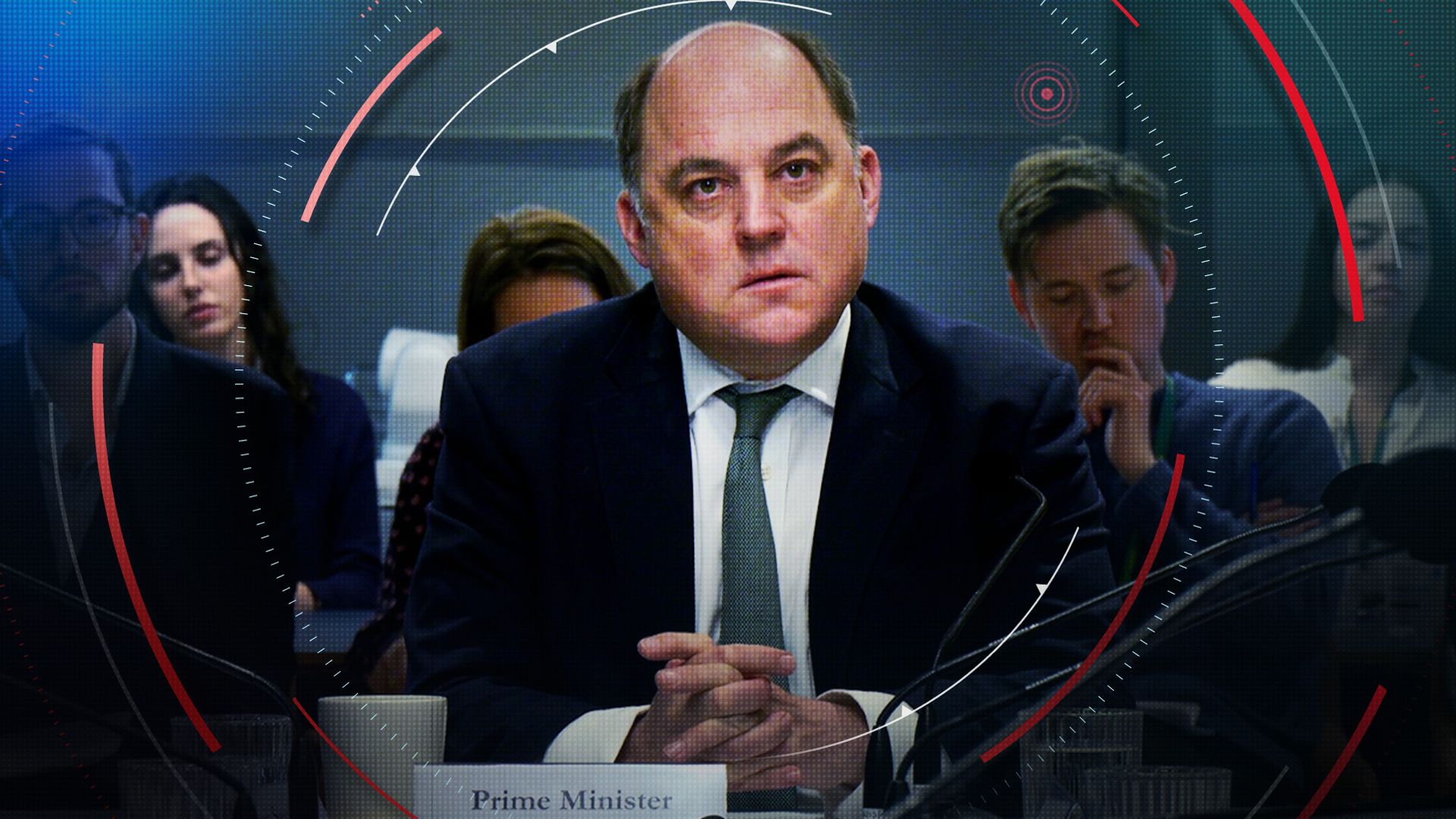
In the exercise, former Defence Secretary Sir Ben Wallace acts as the Prime Minister. As the crisis hits, he quickly discovers that alliance help is not an instant, magical shield. NATO requires consensus. During the simulated attack, the United States is represented by Professor Phillips O'Brien, playing a role deeply influenced by real-world political shifts toward isolationism.
The American response is not an immediate promise to deploy troops or counter-strike. Instead, it is cautious. The Americans offer intelligence sharing. They offer maritime surveillance. What they don't offer is an immediate blank check for World War Three.
This reveals a profound vulnerability in British strategic thinking. We have spent thirty years downsizing our conventional military forces under the assumption that we would never have to fight alone. Our army is at its smallest size since the Napoleonic era. We don't have the ammunition stockpiles to survive a prolonged conventional assault. If our allies hesitate for even forty-eight hours to debate the political fallout of a direct confrontation with a nuclear-armed Russia, the UK is entirely on its own.
The Chaos Inside the Cobra Bunker
When a national crisis erupts, the British government convenes in the Cabinet Office Briefing Rooms, famously known as Cobra. In the simulation, the room is filled with people who have actually run the country. Jack Straw sits as Foreign Secretary. Amber Rudd handles the Home Office. General Sir Richard Barrons acts as the Chief of the Defence Staff.
You would think this concentration of experience would create a smooth crisis response. It doesn't.
The simulation highlights an immediate, brutal logistical problem. In a real kinetic war involving high-precision Russian missiles, sitting in a single known basement room in Whitehall is a death sentence. The entire government would have to disperse immediately to secret, secure locations across the country.
Try running a coordinated military defence, managing public panic, and verifying intelligence reports when your leadership team is scattered across different subterranean bunkers with compromised communications.
The exercise shows that the early hours of an armed attack are defined entirely by what military experts call the fog of war. The team struggles to identify exactly what has been hit. Is the strike on Heathrow Terminal 4 an accident, a cyber-induced navigation error, or a deliberate attempt to paralyze the nation's transportation network? Without clear answers, the Attorney General, played by Baroness Helena Kennedy, must debate the legal thresholds of self-defence while missiles are actively detonating. It is a terrifying loop of bureaucracy meeting high-explosive reality.
The Total Breakdown of Public Communication
During the Cold War, the British government had a clear, albeit grim, plan for speaking to the public. The message was simple. Go in, stay in, tune in. The assumption was that citizens would sit quietly by a battery-powered radio waiting for official instructions from the BBC.
That world is dead.
If an attack happens now, the government is not just fighting Russian missiles. It is fighting the chaotic ecosystem of social media. The simulation addresses how a modern crisis would instantly ignite an explosion of digital disinformation.
Within minutes of the Heathrow explosion, millions of videos would flood TikTok, X, and WhatsApp. Hostile state actors wouldn't even need to hack our news channels. They would simply use troll farms and automated bots to spread conflicting rumors. Some posts would claim the government staged the attack. Others would say a nuclear blast is imminent, triggering immediate, uncontrollable gridlock on every major motorway as millions try to flee the cities.
The current UK emergency alert system, which was tested nationwide back in 2023, can send a text message to every smartphone in the country. But a text message cannot stop a stampede. The simulation exposes that our government has no modern playbook for competing against the viral speed of panic. If the public doesn't trust the source of information, or if the mobile networks collapse under the sheer volume of traffic, national resilience vaporizes.
We Burned the War Book Decades Ago
The most damning insight highlighted by the exercise is the total loss of our national defense muscle memory. Throughout the confrontation with the Soviet Union, the UK maintained a highly detailed, constantly updated document known as the War Book.
The War Book was a literal step-by-step instruction manual for the entire state. It told the food grid how to ration supplies. It told the transport sector how to requisition civilian trains and trucks for military use. It detailed exactly how hospitals would transition from elective surgeries to treating mass casualties.
When the Berlin Wall fell, successive British governments decided that history was over. We threw the War Book away. We embraced just-in-time supply chains for everything from antibiotics to artillery shells.
The Armed Attack episode shows the consequence of that negligence. When Sir Ben Wallace's fictional government tries to mobilize civil contingencies, they find an empty shelf. Professor Lucy Easthope, an expert on mass fatalities and civil disasters who participated in the simulation, makes it clear that our local councils and emergency services are completely unprepared for a state-level military assault. They are structured to handle localized floods or temporary power cuts, not sustained rocket bombardments that knock out the national grid for weeks.
The Reality of Kinetic Scale
We often look at modern conflicts like the war in Ukraine and view them as distant, regional tragedies. We fail to translate the raw math of those conflicts to our own geography.
Russia has spent years practicing what military theorists call long-range precision strikes. They don't need to sail an invasion fleet across the North Sea to destroy Britain. They can launch Kalibr cruise missiles from submarines hidden deep in the Atlantic or fire Kh-101 missiles from bombers flying safely inside Russian airspace.
If those missiles strike our critical infrastructure, the collapse is systemic. The UK relies heavily on an interconnected network of gas pipelines, undersea electricity cables, and data links. If a hostile state cuts the cables supplying electricity from continental Europe and bombs three major sub-stations on the mainland, large parts of the country go dark instantly.
Without power, water treatment plants stop working within twenty-four hours. Cash machines go offline. Food distribution networks freeze because supermarkets can't process digital payments and fuel pumps can't dispense diesel. An armed attack is not just a military problem for soldiers to solve. It is an immediate civilian catastrophe that targets the very baseline of human survival.
Shifting From Complacency to True Deterrence
The Sky News simulation shouldn't be treated as a piece of scary entertainment. It is an urgent warning about the price of complacency. We have treated national security as a line item on a budget spreadsheet that can be trimmed to fund other priorities.
If we want to avoid the nightmare simulated in the exercise, the UK needs to fundamentally change its approach to national resilience. We cannot rely entirely on the hope that a future US president will risk American cities to defend British infrastructure.
First, we must rebuild our strategic stockpiles. A nation that relies on just-in-time deliveries for its survival is inherently fragile. We need deep reserves of food, medical supplies, and critical engineering parts to keep the country running during a prolonged blockade or infrastructure collapse.
Second, the government needs to rewrite the War Book for the twenty-first century. This means creating clear, practiced protocols for how private tech companies, logistics providers, and local authorities will cooperate with the military during a national emergency.
Finally, we need to treat public resilience as a critical asset. Citizens should be educated on basic emergency preparedness without causing unnecessary panic. A population that knows exactly what to do, where to find verified information, and how to look after their neighbors in a crisis is a population that cannot be easily terrorized by foreign adversaries.
The lesson of the wargame is simple. The best way to ensure an armed attack never happens is to prove to any potential enemy that if they strike us, we are fully prepared to survive, adapt, and strike back. Right now, we aren't even close.