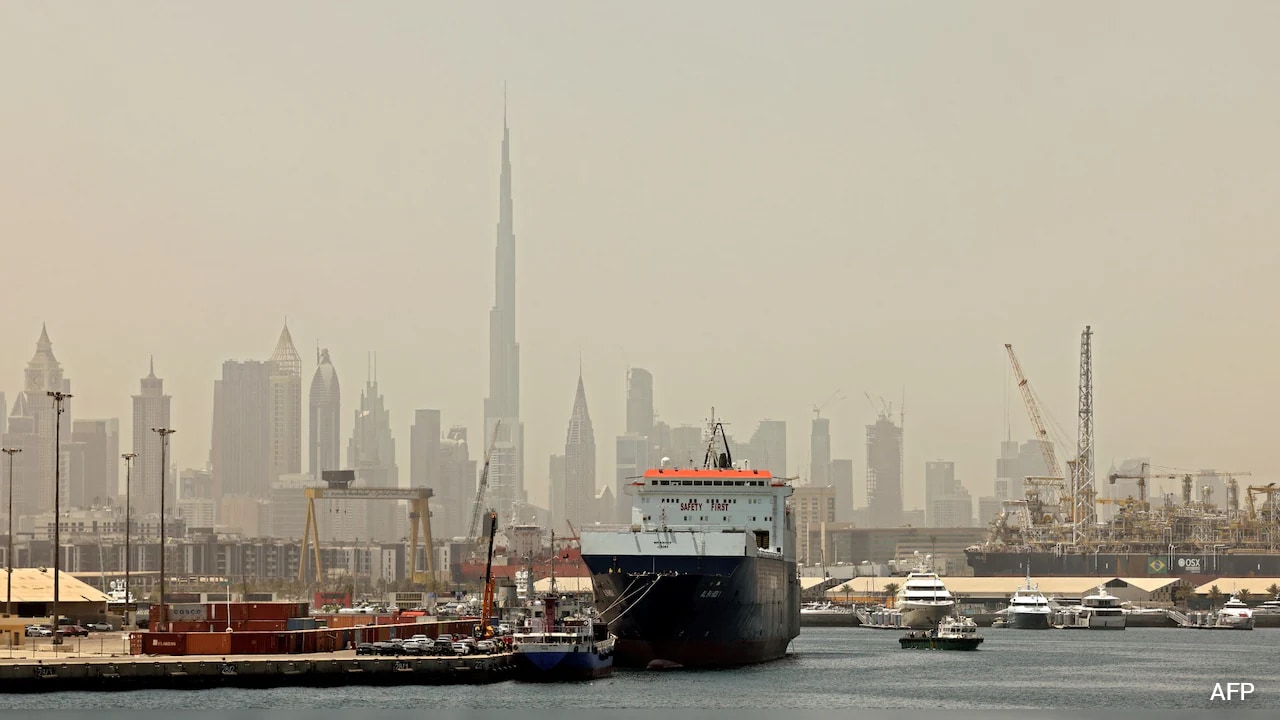
When activity at Jebel Ali, the crown jewel of Middle Eastern trade, plunges by a staggering 90 to 95 percent, you don't just sit around and wait for the geopolitics to fix themselves. You start moving mountains. Or in the case of the United Arab Emirates, you start pouring hundreds of millions of dollars into the coastline outside the Persian Gulf.
The UAE is currently fast-tracking a massive economic pivot. DP World, the Dubai-owned logistics titan, is locked in talks to build a brand-new multipurpose port and a fresh container terminal on the country's eastern coast in Fujairah. The goal isn't just commercial expansion. It's survival. They want to completely bypass the Strait of Hormuz, a narrow marine choke point that has turned into a shooting gallery.
For decades, the assumption was simple: the waters of the Gulf would remain open, and Jebel Ali would funnel goods from China to Africa without a hitch. The outbreak of the US-Israel-Iran conflict blew that assumption to pieces. Between cruise missile strikes hitting commercial tankers and thousands of drones flying across the sky, relying on a single, highly vulnerable bottleneck is a recipe for economic ruin.
The Logistics Blueprint to Sidestep a Choke Point
Let's look at the actual mechanics of what the UAE is pulling off here. If you can't sail through the front door, you create a back door.
The strategy relies entirely on geography. Fujairah sits comfortably on the Gulf of Oman, completely outside the mouth of the Strait of Hormuz. By creating a major freight hub here, container ships can drop off cargo without ever entering the Persian Gulf. From there, the cargo gets loaded onto trucks and trains, moving overland directly to Dubai, Abu Dhabi, and neighboring Gulf states.
[Incoming Cargo Ship]
       │
       ▼ (Bypasses Strait of Hormuz)
[Fujairah East Coast Port]
       │
       ▼ (Overland Transport via Road & Rail)
[Dubai / Abu Dhabi / GCC Markets]
It sounds simple, but the logistical heavy lifting is immense. This isn't just about throwing up a few cranes. The UAE Minister of Foreign Trade, Dr. Thani Al Zeyoudi, made it clear that the ultimate target is to reduce Hormuz dependency to exactly zero. The plan weaves together new highways, expanded rail corridors, and fresh pipelines.
They aren't starting from scratch, either. Abu Dhabi already pushes a portion of its crude through the Habshan-Abu Dhabi pipeline to Fujairah. Right now, crews are working to double that pipeline's capacity from 1.5 million to 3 million barrels per day. Shifting container freight follows the exact same logic: insulate the economy from Iranian military leverage.
The Realities of Replacing Jebel Ali
I hear a lot of analysts talk about this move as if Jebel Ali is being packed up and moved. Let's be realistic: that's not happening. Jebel Ali isn't just a port; it's a massive ecosystem built over decades, featuring a sprawling free zone, heavy manufacturing plants, and endless square miles of warehousing. You don't just copy-paste that onto the rocky shores of Fujairah over a weekend.
Company insiders are very clear about this. Jebel Ali will never be downsized. Instead, think of this new eastern gateway as an expensive, necessary insurance policy. It's a defensive measure designed to absorb the shock when things go sideways in the strait.
Right now, things are very sideways. Traffic through the strait has cratered to just a handful of ships a day. When the alternative is letting your main trade hub sit empty, spending a few hundred million dollars on an 18-month emergency build in Fujairah suddenly looks like a brilliant bargain.
Corporate Rivalries on the Eastern Shore
Building a port is a deeply political move inside the UAE, complicating the project's execution. The country is a federation of seven emirates, and they don't always share the same corporate interests.
DP World is owned by the Dubai government. However, the existing container infrastructure in Fujairah is operated by AD Ports Group—which is primarily controlled by the Abu Dhabi government—under a 35-year concession with the local ruling Al Sharqi family.
On top of that, you have Gulftainer, a Sharjah-based company, throwing $2 billion into expanding its own terminal at nearby Khor Fakkan on the east coast. The eastern coast is quickly becoming crowded, and DP World will have to carefully navigate these internal politics and local concessions to get its standalone facilities running smoothly.
What Happens Next
The UAE moves incredibly fast when it zeroes in on an infrastructure goal. If you're a logistics manager, supply chain strategist, or commodity trader, don't wait for the first container terminal to open before adjusting your plans.
- Audit Your Supply Chain: Map out how much of your current regional distribution relies on ships entering the Persian Gulf.
- Assess Freight Budgets: Factor in the reality that overland transit from Fujairah to Dubai will alter your per-mile freight costs, even if it saves you a massive headache on maritime war-risk insurance premiums.
- Secure Logistics Space Early: Keep a close eye on warehousing and industrial land allocations around Fujairah and Dibba. Space on the eastern coast is about to become premium real estate as the region prepares for prolonged geopolitical instability.
The old days of relying on a single maritime gateway are over. Diversification isn't a buzzword anymore; it's the only way to keep the shelves full.