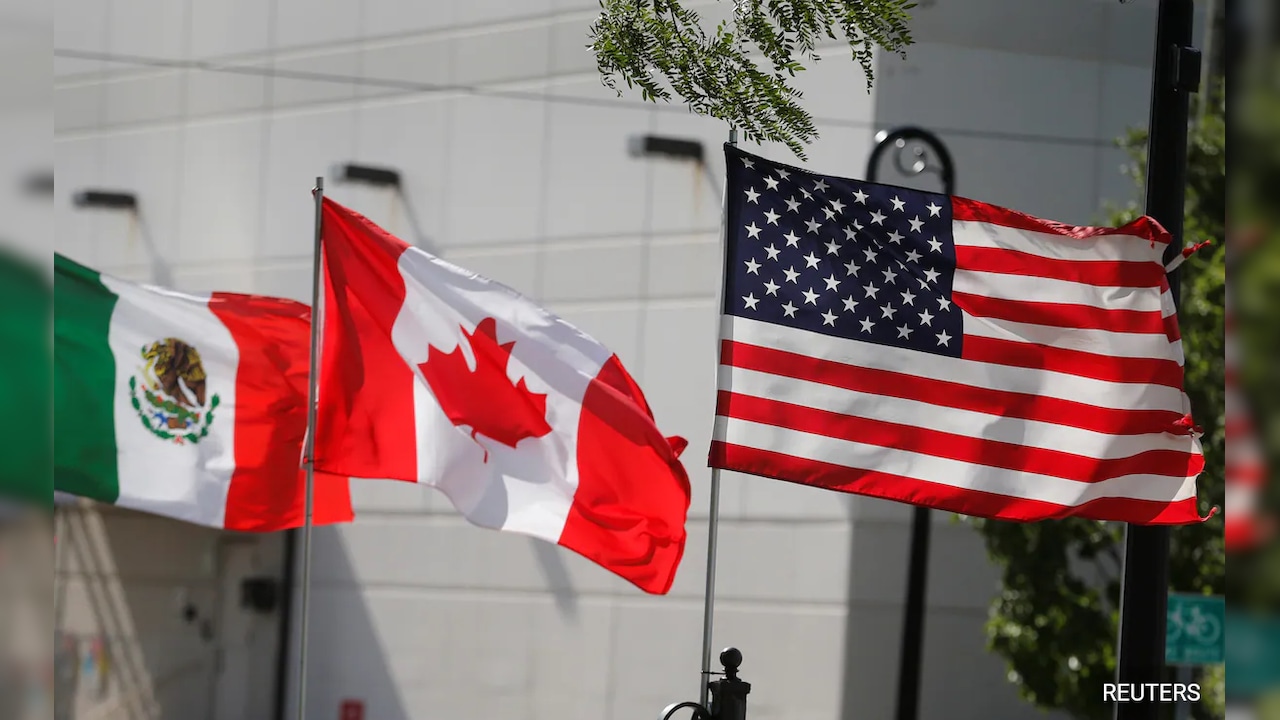
Donald Trump just dropped a massive 50 percent tariff hammer on Canadian goods, and if Washington expected Ottawa to panic, they miscalculated.
Instead of scrambling, Prime Minister Mark Carney issued a steady response, making it clear Canada is ready to intensify trade talks while standing firm against pressure from south of the border. The White House gave a 30-day window before these sweeping import taxes kick in. That timeline isn't an accident. It's a high-stakes pressure tactic designed to force quick concessions on long-standing friction points like dairy, auto manufacturing, and provincial alcohol bans. Also making waves recently: Why Iran Missile Barrages Against Bahrain Put Global Shipping And Energy Markets On Edge.
Canada isn't playing from a weak position. While Washington relies on heavy-handed maneuvers under Section 338 of the 1930 Tariff Act, Ottawa has quietly spent the last year building economic buffers, opening new global trade corridors, and unifying domestic political leadership across provincial lines.
What Donald Trump's New Tariffs Actually Target
The White House signed three separate proclamations targeting a wide slice of the Canadian economy. The headline figure is 50 percent, covering everything from motor vehicles and parts to dairy products, alcoholic beverages, wine, hockey sticks, and cement. Additional details on this are explored by USA Today.
Washington claims these duties retaliate against unequal treatment of American products. U.S. officials point directly at provincial boycotts of American alcohol, Canada's supply-managed dairy protections, and Canadian taxes on foreign-built auto parts that fall outside the Canada-United States-Mexico Agreement.
Targeted Sectors (50% Duty):      Exempted Sectors (0% Duty):
- Motor vehicles & auto parts     - Crude oil & energy products
- Dairy products & cheeses        - Critical minerals
- Beer, wine, & spirits           - Potash & fertilizers
- Consumer items (hockey sticks)  - Seafood & fish
- Industrial goods (cement)
The exemptions tell you everything about who actually holds leverage here. Washington deliberately left crude oil, natural gas, critical minerals, potash, and seafood completely untouched. American refiners need Canadian heavy crude to run their Gulf Coast facilities. American farmers need Canadian potash to fertilize their crops. Taxing those essential commodities would immediately drive up fuel and food prices for American voters.
By carving out energy and raw materials, the White House tried to craft a surgical strike that hurts Canadian manufacturers without triggering immediate domestic backlash inside the U.S.
Mark Carney's Strategy and Why Canada Isn't Panic-Selling
When Mark Carney addressed the nation after the announcement, his message wasn't one of outrage. It was calculated calm. Calling the U.S. tariffs a direct violation of CUSMA, Carney reminded observers that Canada has already matched previous American trade penalties where appropriate while offering concrete proposals to modernize the agreement.
Carney's approach differs sharply from past trade skirmishes. His background running both the Bank of Canada and the Bank of England gives him a technical understanding of global capital flows that few politicians possess. He knows that throwing emotional rhetoric at Washington doesn't work. Practical leverage does.
Ottawa has been actively preparing for this exact scenario. Over the past year and a half, Canada signed more than 20 separate economic and security deals with international partners across Europe, Asia, and Latin America. Carney explicitly set a strategic goal to double Canada's non-U.S. exports over the next decade.
By systematically opening alternative markets for Canadian wood, tech, and agricultural exports, the federal government is slowly chipping away at its historical economic dependence on the United States. When you aren't backed into a single buyer's corner, you don't have to accept bad terms at the negotiating table.
The Domestic Pushback and the Role of Provincial Premiers
It isn't just Ottawa taking a firm stance. Provincial leaders across Canada are digging in.
Ontario Premier Doug Ford didn't mince words following the White House announcement, urging a dollar-for-dollar, tariff-for-tariff response if the U.S. duties go into effect after the 30-day grace period. Ontario sits at the heart of North America's integrated automotive supply chain. A auto part produced in Hamilton or Windsor might cross the Detroit River five or six times before sitting in a finished vehicle in a Michigan dealership. Disrupting that chain with a 50 percent penalty hurts Midwestern assembly plants just as badly as Canadian suppliers.
Meanwhile, provincial alcohol distribution boards maintain their ongoing boycott of U.S. wine and spirits. Canadian premiers made it clear from day one: lift the duties on Canadian steel, aluminum, and manufacturing, and the bourbon and Napa Valley wines return to Canadian shelves. Until then, American distillers and winemakers remain locked out of one of their largest export markets.
This cross-party, federal-provincial alignment creates a rare political wall. Party politics usually fracture Canadian policy, but aggressive moves from Washington have united federal Liberals, provincial Conservatives, and regional leaders behind a single defense strategy.
The Legal Flaws in Washington's Section 338 Playbook
To impose these new 50 percent duties, the Trump administration bypassed standard national security justifications and reached back to Section 338 of the Tariff Act of 1930. This obscure provision gives the executive branch power to impose tariffs on countries deemed to discriminate against American commerce.
There is a big catch: Section 338 is almost completely untested in modern trade courts.
Earlier this year, the U.S. Supreme Court struck down several global tariffs that the administration attempted to enact using emergency executive authority. By shifting to Section 338, Washington is trying an alternative legal mechanism to sidestep earlier court rulings. Trade lawyers in both Ottawa and Washington are already preparing legal challenges under CUSMA dispute mechanisms and international trade law.
Because CUSMA remains a legally binding trilateral treaty ratified by the U.S. Congress, unilateral duties on covered goods like motor vehicles represent a direct breach of contract. Legal battles take time, but the uncertainty itself hurts American businesses trying to maintain stable supply contracts with Canadian partners.
Who Actually Pays for These Tariffs
A fundamental misconception persists about how tariffs operate. Foreign governments do not pay tariffs to the U.S. Treasury. American importers pay them at the port of entry.
When a 50 percent duty hits a shipment of Canadian-built vehicle parts or structural cement entering New York or Ohio:
- The U.S. buyer pays the tax directly to U.S. Customs.
- The U.S. buyer either absorbs the cost, cutting into profits, or passes it directly to American consumers.
- American construction firms face higher building costs for cement and materials.
- Auto buyers face higher sticker prices on vehicles reliant on cross-border supply chains.
Carney explicitly highlighted this reality, pointing out that ongoing trade actions have consistently driven up costs for everyday families, particularly inside the United States. In a high-inflation environment, adding a 50 percent markup on imported industrial and consumer goods puts upward pressure on consumer price indexes across American cities.
What Happens During the 30-Day Window
The next 30 days will determine whether this threat turns into an economic reality or serves as a aggressive bargaining chip.
The White House intentionally built in a 30-day delay before enforcement begins. That creates a narrow runway for intense negotiations. Canadian negotiators are heading back to the table with a comprehensive set of proposals aimed at modernizing CUSMA and addressing specific administrative friction points without giving up domestic sovereignty.
Ottawa isn't offering a surrender. They're offering a pragmatic path out of an economic stalemate that threatens businesses on both sides of the border.
How Businesses Should Navigate the Uncertainty
If your business relies on cross-border trade between the U.S. and Canada, sitting back and waiting for the 30-day clock to expire isn't an option. You need to take concrete steps right now to protect your operational margins.
- Audit your supply chain classification codes. Verify whether your specific product line falls under the exempted categories like critical minerals or energy products, or if it touches targeted tariff codes like autos and consumer goods.
- Review duty drawback eligibility. If you import Canadian components into the U.S. to manufacture goods that are later re-exported, explore duty drawback programs to recover paid tariffs.
- Re-examine contract terms. Check your current supplier agreements for Incoterms (like DDP vs. FOB). Make sure it's clear which party is contractually responsible for unexpected import duties and border taxes.
- Establish alternative routing corridors. Evaluate short-term storage and warehousing options inside domestic borders to buffer against sudden cost swings or shipment delays while trade talks intensify over the coming weeks.



:max_bytes(150000):strip_icc():focal(999x0:1001x2)/rishi-sunak-akshata-murthy-10-78981f8236984c69b70bc15bcb3d49e9.jpg)