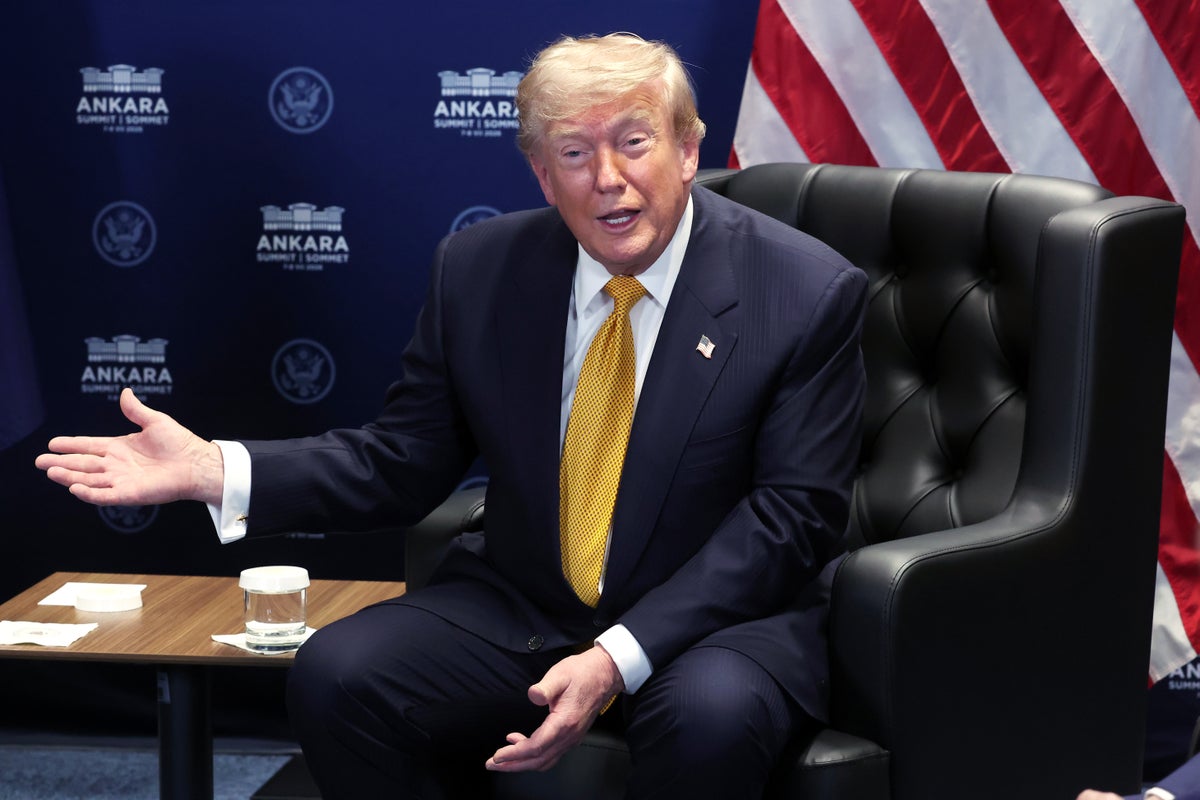
The NATO summit in Ankara just erupted into absolute chaos. Standing right next to a visibly uncomfortable NATO Secretary General Mark Rutte, US President Donald Trump dropped a geopolitical bomb. He announced that he has ordered Treasury Secretary Scott Bessent to completely cut off all trade with Spain.
He didn't hold back. He called Spain a "terrible partner," a "wasted cause," and even labeled its leadership "bad people." Turning directly to Bessent in front of the press corps, Trump said, "Take it immediately. Don't even talk to them." Bessent nodded and replied, "Yes, sir."
It makes for incredible television. It dominates the news cycle. But if you look past the theatrical anger, the reality of global economics and international law tells a completely different story. This threatened trade freeze is practically impossible to pull off without starting a catastrophic economic war with the entire European continent.
Here is the real breakdown of what happened in Turkey, why Spain is in the crosshairs, and why this dramatic trade ban will almost certainly hit a legal brick wall in Brussels.
The Real Triggers Behind the Spain Grudge
Trump does not just wake up and pick a fight with a European ally for no reason. This blowout is the boiling point of two major grievances that have been simmering behind closed doors for months.
The Five Percent Defense Target
The first issue is military spending. Washington has been aggressively pushing all NATO members to commit to a brand-new defense spending target of 5% of their Gross Domestic Product by the year 2035. That is a massive jump from the old 2% baseline.
Spain has historically lagged behind on defense budgets. To be fair, Madrid made significant progress recently. Under Prime Minister Pedro Sánchez, Spain boosted its defense spending to 2.1% of GDP in 2025, a significant climb from the 1.4% it recorded back in 2021. Mark Rutte actually tried to defend Spain during the press conference, pointing out this exact progress to Trump.
Trump was entirely unmoved. Spain remains the absolute only NATO member state that flatly refused to sign the new 5% pledge. In Trump’s eyes, if you do not pay the full entry fee, you do not get the benefits of American partnership.
The Airspace Ban During the Iran Conflict
The second, much more explosive trigger involves the recent military conflict with Iran. When Washington launched bombing campaigns against Iranian targets, the US military expected to rely heavily on its long-standing strategic hubs in Spain. Specifically, Naval Station Rota and Morón Air Base.
Sánchez’s leftist minority government drew a hard line. Citing constitutional limits and a desire to avoid regional escalation, Spain explicitly blocked the US military from using these bases or even entering Spanish airspace for any offensive operations against Iran.
That decision infuriated the Pentagon. A leaked internal email from April detailed a list of potential retaliatory measures against allies who failed to support the military campaign. Spain sat right at the top of that list. This is not even the first time Trump threatened to pull the plug over it. He made an almost identical threat back in March, which ultimately resulted in zero actual policy changes.
The Irony of the Trade Numbers
During his Ankara outburst, Trump claimed that Spain makes "so much money with us" and vowed that Washington would make sure they make a lot less.
The actual trade data exposes a major flaw in that argument. A spokesperson for the Spanish government responded very calmly to the threats, reminding reporters that the United States actually runs a trade surplus with Spain. In plain terms, America sells more goods and services to Spain than it buys from them.
Spain is the world’s leading exporter of olive oil, and it sends a steady stream of automotive parts, steel, and chemical products across the Atlantic. But the flow of American liquefied natural gas, aerospace technology, and machinery going into Spain outweighs what comes out. If a total trade halt somehow occurred, American exporters would lose a highly lucrative market.
The Spanish administration is treating this as political theater. They noted that economic ties are forged and maintained by private enterprises, not by executive decrees in Washington.
The Brussels Wall and the Power of the EU
The single biggest reason this trade ban will fail is the legal structure of the European Union. Spain does not operate its own independent trade policy.
When a country joins the EU, it hands over all external trade authority to Brussels. The European Commission negotiates and manages trade deals for all 27 member states as a single, consolidated bloc. Under international trade law and the rules of the World Trade Organization, you cannot legally embargo or slap targeted trade bans on a single EU member state without applying those exact same measures to the entire European Union.
If the US Treasury tries to stop Spanish ships from docking or bans Spanish products from crossing US customs, it is effectively declaring a trade war on Germany, France, Italy, and 23 other nations.
Brussels has already made its stance perfectly clear. EU trade spokesman Olof Gill stated immediately after the Ankara speech that Europe will always protect the economic interests of its member states. He reminded Washington of the joint trade pact signed last year, noting that Europe expects the US to honor its commitments. Trump cannot isolate Madrid without breaking treaties with the largest trading bloc on earth.
Aggressive Bargaining on Multiple Fronts
This attack on Spain is part of a broader, highly aggressive approach to the entire NATO alliance. During the exact same sessions in Ankara, Trump renewed his controversial demand that Denmark hand over control of Greenland to the United States. That demand immediately drew a fierce, angry response from Copenhagen, with Danish officials vowing to defend every single inch of their sovereign territory.
Trump also explicitly threatened to withdraw all American troops from European soil if alliance members do not immediately accelerate their military budgets. He uses massive trade threats as an aggressive bargaining chip to force sovereign nations to change their defense and foreign policy platforms.
Sometimes these high-pressure tactics yield concessions. Sometimes they just create deep, permanent diplomatic friction among historic allies.
What to Do Next
If you are an investor, business owner, or logistics manager dealing with transatlantic trade, do not panic log into your brokerage account to sell off European assets based on this Ankara press conference.
Keep your eyes fixed firmly on Brussels. Watch the European Commission for any signs of formal retaliation or escalating rhetoric. The real risk is not a isolated embargo on Spanish olives. The real risk is a broader, systemic breakdown in US-EU trade relations if Washington attempts to bypass European customs laws.
Treat the headlines coming out of the summit as a high-stakes diplomatic poker game. The structural legal barriers protecting European trade mean that executing a single-country ban is nearly impossible without triggering a global economic crisis that Washington simply cannot afford.