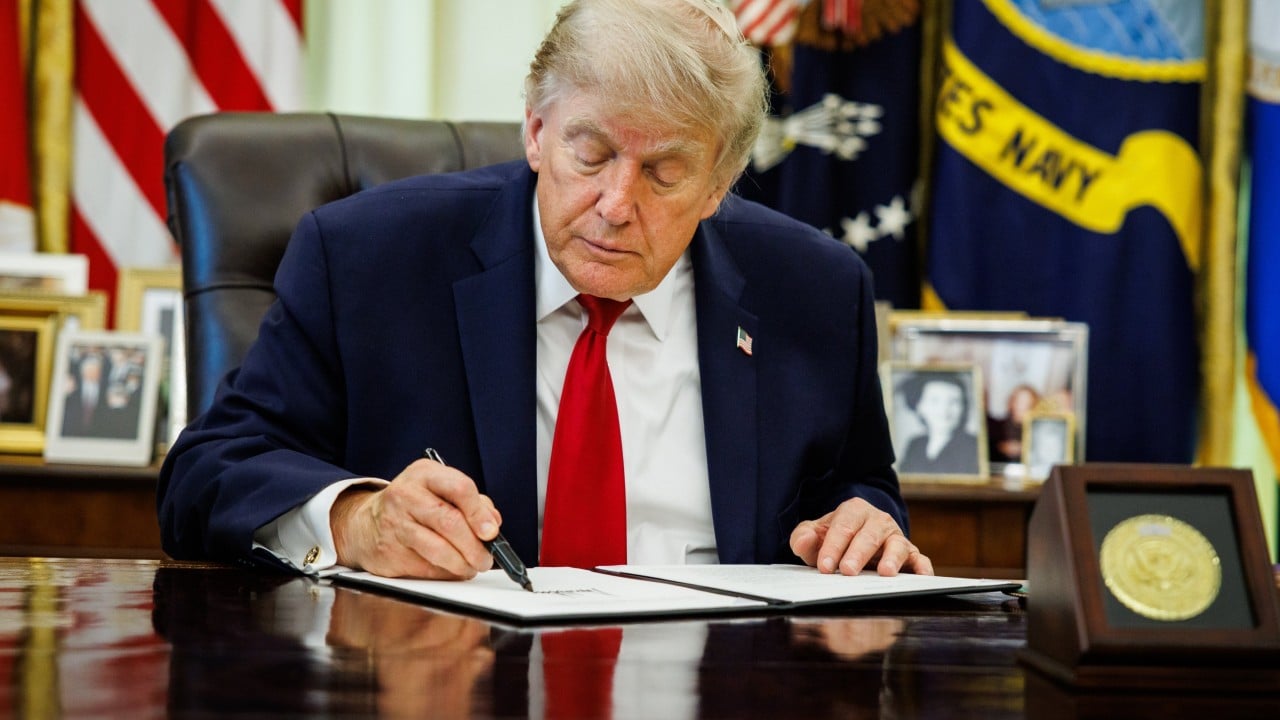
Pentagon suppliers face a hard deadline. The White House signed an executive order shutting down the loopholes defense contractors used to buy military minerals tied to China.
If you build fighter jets, radar systems, or precision missiles for the U.S. military, your supply chain just became your biggest liability. The order restricts waiver approvals for critical materials sourced from foreign adversaries, forces prime contractors to map every tier of their supply networks, and requires defense firms to replace unreliable foreign suppliers with domestic or allied alternatives.
This isn't a simple policy tweak. It's an aggressive overhaul of how the U.S. military buys raw materials.
The Loophole Machine Is Closing Down
For years, federal law under 10 U.S.C. 4872 barred the Department of Defense from procuring strategic minerals—such as samarium-cobalt magnets, neodymium, tantalum, and tungsten—from designated covered nations: China, Russia, North Korea, and Iran.
In practice, defense contractors routinely bypassed these rules. When a contractor couldn't find a domestic supplier or claimed an foreign alternative was too expensive, the Pentagon handed out national security waivers. These waivers allowed military hardware to ship on schedule while keeping Chinese-processed materials inside American weaponry.
The new order strips away that flexibility. Defense officials can no longer hand out waivers just to keep projects on budget or on schedule. When a contractor asks for an exemption today, they must submit an explicit mitigation plan outlining exactly how they intend to shift production back to domestic soil or trusted partner nations.
If a contractor relies on a single-source supplier linked to Beijing, they can't just throw their hands up and request an exception. They have to fix the link.
Deep Supply Chain Mapping Becomes Mandatory
Most major defense firms don't actually know where their raw materials come from. A prime contractor builds a missile casing, but they buy components from a sub-tier vendor, who buys processed alloys from a distributor, who buys refined metals from a smelter in Asia.
Under the new directives, that lack of visibility is no longer legally acceptable. The order mandates comprehensive supply chain illumination across all key defense procurements. Prime contractors and sub-tier vendors must map every layer of their supply chain right down to the original mine and refining facility.
Contractors must implement formal, written procedures to vet every subcontractor. If a vendor uncovers a bottleneck or a single point of failure tied to an unreliable foreign supplier, they are legally required to find and qualify an alternative source as quickly as possible.
This requirement puts massive pressure on corporate compliance teams. Knowing your direct vendor isn't enough anymore. You have to know your vendor's vendor, and where that vendor gets its raw ore.
Why Processing Dominance Is China's True Advantage
Many analysts mistakenly talk about mineral extraction when discussing critical material vulnerabilities. America actually mines some of these raw materials locally or buys them from friendly nations. The bottleneck isn't digging rocks out of the ground. The bottleneck is refining those rocks into high-purity industrial inputs.
China dominates global refining capacity. Beijing controls between 40% and 90% of the world's processing capacity for key energy and defense materials, including lithium, cobalt, antimony, dysprosium, and graphite. Even when rare earth minerals are mined in Australia or North America, they are frequently shipped to Chinese processing plants before they can be used in defense manufacturing.
When Beijing expanded export controls on gallium, germanium, antimony, and specialized processing technologies, it exposed how vulnerable Western defense manufacturing really is. Modern military hardware requires those specific refined inputs:
- Gallium and germanium power military radar arrays, high-frequency microelectronics, and night-vision optics.
- Antimony is required for armor-piercing munitions, night-vision goggles, and military pyrotechnics.
- Heavy rare earth elements like dysprosium and terbium allow permanent magnets to operate under extreme temperatures inside jet engines and missile guidance systems.
- High-purity synthetic graphite forms the anodes required for defense battery systems and aerospace insulation.
By targeting processed minerals rather than raw ore, the executive order hits the exact node where China holds the most leverage.
The Allied Strategy and Price Floors
The White House acknowledges that the U.S. cannot build a completely self-contained domestic mineral pipeline overnight. Opening a new mine in North America takes years due to environmental reviews, permitting hurdles, and capital requirements. Refining facilities are equally expensive and complex to build.
To bridge this gap, the administration is pairing internal defense procurement rules with bilateral trade agreements. The U.S. is expanding partnerships with allied nations—including Australia, Japan, Malaysia, Thailand, Argentina, and Cambodia—to build alternative processing infrastructure outside China's reach.
The policy addresses another major structural issue: predatory pricing. Historically, whenever Western firms invested in domestic processing plants, Chinese state-subsidized refiners flooded the market, crashed global prices, and drove those Western competitors into bankruptcy. Once the Western facilities closed, prices spiked again.
To counter this tactic, current trade negotiations incorporate explicit price support mechanisms, such as price floors. By guaranteeing a stable minimum price for refined critical minerals, the government aims to give private investors the confidence to build processing plants without fear of being priced out of the market by foreign state-backed cartels.
The Operational Reality for Defense Suppliers
If you manage procurement, legal compliance, or manufacturing for a defense contractor, the operational rules of engagement have shifted overnight. You can no longer rely on paper certifications from sub-tier suppliers.
Here is what defense contractors must do immediately to remain compliant:
- Audit every bill of materials for active defense contracts. Track all strategic metals, rare earth magnets, and specialized alloys back to the original smelter or refiner.
- Identify every waiver currently active under 10 U.S.C. 4872. Draft concrete, time-bound mitigation plans to replace those foreign components with domestic or allied alternatives.
- Establish strict written vetting procedures for all sub-tier vendors. Force suppliers to disclose the geographic origin of their processed inputs.
- Accelerate qualification protocols for alternative suppliers based in approved partner countries like Australia, Japan, or South Korea.
- Prepare internal compliance teams for regulatory audits. Defense procurement officers will evaluate supply chain transparency as a core criteria when awarding new contracts.
Companies that move quickly to clean up their supply chains will secure a distinct competitive advantage in federal procurement. Those that continue to rely on legacy waivers risk losing major military contracts entirely.