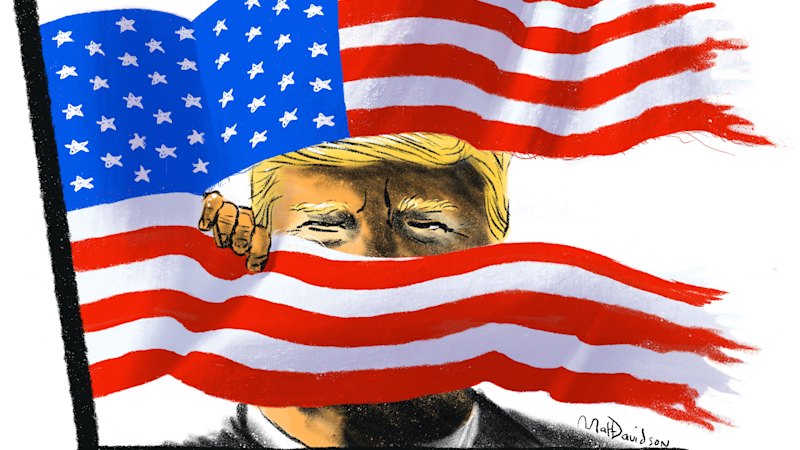
America is hurtling toward July 4, 2026, and the mood isn't exactly festive. If you look at the headlines or scroll through social media, it feels like the country is tearing itself apart at the seams. People love to blame Donald Trump for this toxic atmosphere. They call it a cold civil war, a tribal standoff where no one listens, and everyone is angry.
They're not wrong about the anger. But they are dead wrong if they think this is a new disease.
The truth is that deep, bitter division is the default state of the American experiment. As the United States hits its semiquincentennial—its 250th birthday—this ferocious internal warfare isn't an aberration. It's the most authentic way the country could possibly mark the occasion. America was born in conflict, sustained by friction, and has always used partisan rage as its primary fuel source.
The Myth of a Once-United Republic
We've been fed a sanitized version of American history. It's a neat little story featuring noble men in powdered wigs who stood shoulder-to-shoulder in Philadelphia, completely unified in their vision. It's pure fiction.
The Revolutionary War wasn't a unanimous uprising. It was a messy, violent civil war. Roughly a third of the colonists wanted independence, a third wanted to stay loyal to the British Crown, and the rest just wanted to be left alone. Neighbors spied on neighbors. Families fractured. The birth of the nation was an ugly, polarized affair.
Once the British left, the internal fighting didn't stop; it just changed venues. The 1790s saw political vitriol that makes today's cable news look like a polite tea party. Thomas Jefferson’s camp accused John Adams of having a "hideous hermaphroditical character." Adams’s loyalists fired back, claiming Jefferson would introduce open murder and robbery to the nation.
Fistfights broke out on the floor of Congress. Andrew Jackson faced down threats of nullification from South Carolina. Then came the actual Civil War, a bloody rupture that cost hundreds of thousands of lives. The 1960s brought assassinations, riots, and a generational divide over Vietnam that seemed utterly permanent.
When you look at the broad arc of the past two and a half centuries, the quiet periods are the outliers. The chaos is the baseline.
Donald Trump as a Mirror, Not a Cause
It's easy to look at Donald Trump's return to the presidency in 2026 and conclude he broke the system. His rallies are aggressive, his rhetoric ignores traditional political norms, and his policy goals challenge long-standing institutions. He thrives on drawing sharp lines between "us" and "them."
But Trump didn't invent the cultural and economic fractures running through America. He just built a massive megaphone next to them.
The resentment driving today's cold civil war has been baking for decades. It's the byproduct of hollowed-out manufacturing towns, a growing disconnect between coastal elites and the heartland, and a deep-seated distrust of institutions like the media, the courts, and federal agencies. Gallup polling has shown a steady, decades-long drop in public trust across almost every major institution.
Trump recognized this anger and weaponized it. By treating politics as an all-out cultural war, he gave a voice to millions who felt ignored, while simultaneously horrifying millions of others who believe he poses a fundamental threat to democratic norms. He acts as a mirror reflecting the country's pre-existing fractures back at itself.
The Architecture of Friction
The foreign observers looking at America right now often view the constant gridlock and social media warfare as a sign of imminent collapse. What they miss is that the American system was deliberately built to manage conflict, not to create harmony.
The U.S. Constitution wasn't designed for a smooth, efficient government. The Founders were deeply terrified of concentrated power. They created a messy system of checks and balances specifically to slow things down and force different factions to fight it out. The presidency, the two houses of Congress, the Supreme Court, and the individual states are all supposed to be in constant tension.
- Federalism: States like Texas and California run entirely different socio-economic experiments within the same national borders.
- Separation of Powers: The executive branch and the legislature are built to clash, regardless of which party holds the keys.
- The Judicial Veto: A lifetime-appointed Supreme Court can upend decades of legislative consensus with a single ruling.
This architecture means that friction is a feature, not a bug. The system assumes Americans will disagree passionately about almost everything. It forces those disagreements into a continuous political cage match.
Surviving the Semiquincentennial
So, how does a nation celebrating 250 years navigate a cold civil war without letting it turn hot?
It starts by discarding the naive hope that everyone will suddenly agree or that some magical leader will unite the country. That isn't going to happen. The polarization isn't a phase that will vanish after the next election cycle.
Instead of searching for a non-existent unity, the goal should be managing the conflict so the machinery of the republic keeps running. That means protecting the foundational rules of the game—like free speech, open debate, and peaceful transitions of power—even when you absolutely despise the people winning the current round.
If you want to understand where America is heading as it hits this major milestone, stop looking for signs of harmony. Accept that the noise, the anger, and the endless political legal battles are exactly what American history looks like in real time.
Take a hard look at the local institutions around you. The national political theater is designed to keep you angry and glued to a screen. Focus your energy on your city council, your local school board, and your immediate community. That's where the actual work of keeping the country together happens, far away from the federal circus. The big show in Washington will always be loud and fractured. It's been that way for 250 years, and it's not changing now.