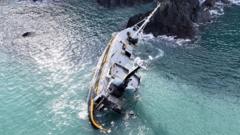
Leaving a 25-meter ship to rot on a jagged coastline isn't an option anymore. When the guard vessel GV Resolute smashed into the rocks at Aber Hywel back in December 2025, it didn't just trigger a terrifying midnight rescue. It set off a ticking environmental time bomb. After seven months of being battered by the Irish Sea, the battered hull is finally gone, chopped into pieces by salvage teams who had to fight brutal tides just to clear the coast.
Most people think removing a shipwreck means hooking it up to a massive crane and towing it away. If only it were that simple. The reality is a brutal, expensive game of mechanical surgery conducted in freezing, unpredictable waters.
Why Tying a Rope and Towing a Shipwreck Fails
The GV Resolute, valued at over £250,000 before the crash, was serving as a guard boat for an Irish offshore wind farm when rough seas and force seven winds drove it ashore. By the time the storm cleared, the vessel was jammed so tightly into the rocky coastline below the Penrhyn caravan park that pulling it off in one piece was physically impossible.
A 3D seabed survey in February revealed the truth. The vessel's hull was completely wedged. The stern and deck were already drowning at high tide, and the hold was flooded with sea water. If you try to drag a grounded ship like that, you end up ripping the bottom out, tearing the remaining metal apart, and spilling whatever contents are left into a marine environment.
Local experts knew the area couldn't handle a massive spill. Pembrokeshire's coast is a vital breeding ground for wintering seabirds like razorbills. Contractors had to act fast, draining 10,000 liters of fuel and oil in January before the main structure disintegrated.
Inside the Destruction of the GV Resolute
When pulling fails, you chop. Specialist marine contractors Jevingtons Logistics moved in with a 36-meter barge, the tug Forth Trojan, and a workboat named Handfast. They set up a strict 500-meter exclusion zone to keep curious kayakers and small boats back, and they got to work with heavy machinery.
The process is methodical and dangerous.
- The Big Cuts: Salvage crews used a massive excavator equipped with heavy-duty hydraulic shears mounted directly on the barge. This machine literally chewed the ship into five massive sections.
- The Fine Slicing: Once the big chunks were separated, workers used oxy-propane torches to slice the steel into smaller, manageable pieces that could fit into scrap skips.
- The Final Sweep: It wasn't just about the visible boat. Crews are now scanning the seabed and the surrounding rocks with divers and sensors to make sure not a single shard of metal or debris is left to wreck local fishing nets.
In total, the operation is pulling roughly 110 tonnes of steel out of the water. Every single bit of it is being shipped to Fishguard Port to be processed and recycled.
The Human Toll and What Comes Next
While the physical cleanup is winding down, the legal fallout is just starting. The Maritime and Coastguard Agency launched a criminal investigation into how the ship ended up on the rocks in the first place, resulting in an official caution issued to an unnamed offender.
But the real heroes here were the volunteers. During the initial rescue on that stormy December night, the conditions were so bad that a rescue helicopter and the all-weather lifeboat couldn't safely reach the ship. Fishguard's inshore lifeboat crew had to brave the waves to pull the four crewmen off. One worker was even swept overboard into the freezing sea during the chaos, saved only by the fast maneuvering of lifeboat helm Warren Bean.
If you are a mariner or local boat owner in Pembrokeshire, keep your distance from the Aber Hywel area. The exclusion zone remains active while the final seabed sweep finishes up, and crews are still monitoring VHF channels 16 and 14 for local traffic movements around Fishguard Harbour.