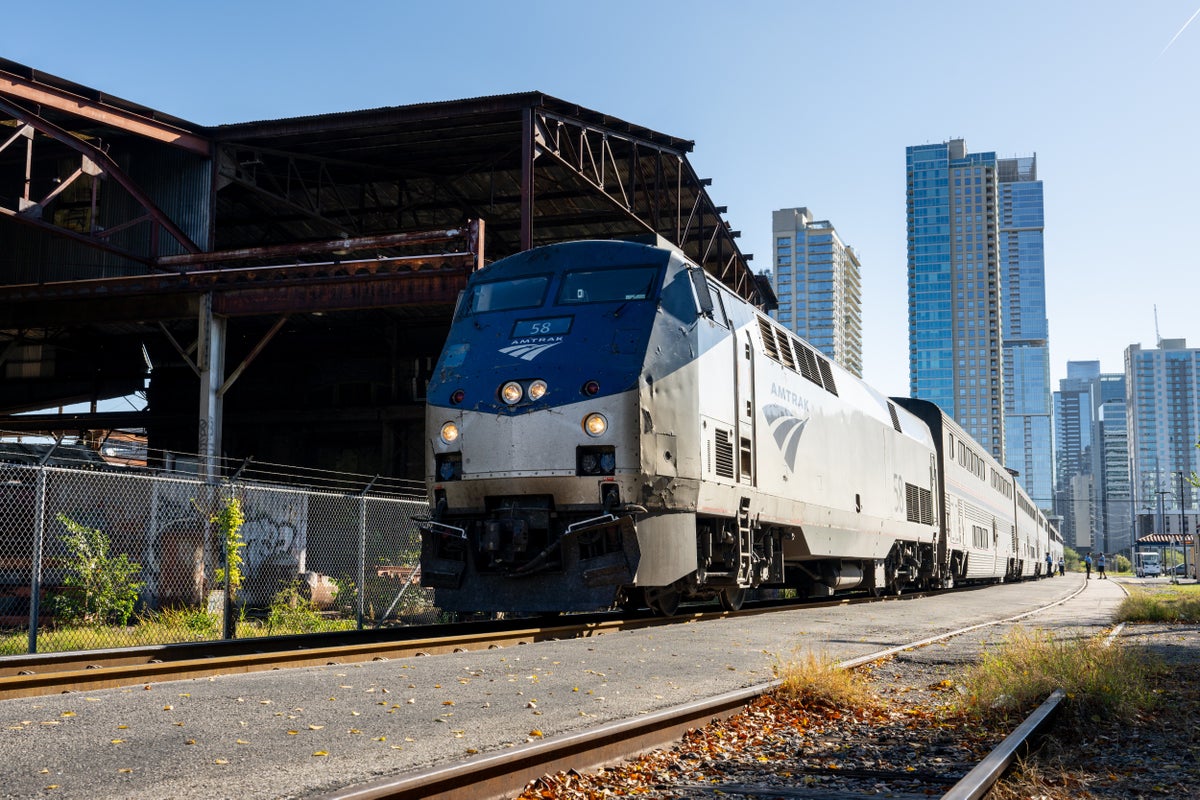
You are standing on a roasting concrete platform, sweat dripping down your neck, staring at a departure board that keeps pushing your train back. Ten minutes. Twenty minutes. An hour. When the announcement finally crackles over the loudspeaker, the voice blames "heat-related speed restrictions."
It sounds like a lazy excuse. How does hot air slow down a giant steel machine? For a more detailed analysis into similar topics, we recommend: this related article.
The truth is much more alarming. If that train ran at its normal speed, it could literally tear the tracks out of the ground or derail at eighty miles per hour. The physics of metal and extreme heat are working against our aging transit systems. As summer heat waves shatter records across the country, our entire rail network is buckling under the pressure.
Here is what is actually happening beneath your feet when the mercury rises, and why the solution is not as simple as just laying down stronger steel. To get more information on this issue, extensive reporting can be read on Travel + Leisure.
Steel Under Pressure
To understand why trains have to crawl during a heat wave, you have to look at how modern railroad tracks are put together.
In the old days, tracks were laid in short segments with gaps between them. You probably remember the rhythmic click-clack sound of old train rides. That sound was the wheels passing over those gaps. Those spaces were there for a reason: they gave the steel room to expand in the summer and contract in the winter.
But jointed rail has a massive downside. Those gaps wear down wheels, damage the ends of the rails, and require constant, expensive maintenance.
To solve this, modern railroads use Continuously Welded Rail (CWR). These are massive, unbroken stretches of steel welded together into single pieces that can be miles long. CWR offers a incredibly smooth ride, lets trains travel much faster, and lasts far longer.
But we traded one problem for another. Without those joint gaps, the expanding metal has nowhere to go.
When the sun beats down on a steel rail, the metal does not just match the air temperature. It absorbs the heat. On a ninety-degree day, the rail itself can easily spike to 130 or 140 degrees Fahrenheit.
Because the rail is locked in place by heavy metal clips and wooden or concrete ties, it cannot grow longer. Instead, it builds up massive internal compression stress. The steel is essentially fighting itself, pushing outward with incredible force.
The Anatomy of a Sun Kink
If the internal stress gets too high, the track reaches a breaking point. It relieves the pressure by violently kicking out to the side.
In the railroad industry, this is called a "sun kink" or a thermal lateral buckle.
A track buckle does not happen slowly over several days. It can happen in a split second, often right under the weight and vibration of a passing train. A perfectly straight line of track instantly warps into a grotesque S-curve.
If a passenger train hits a sun kink at full speed, the result is almost always a catastrophic derailment. Over the last few decades, track buckling has caused hundreds of derailments in the United States alone, costing millions of dollars and, in some tragic cases, taking lives.
This is why transit operators like Amtrak, New York’s MTA, and Philadelphia’s SEPTA issue "slow orders" during heat waves.
Slowing a train down does two vital things:
- It reduces mechanical force. A heavy train slamming into the rails at high speeds vibrates the track structure violently. That vibration can be the final trigger that causes a highly stressed rail to buckle. Slowing down reduces that kinetic energy.
- It gives the engineer time to react. If a sun kink has already formed ahead, an engineer crawling at thirty miles per hour has a much better chance of spotting the warped track and stopping the train safely than an engineer flying at ninety miles per hour.
Sagging Wires and Pantograph Disasters
The rails are only half the problem. If you are riding an electrified rail system like Amtrak’s Northeast Corridor, the power lines above the train are also vulnerable to the heat.
Electric trains draw their power from overhead wires, known as catenary systems. These copper wires must remain perfectly tight so the metal arm on top of the train—the pantograph—can slide along them smoothly to draw electricity.
Just like steel rails, these copper wires expand when they get hot. When they expand, they sag.
If an overhead wire sags too low, a speeding train’s pantograph can hook onto the slack wire instead of sliding under it. This can rip down miles of overhead electrical lines in a single second, completely paralyzing the entire rail line, cutting off air conditioning, and leaving thousands of passengers stranded in hot metal cars for hours.
To prevent this, many modern systems use heavy constant-tension weights that hang from poles to pull the slack out of the wires as they expand. But older parts of our rail system still rely on fixed-termination wires that have no way to compensate for extreme temperature swings. When it gets too hot, the only safe option is to slow the trains down.
Why We Can't Just Lay Better Rails
It is easy to look at this mess and ask why we don't just build better tracks. Why can't engineers lay down rails that tolerate both freezing winters and scorching summers?
They try. But physics makes it a zero-sum game.
When crews install continuously welded rail, they use a calculation called the "stress-free temperature" (SFT). This is the target temperature where the steel rail is under absolutely zero tension or compression. To achieve this, crews actually use massive hydraulic tensioners to stretch the rail, or use heaters to expand it, before anchoring it permanently to the ties.
Ideally, the stress-free temperature is set right in the middle of a region's historic temperature extremes. In most of the U.S., that is around 95 to 115 degrees Fahrenheit.
If they set the neutral temperature too low, the rail will build up terrifying amounts of compression in the summer and buckle.
If they set it too high to prepare for extreme summer heat, the steel will contract too much when winter hits. When steel is pulled apart by extreme cold, it snaps. A broken rail in freezing weather is just as dangerous as a buckled rail in July.
Railroads are forced to play a delicate balancing game. They are preparing their tracks for a climate that no longer exists. The historic temperature ranges we used to calculate SFT are being obliterated by climate change.
Real Solutions in Play
Railroads cannot just accept constant summer shutdowns. Several transit agencies are experimenting with practical fixes to keep things moving.
Reflective White Paint
It sounds absurdly low-tech, but painting the sides of steel rails white actually works. Major freight railroads like Union Pacific and various European networks have coated miles of high-risk track in reflective white paint. This simple trick can lower the temperature of the rail by up to twenty degrees, keeping the steel safely below its buckling threshold.
Smart Sensors and Acoustics
Instead of guessing track temperatures based on the local weather forecast, railroads are installing remote thermal sensors directly on the steel.
Some companies are even testing distributed acoustic sensing. By running fiber-optic cables along the tracks, they can "listen" to the vibrations of the rails. As the steel expands and builds up stress, it makes distinct "thermal pops". Algorithms can analyze these sounds to warn dispatchers of an impending buckle before a train ever reaches the area.
Heavier Ballast
The crushed stone beneath the wooden ties is called ballast. It does more than just drain water; it locks the track structure in place.
By piling more high-quality, angular ballast around the ends of the ties—a practice known as widening the shoulder—railroads can physically prevent the track from kicking sideways when the steel expands.
Your Heat Wave Travel Survival Plan
Since slow orders are not going away anytime soon, you have to adapt your travel habits. Here is how you should handle train travel during extreme heat:
- Book early morning trips. Tracks absorb heat throughout the day. Speed restrictions usually do not kick in until midday, typically between 11:00 AM and 7:00 PM, when the sun is at its peak. Travel early to bypass the worst of the delays.
- Monitor the rail temperature, not just the weather. If the local forecast calls for ninety-five degrees, expect the steel tracks to be well over 120 degrees. Speed restrictions are almost guaranteed on older corridors.
- Pack extra water and snacks. If a sagging overhead wire shuts down power, you could be stuck on a train without air conditioning for a long stretch. Never board a summer train without your own backup supplies.
- Download the transit app before you leave. Do not rely on platform announcements. Track the live location of your train on your phone so you can see exactly where the delays are piling up.