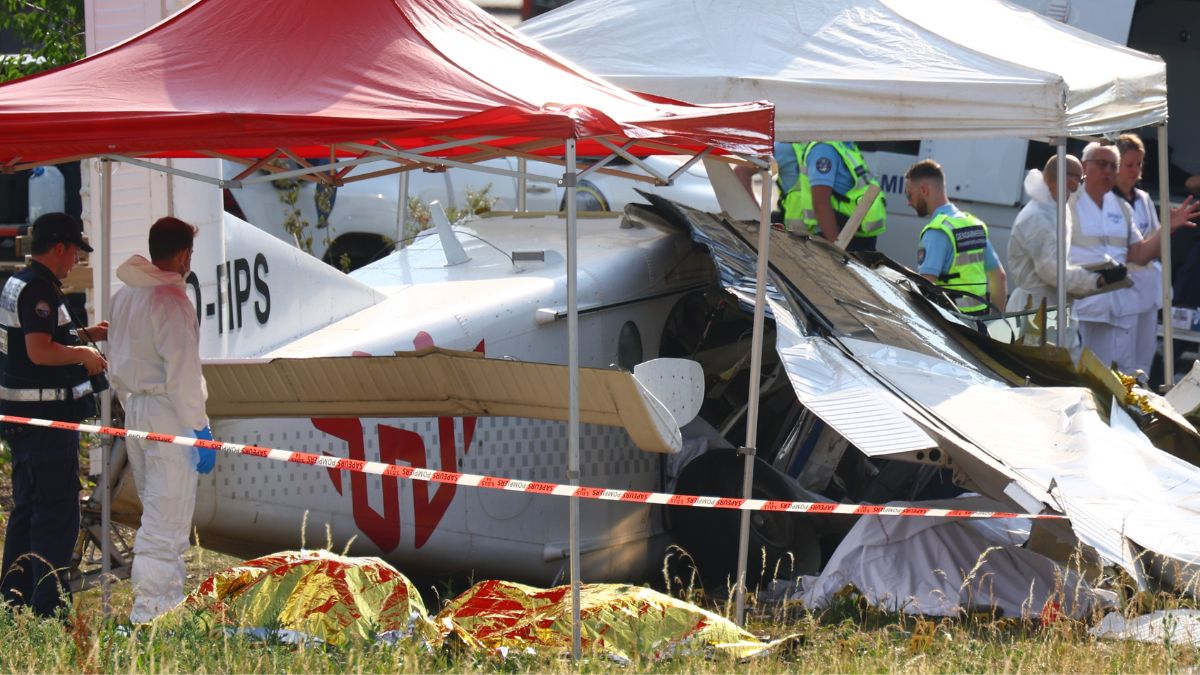
A plane carrying eager first-time skydivers climbed into the morning sky over northeastern France on Sunday, June 28, 2026. Minutes later, it plummeted straight down into a bicycle path. All 11 people on board died instantly. The tragic accident in Tomblaine, near Nancy, is the deadliest skydiving aviation disaster in French history. Loved ones stood on the ground at the Nancy-Essey aerodrome, preparing to film what should have been a joyful experience. Instead, they watched the aircraft drop out of the sky.
Aviation experts and authorities are left sorting through the wreckage of the single-engine Pilatus PC-6 Porter. The investigation faces immediate hurdles. Small aircraft like this are not legally required to carry flight data recorders, commonly known as black boxes. Without that data, investigators must piece together what went wrong using eyewitness accounts, wreckage analysis, and maintenance records.
What Witnesses Heard in the Sky over Tomblaine
Eyewitness accounts point toward sudden mechanical trouble. A local resident, John Curaka, was in his garden with his son when he heard the plane ascending. He noted that the engine noise abruptly stopped in mid-air, followed shortly by a loud bang as the aircraft struck the ground.
Other witnesses confirmed there was no smoke, fire, or mid-air explosion before the plunge. The plane fell vertically, dropping like a stone just 300 meters from the runway. Tomblaine Mayor Hervé Féron described the descent as completely unexplained, noting that the aircraft came straight down.
The plane crashed near Salvador Allende Street, narrowly missing a shopping center and nearby residential homes. Regional prefect Yves Séguy noted that a few meters in either direction could have resulted in significant casualties on the ground.
The Victims of the Nancy Airport Tragedy
The disaster claimed the lives of a tight-knit group of medical professionals. The five student jumpers were independent nurses from the Nancy region. Thierry Péchey, head of the local nursing council, confirmed the colleagues booked the flight together to unwind during a severe regional heatwave.
The full list of fatalities includes:
- One pilot
- Five skydiving instructors
- Five student jumpers
Emergency services deployed 50 firefighters and multiple police units to secure the perimeter. First responders faced an immediate threat of secondary explosions due to leaking fuel, prompting a strict lockdown of the crash site.
The Missing Black Box and Investigation Challenges
Investigators from the gendarmerie units specializing in air transport face a difficult path. The German-registered Pilatus PC-6 Porter, built in 1991 and operated by Classic Wings/KIAS Airlines, lacked a black box.
Most people assume every commercial flight records cockpit audio and flight telemetry. Under European aviation rules, light utility aircraft under certain weight thresholds do not require these systems. This leaves a massive data gap for investigators.
Deputy Public Prosecutor Amaury Lacôte stated that a technical investigation is officially underway. Investigators will scrutinize the historical records of the airframe, registered as D-FIPS. The plane had a minor ground taxiing collision back in 2012 under a different operator, though it is unclear if that has any relevance to this weekend's tragedy.
Experts are also analyzing the environmental factors. The region experienced record-breaking high temperatures the day before the crash. Extreme heat alters air density, which directly impacts engine performance and aerodynamic lift.
Immediate Aviation Safety Steps for Recreation Groups
If you are planning a group aviation or skydiving excursion, you need to look beyond the basic booking website. Take control of your safety by asking specific questions before stepping onto the tarmac.
Verify the Aircraft History
Do not hesitate to ask the operator for the registration number of the plane you will be flying in. You can cross-reference this number on aviation safety databases to check for past incidents or structural issues.
Check Weather Limitations
High heat changes how planes fly. Ask the flight operators about their specific safety margins regarding ambient temperature and passenger weight limits. If the weather feels extreme, push the jump to a cooler day.
Understand the Onboard Equipment
Recognize that smaller recreation planes operate under different regulatory standards than commercial airliners. Ask if the aircraft uses tracking systems or secondary engine monitoring tools that help pilots detect failures before they become catastrophic.
French Transport Minister Philippe Tabarot called the incident the most serious skydiving accident in three decades. The tragedy will likely pressure European regulators to rethink safety equipment mandates for recreational aviation.