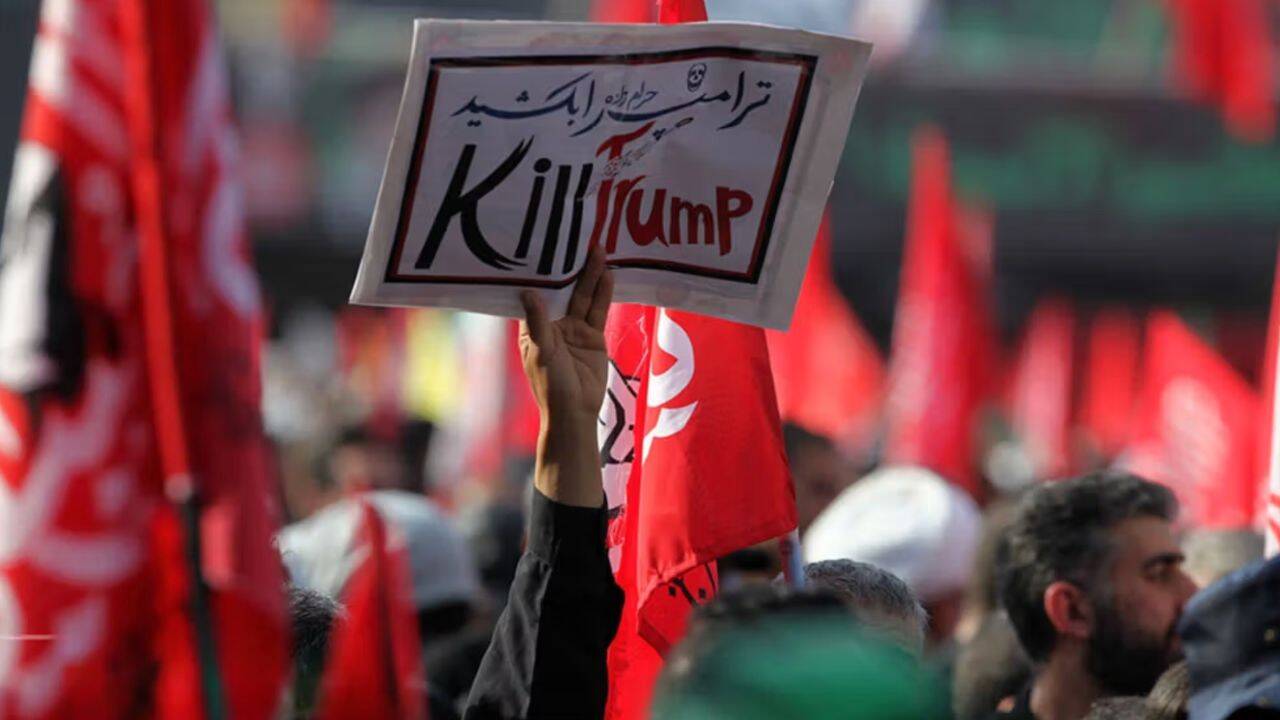
Tens of thousands of black-clad mourners flooded the streets of Tehran today, turning the multi-day funeral procession for Iran's late Supreme Leader Ayatollah Ali Khamenei into a highly volatile geopolitical theater. While the official state apparatus attempts to project controlled grief and internal stability, the raw sentiment boiling over on the ground tells a much more chaotic story. Banners carried by hardline loyalists openly called for the assassination of U.S. President Donald Trump and Israeli Prime Minister Benjamin Netanyahu, with some extreme factions going as far as offering personal land parcels to anyone who delivers their heads.
The extreme rhetoric—including slogans urging authorities to "kill them both like dogs"—highlights a massive disconnect between the diplomatic maneuvering happening behind closed doors and the furious demands for blood vengeance from the regime's core support base.
The Public Outrage vs. Diplomatic Pauses
Iran is currently navigating one of its most critical transitions since the 1979 revolution. Following the airstrikes that claimed Khamenei's life earlier this year, the country has been balancing a delicate tightrope. On one hand, Iranian officials have been engaged in back-channel talks with the United States to secure a permanent end to the devastating regional war. Donald Trump even confirmed that both sides agreed to a temporary pause in hostilities so the funeral could take place without immediate threat of escalation.
But on the streets of Tehran, the word "compromise" is treated as treason.
The turnout has drawn comparisons to the massive 2020 funeral of Revolutionary Guard General Qassem Soleimani. Mourners packed Freedom Square, throwing personal items toward the flag-draped coffin to receive blessings, while loudspeakers alternated between religious chants and revolutionary anthems. The sheer volume of red flags on display across the capital serves as a traditional Islamic symbol indicating that a death has not yet been avenged.
Why the Land For Heads Bounty Matters
The financial and material bounties offered by civilian mourners and hardline influencers shouldn't be dismissed as mere performance. In Iran's highly factional political eco-system, these public declarations place immense pressure on the newly appointed Supreme Leader, Mojtaba Khamenei.
- The Succession Crisis: Mojtaba, the late leader's son, was quickly elevated to the top position, but he remains largely in hiding due to obvious security threats.
- The Hardline Mandate: The regime derives its legitimacy from its fierce anti-Western stance. If the new leadership appears too eager to sign a peace deal with Trump while the public demands retribution, it risks alienating the paramilitary forces and ultra-conservatives who keep the government in power.
- The Foreign Presence: The funeral has also become a diplomatic staging ground. Over 70 foreign delegations are represented, including high-level officials from Russia. This presence signals to the West that despite the loss of its long-standing leader, Iran is far from isolated.
What Happens Next
The temporary pause on military action will expire as the six-day mourning period concludes. If you want to understand where this conflict goes next, keep a close eye on the Strait of Hormuz. Tehran has already issued strict warnings to international commercial shipping, indicating that any perceived violation of its maritime boundaries will be met with immediate force.
The immediate next steps are clear. Watch for whether Mojtaba Khamenei delivers a public address following the final burial rites on July 9. His tone will reveal whether the regime intends to honor the diplomatic channel with Washington or cave to the furious demands of the crowds currently occupying the streets of Tehran.
Tehran Mourners Call for Revenge
This on-the-ground report captures the scale of the crowds and the explicit calls for retaliation broadcast from the funeral ceremonies in Tehran.