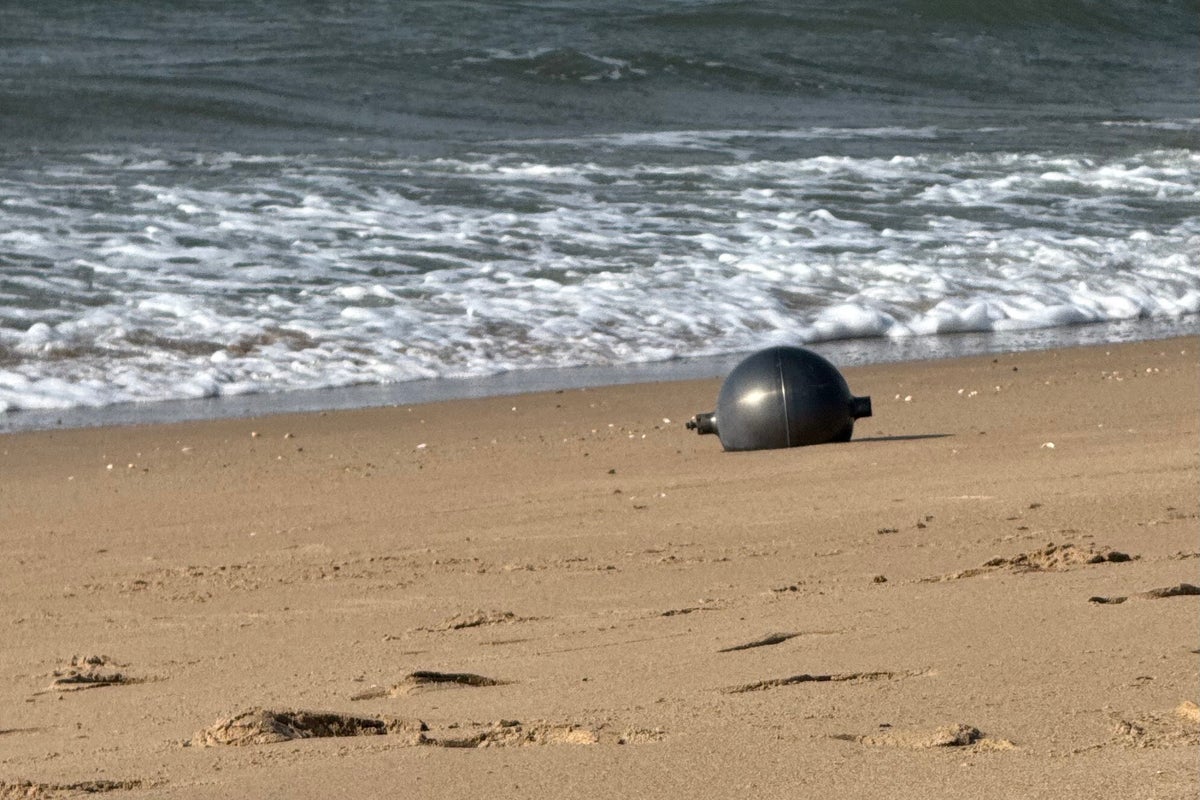
Imagine walking along a quiet beach and stumbling upon a giant, metallic sphere half-buried in the sand. It sounds like a scene from a bad sci-fi film. Yet, that is exactly what happened to residents of Forrest Beach, a sleepy coastal community north of Townsville in Queensland, Australia.
Over a wild weekend, six metallic "space balls" washed ashore. The discovery sent local emergency services into overdrive, sparking a 50-metre exclusion zone and bringing out hazmat teams in full protective gear. For a more detailed analysis into this area, we suggest: this related article.
The Australian Space Agency just cracked the mystery. These objects are pressure vessels from a foreign space launch vehicle. They likely plunged back to Earth during an uncontrolled atmospheric re-entry.
If you think this is a one-off freak event, you're mistaken. It is a symptom of a much larger, increasingly crowded problem hovering right above our heads. For broader context on this topic, detailed reporting can be read at The New York Times.
What Are These Metallic Spheres Anyway
When space experts look at these silver orbs, they don't see aliens. They see hardware. Specifically, they recognize them as high-pressure fuel or gas tanks, often built from titanium alloys.
Rockets need these rugged spheres to store highly pressurized gases like helium or volatile propellants like hydrazine. Titanium is used because it can handle extreme pressures and immense stress. That strength is exactly why they do not burn up completely when plunging back through Earth's atmosphere. While the flimsy outer skin of a rocket stage disintegrates into ash upon re-entry, these robust spheres act like armored pods, hitting the ocean intact and floating to shore.
What puzzled scientists initially about the Queensland debris was the lack of obvious burn marks. Dr. Sara Webb, an astrophysicist at Swinburne University of Technology, noted that the pristine condition suggests these particular tanks might have come from the lower stages of a rocket. These stages are discarded early in a launch sequence before reaching orbit, falling back from lower altitudes without facing the extreme friction and heat of full orbital re-entry.
Prominent space archaeologist Dr. Alice Gorman even speculated that the spheres could be linked to a Russian Fregat upper stage rocket, which famously uses a cluster of spherical tanks.
The Toxic Reality Hidden Inside Space Junk
The media loves a good mystery, but local authorities were genuinely worried about something far more grounded: chemical poisoning.
Spacecraft fuel systems frequently rely on hydrazine. It is an incredibly efficient rocket propellant, but it is also highly corrosive, volatile, and a known carcinogen. If a leaking tank washes ashore and an unsuspecting beachgoer decides to poke it, the results can be catastrophic.
This explains the intense response by the Queensland Fire Department. Teams carefully loaded five of the spheres into specialized hazmat drums while scientists worked to neutralize the sixth.
- Rule number one: If you ever find strange metallic debris on a beach, do not touch it.
- Rule number two: Move far away and call emergency services immediately.
Fortunately, Queensland responders declared the Forrest Beach objects safe after thorough testing. The exclusion zones have been lifted, but the Australian Space Agency is keeping a watchful eye out because ocean currents could easily deposit more debris along the coastline over the coming days.
Australia Is a Magnet for Falling Space Hardware
This isn't Australia's first rodeo with falling cosmic debris. Because of its massive landmass and vast surrounding oceans, the continent frequently plays host to discarded space tech.
Notable Space Junk Landings in Australia:
- 1979: NASA's Skylab space station showered fragments across Western Australia.
- 2022: A charred chunk of a SpaceX Dragon trunk was found sticking out of a sheep paddock in New South Wales.
- 2023: A massive metal dome from an Indian Polar Satellite Launch Vehicle (PSLV) washed ashore near Perth.
- 2026: Six titanium pressure vessels landed on Forrest Beach in Queensland.
We are witnessing a clear upward trend. Dr. Webb points out that humanity has launched more objects into space over the last five years than during the entire previous history of space exploration. There are currently an estimated 130 million pieces of space debris orbiting Earth.
Most of this junk is small, but as mega-constellations grow and launch cadences accelerate, uncontrolled re-entries will become part of daily life. The international space community operates under strict treaty obligations regarding liability for damage caused by space objects, which is why the Australian Space Agency is actively coordinating with foreign counterparts to pinpoint the exact nation responsible for the Queensland spheres.
What to Do If You Find Space Debris
If you live along the northern Australian coast, keep your eyes open but your hands to yourself.
- Snap a photo from a safe distance. Note your exact GPS coordinates if possible.
- Call emergency services. In Australia, that means dialing Triple Zero (000).
- Report the find directly to the Australian Space Agency. They maintain a dedicated tracking framework to handle international space law obligations and ensure the safe recovery of foreign aerospace property.