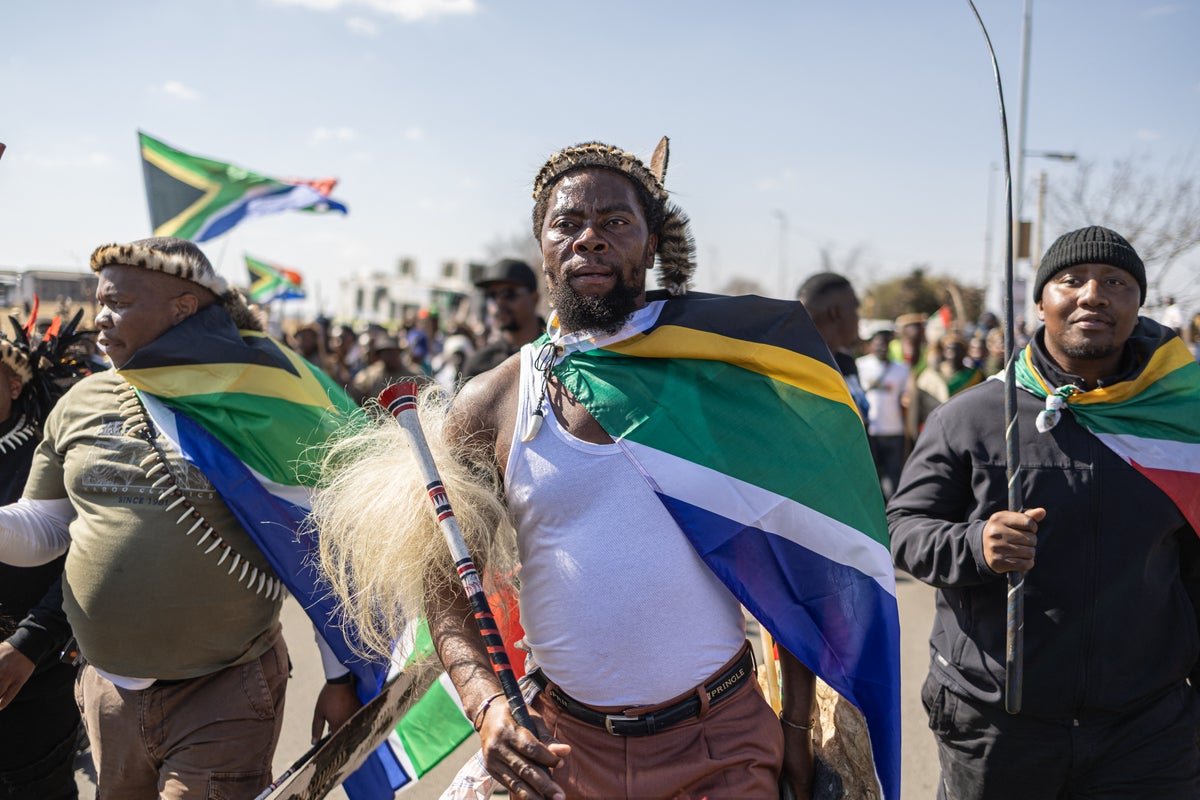
Shops are locked. Buses are completely stationary. Streets that usually pulse with the chaotic energy of commerce are eerie and quiet. Today, June 30, 2026, South Africa is waking up to a coordinated national shutdown driven by escalating South Africa migrant protests. The tension has been building for months, centered around an unofficial ultimatum that has effectively frozen the economic hubs of Johannesburg and Durban. Vigilante groups set today as the hard line. Leave the country, they warned undocumented foreign nationals, or face the consequences.
The fear is tangible. It isn't just a political disagreement anymore. It is an immediate safety crisis. Thousands of immigrants have already fled their homes, while those remaining are hiding in transit camps or huddled outside government buildings. Landlords, terrified that their properties will be torched or smashed up by angry crowds, are pre-emptively tossing out foreign tenants. The line between legal residents and undocumented arrivals has completely dissolved in the eyes of the mobs. If you sound or look foreign, you're a target. For a closer look into this area, we recommend: this related article.
The mechanics behind the June 30 deadline
The group orchestrating this massive mobilization calls itself March and March. Led by Jacinta Ngobese-Zuma, the organization claims its campaign isn't xenophobic. They say they're simply protesting government failure regarding border control and immigration enforcement. But out on the streets, that message translates into raw intimidation. Men carrying wooden sticks, sjamboks, and knives have been moving through poorer neighborhoods for weeks, forcing shopkeepers to show legal identity documents.
Look at the scale of the state response. The South African government didn't ignore this. They mobilized the military on an emergency budget of 600 million rand. Thousands of police units are patrolling volatile areas with strict orders to prevent the kind of mass looting and mob violence that devastated KwaZulu-Natal and Gauteng back in July 2021. Acting Police Minister Firoz Cachalia canceled all police leave. For broader information on the matter, detailed analysis is available on USA Today.
It is a massive gamble of resources for an economy that's already buckling.
Sifting through the numbers and the rhetoric
Scapegoating is easy when a country's numbers look grim. Thirty years after the fall of apartheid, South Africa remains one of the most unequal societies on earth. A full third of the population is officially unemployed. It is easy to see why poor, desperate citizens buy into the narrative that foreign nationals are stealing their livelihoods, draining public hospitals, and driving up crime rates.
But social scientists point out a massive gap between perception and reality.
Statistics South Africa reports that the total foreign-born population stands at roughly three million people. In a nation of 62 million, that is only about 4%. Populist political figures frequently claim the number is closer to 15 or 20 million, numbers completely detached from verified data. Most immigrants work in the informal sector, creating micro-businesses rather than occupying corporate positions.
The human cost is mounting. Since the current wave of anti-immigrant actions flared up in April, five Mozambican nationals have been killed. In Pietermaritzburg, a Malawian man was beaten to death following public incitement. For those caught in the crosshairs, like James Macki, a Malawian barber working in Johannesburg, the choice was simple but terrifying. Neighbors warned him that blood would flow if he stayed past the June 30 deadline. He is now waiting in a makeshift encampment, praying for safe passage home.
Political tightropes and a damaged reputation
President Cyril Ramaphosa finds himself caught in an impossible political vice. He needs to appease a furious, voting public that demands stricter borders, but he also has to uphold international human rights standards. His official statements reflect this agonizing compromise. He acknowledged that South Africans' deep concerns about immigration are real and deserve to be heard, while simultaneously warning that the right to protest does not grant a license to intimidate or destroy property.
This ongoing crisis is severely fracturing South Africa's post-Mandela image. Long viewed as a moral beacon and a defender of human rights on the continent, the country is facing intense diplomatic friction with its neighbors.
What happens next
The immediate focus is surviving the week without mass casualties. If you are operating a business or living in high-risk zones, specialized safety steps are necessary right now.
First, stay completely clear of central business districts and protest march routes in Johannesburg, Durban, and Pretoria. Monitor local radio and community security forums instead of relying solely on mainstream news, which often lags behind real-time escalations.
Second, informal traders and logistics operators should suspend operations until the security forces fully secure the transport corridors. The financial loss of a two-day closure is painful, but it is vastly preferable to losing stock, vehicles, or your life.
The military deployment might keep a temporary lid on the violence today, but the underlying economic desperation isn't going anywhere.



:max_bytes(150000):strip_icc():focal(999x0:1001x2)/rishi-sunak-akshata-murthy-10-78981f8236984c69b70bc15bcb3d49e9.jpg)