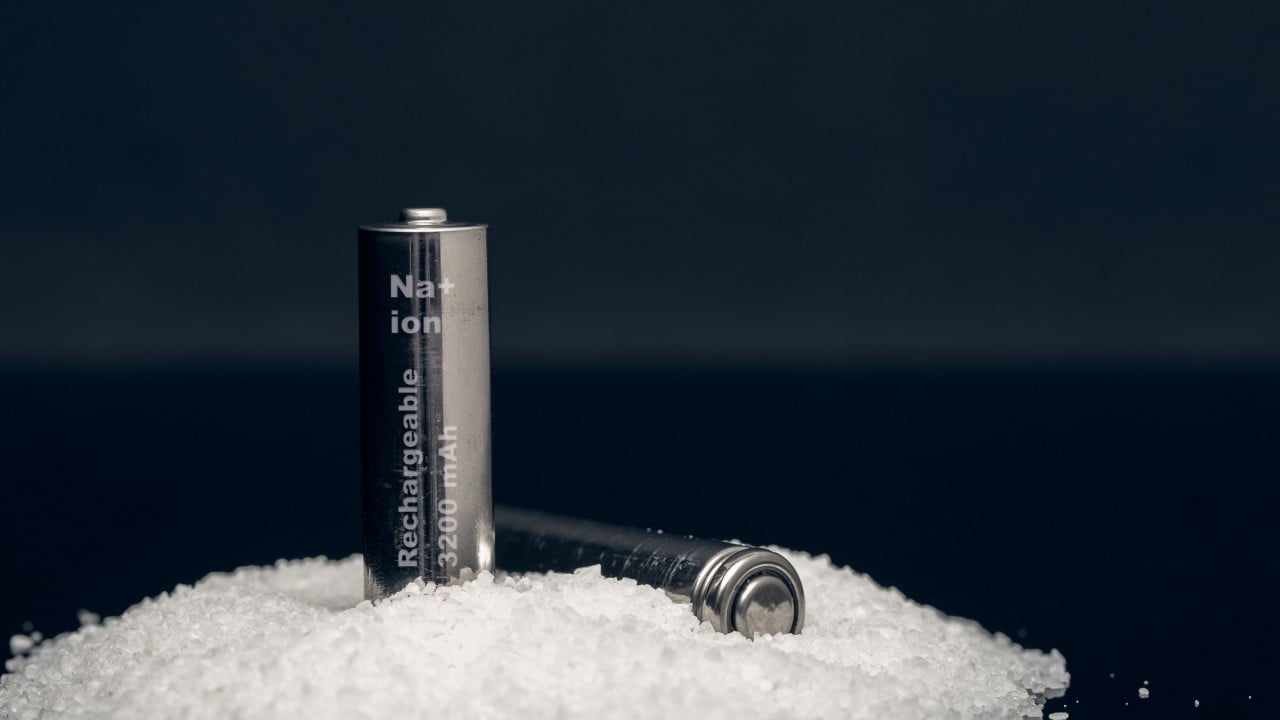
Lithium has dominated the energy conversation for decades. Every smartphone in your pocket, every electric car on the road, and almost every massive grid storage facility relies on it. But lithium has a massive problem: it's expensive, concentrated in a handful of regions, and prone to extreme price swings.
That reality is changing faster than most people realize.
Recent laboratory evaluations and real-world teardowns of sodium battery technology have sent shockwaves through the energy industry. Independent testing from researchers published in Cell Reports Physical Science revealed that commercial sodium-ion cells produced in China match the structural uniformity and manufacturing quality of Tesla's gold-standard lithium-ion cells.
This isn't just a lab curiosity anymore. It's a fundamental shift in how we build batteries.
The Problem With Lithium's Stranglehold
If you look at where lithium comes from, the bottleneck becomes obvious immediately. More than half of the global lithium reserves sit in just three South American nations: Argentina, Bolivia, and Chile. Processing that raw material into battery-grade chemicals requires immense capital and complex supply chains.
Sodium is everywhere. It sits in sea salt and rock deposits across every continent.
For years, skeptics argued that sodium cells couldn't compete because sodium atoms are larger and heavier than lithium atoms. That physical reality meant lower energy density. Engineers assumed sodium would always remain a budget alternative meant for low-speed scooters or stationary back-up power.
They were wrong.
How Chinese Engineers Solved the Sodium Puzzle
The leap forward didn't happen overnight. It came from clever structural engineering and clever chemistry tweaks.
When researchers disassembled commercial 120-cell batches from Chinese maker Hina Battery using high-resolution X-ray imaging, they found something unexpected. The cells used a tabless, double-aluminum current collector layout.
Why does that matter?
Because that exact architecture reduces internal electrical resistance and distributes heat evenly throughout the cell during high-drain operation. It's the exact same architectural principle Tesla used to make its 4680 lithium cells so efficient.
Instead of trying to force sodium to act like lithium, engineers redesigned the internal hardware to maximize what sodium does best: handle high current loads without overheating.
The Hard Carbon Breakthrough
The bigger chemical bottleneck was always the anode. Lithium batteries use graphite anodes because lithium ions fit neatly between the carbon layers. Sodium ions are too big; they destroy regular graphite after just a few charge cycles.
The solution came from hard carbon materials derived from local organic sources and coal processing byproducts. Hard carbon has a disordered atomic structure with wider microscopic gaps.
This gives sodium ions plenty of room to dock without expanding or degrading the battery structure.
Production costs for these cells have dropped to roughly $0.051 per watt-hour for integrated packs. That cuts cell manufacturing costs almost in half compared to standard lithium iron phosphate (LFP) cells.
Where Sodium Wins and Where It Still Struggles
Honesty matters here. Sodium isn't going to replace lithium in long-range luxury sedans anytime soon. The physics still favor lithium when you need 400 miles of range in a compact frame.
But for almost every other application, sodium offers clear advantages.
Superior Low-Temperature Performance
Lithium batteries famously lose significant capacity and charge painfully slowly in freezing weather. Sodium batteries behave differently.
Testing shows commercial sodium cells retain up to 90% of their usable capacity at -20°C. They can discharge high power even in arctic conditions without requiring massive energy drain just to heat the battery pack first.
Thermal Safety and Thermal Runaway
Sodium chemistry is inherently more stable than nickel-rich lithium variants. CATL's latest sodium battery units operate safely at internal temperatures up to 70°C, roughly ten degrees higher than typical lithium-ion limits. That reduces the need for heavy, expensive liquid cooling loops in budget vehicles and stationary power banks.
The Energy Density Tradeoff
The main drawback remains energy density. Current commercial sodium-ion packs achieve around 160 to 175 Wh/kg. High-end lithium-ion cells push well past 240 Wh/kg.
That means a sodium battery pack offering 200 miles of range will weigh slightly more and take up more physical space than an equivalent lithium pack.
For commercial delivery vans, city commuters, heavy trucks, and utility grid storage, that weight penalty is a minor tradeoff for a battery that costs half as much and won't freeze in January.
What This Means for the Global Auto Market
We are seeing a multi-tier battery strategy take shape across the industry.
Lithium will likely remain the premium chemistry for high-performance electric vehicles and long-range haulers. Sodium will take over entry-level electric cars, short-range urban transports, stationary solar storage, and telecommunications backup.
China's rapid deployment of sodium battery manufacturing capacity—scaling lines for commercial transport and Yangtze River cargo vessels—is a clear signal. Automakers aren't waiting for lithium prices to spike again. They are building a parallel supply chain grounded in abundant, low-cost raw materials.
Next Steps for Energy Tech Observers
If you're watching the energy transition or evaluating electric transport investments, keep your eye on three key indicators over the next 18 months:
- Watch low-temperature fast-charging benchmarks. The biggest remaining challenge for sodium chemistry is charging speed below 0°C. Improvements in liquid electrolyte additives are fixing this rapidly.
- Track mass-market vehicle rollouts in urban markets. Entry-level EVs featuring hybrid packs (combining sodium and lithium cells in one casing) offer the best balance of cost and cold-weather reliability.
- Monitor grid-scale utility deployments. Stationary storage project operators are pivoting to sodium because energy density matters much less when the battery is bolted to a concrete foundation on a solar farm.