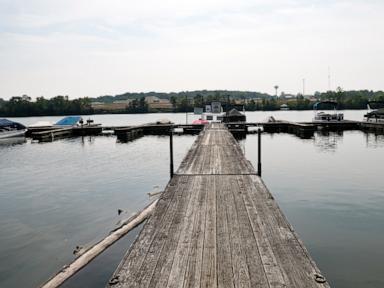
A peaceful Sunday evening along the Scioto River in Powell, Ohio, shattered when five adults drowned after trying to rescue a single struggling swimmer.
It’s an agonizing scenario that repeats every summer across American waterways. One person gets into trouble, and pure instinct drives family or friends to rush into the water to help. Within minutes, a single emergency becomes a mass tragedy.
Understanding what went wrong on the Scioto River requires looking at two distinct forces: the deceptive behavior of rising river currents and the biological reality of human drowning dynamics.
What Happened on the Scioto River in Powell
On Sunday, July 19, 2026, a family and friend group gathered along the banks of the Scioto River in Delaware County, just north of Columbus, for an evening of relaxation and fishing. The weather seemed pleasant enough, but conditions beneath the surface of the river were anything but calm.
When one member of the group stepped into the river to swim, they quickly encountered trouble. Seeing the swimmer panic, multiple adults jumped in, attempting a rescue. Instead of saving the initial swimmer, the helpers were caught in the exact same current.
Timeline of Events (Powell, Ohio)
- Sunday evening: Group gathers along Scioto River near State Route 257.
- Approx. 9:00 PM: A passing driver spots a distraught child running along Route 257 and calls 911.
- Sunday night: Emergency crews recover two women from the river; both die at local hospitals.
- Monday morning: Search teams recover the remaining three male victims.
The alarm wasn't raised by anyone in the water. Around 9:00 PM, a passing driver spotted a young, terrified child running down State Route 257 looking for help. The driver immediately called 911.
Delaware County Sheriff Jeffrey Balzer confirmed that two young children under age ten remained on the riverbank during the ordeal. A language barrier made initial interviews difficult for first responders, but search teams located two women Sunday night, both of whom were pronounced dead at nearby hospitals. By Monday, searchers recovered the bodies of three men from the river. Five lives ended in a matter of moments.
The Hidden Power of Water Flow Rates
Rivers look calm on the surface. That’s why they’re dangerous.
On the day of the drowning, data from a U.S. Geological Survey water gauge located near the local dam showed a dramatic spike in discharge. The Scioto River was running high and fast, flowing at roughly 350 cubic feet per second.
That rate represented more than a fourfold increase over just three days, and sat at more than double the normal seasonal average.
Scioto River Flow Metrics
- Sunday Discharge: ~350 cubic feet per second (cfs)
- 3-Day Increase: 4x flow volume
- Historical Baseline: More than double seasonal average
Water moving at 350 cubic feet per second isn't just water flowing. It's thousands of pounds of continuous kinetic force pressing against anything in its path.
When water discharge increases four times over, the force exerted on a swimmer doesn't just quadruple—it increases exponentially with velocity. A person standing knee-deep in a fast-moving current can easily be swept off their feet. Once off-balance, even strong swimmers struggle to fight the shear momentum of the current while trying to stay afloat.
Add moving sediment, submerged branches, and unseen drop-offs along the riverbed, and you have an environment where human strength offers zero advantage.
Aquatic Victim Rescuer Syndrome Explained
Why do multiple people die trying to save one person?
Water safety experts and emergency responders call this Aquatic Victim Rescuer Syndrome. It describes the dangerous physical reaction that happens when an untrained person enters deep water to rescue a drowning victim.
Drowning is rarely the noisy, splashy event depicted in television dramas. When a person begins to drown, their body enters a involuntary physiological survival state known as the Instinctive Drowning Response:
- Inability to call for help: The respiratory system prioritizes breathing over speech. A drowning person cannot cry out for aid.
- Loss of voluntary arm movement: Instead of waving, the victim's arms naturally press down against the water surface to lift their mouth above the waterline.
- Vertical body position: The victim stands vertically in the water without kicking, struggling silently to keep their head up.
- Panicked force exertion: A drowning human possesses terrifying physical strength driven purely by adrenaline and primal panic.
When an untrained helper swims up to a drowning person, the panicking victim does not recognize them as a savior. They recognize them as a floating object.
The drowning victim will climb, grab, push down, and submerge the rescuer in a frantic attempt to keep their own mouth above water. Within seconds, the rescuer is pushed underwater, gasping for air, and entering the exact same drowning process.
This chain reaction explains how one person in distress quickly leads to two, three, or five casualties. It’s brutal, swift, and entirely biological.
Rethinking Bystander Rescue Strategy
Human nature dictates that when you see someone you care about drowning, you want to jump in. You have to fight that instinct.
Entering high-velocity water without flotation gear or professional rescue training almost always creates an additional victim. First responders teach a specific four-step progression for bystander water rescues. You should memorize these steps in order.
Step 1: Reach
Never enter the water if you can avoid it. Stand firmly on the shore, dock, or bank, anchor your body, and extend an object to the victim.
- Use a sturdy tree branch, a pole, an oar, or a piece of clothing.
- Stay low to the ground—preferably lying flat on your stomach—so the victim cannot pull you into the river.
Step 2: Throw
If the victim is out of reach from the shore, throw them something that floats.
- Look for life jackets, ring buoys, coolers, foam noodles, or sealed plastic water jugs.
- Even an empty, sealed gallon jug attached to a line can save a life by providing buoyant support.
- Throw the object slightly past the victim so the current carries it directly into their arms.
Step 3: Row
If a boat, kayak, or canoe is nearby and you know how to operate it safely, row or paddle to the person in distress.
- Keep the boat between you and the struggling swimmer.
- Extend an oar or rope from the stern or side of the vessel rather than letting the victim pull on the edge of a small boat, which can easily capsize it.
Step 4: Go (With Flotation Only)
Entering the water should be your absolute last resort.
- Never swim out empty-handed. Take a life jacket, a kickboard, or a floating cushion with you.
- Keep the floating object between yourself and the victim at all times.
- Push the float toward them and let them grab that—not you. Maintain your distance until they have secured themselves onto the buoyant device.
Essential River Safety Protocol
Rivers change dramatically based on rainfall, upstream dam releases, and seasonal runoff. What was a calm swimming hole last weekend can become a fatal hazard a few days later.
Before you visit any river or natural waterway, commit to basic prep:
- Check local USGS gauge readings: Look up real-time streamflow metrics online before heading out. A sudden spike in cubic feet per second (cfs) indicates elevated water speeds and hidden turbulence.
- Wear Coast Guard-approved life jackets: Wear flotation gear whenever you are in or near moving water, regardless of your perceived swimming abilities.
- Establish a shore spotter: Keep at least one responsible adult on dry land who stays alert, monitors conditions, and holds a cell phone ready to dial 911.
- Identify landmarks and emergency exits: Before anyone touches the water, survey the shoreline for steep drop-offs, slippery clay banks, and fast-moving eddies. Know where you can safely pull someone out.
Respect moving water. The Scioto River tragedy serves as a solemn reminder that good intentions cannot overcome the laws of fluid dynamics. Stay on shore, throw flotation devices, and call emergency services immediately whenever someone is in distress.