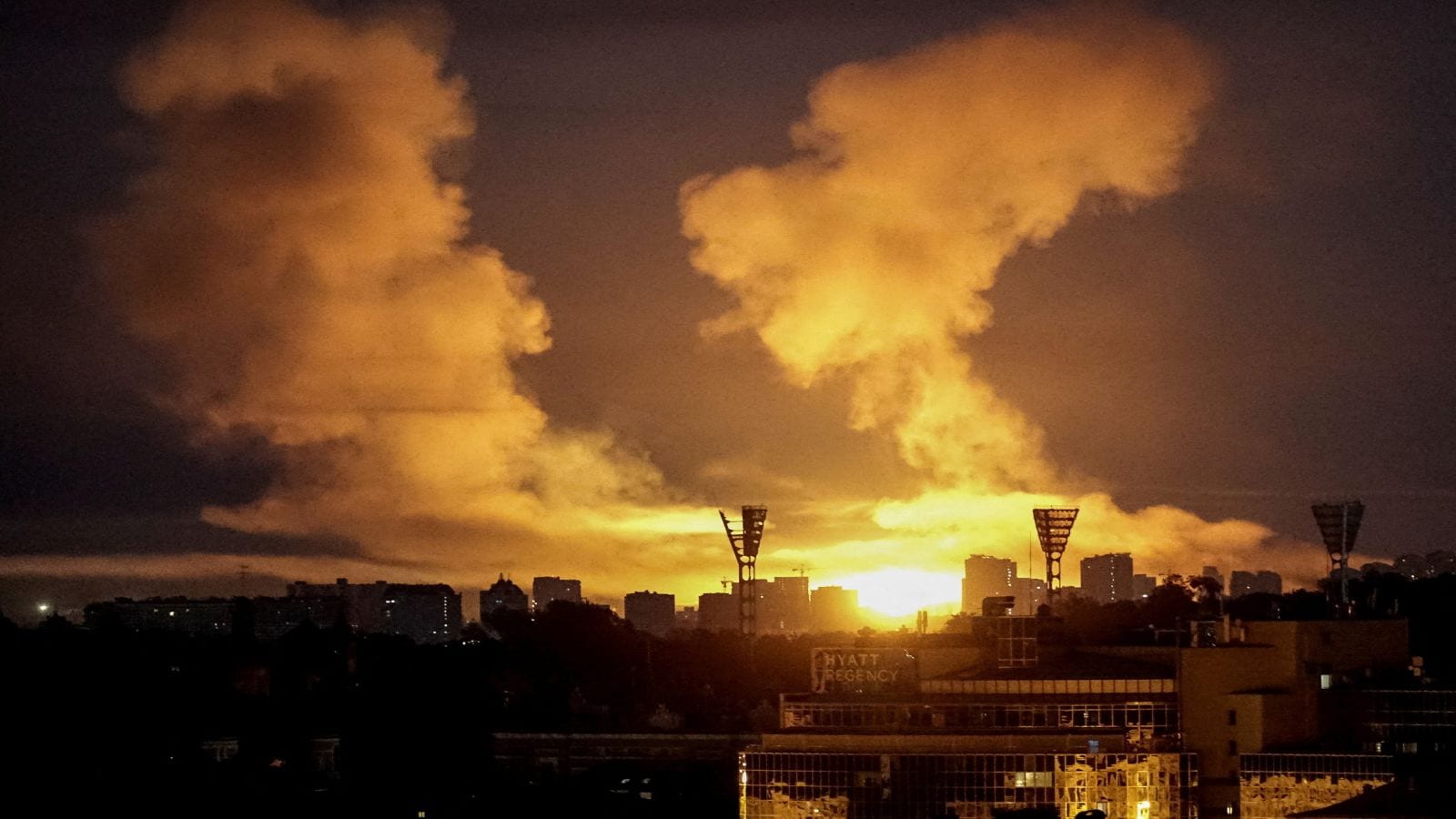
The air raid sirens didn't just wail in Kyiv; they screamed for hours. Overnight, Russia launched a massive, coordinated assault on the Ukrainian capital, turning the early morning hours into a chaotic nightmare of explosions, fires, and falling debris. When the smoke began to clear, at least 13 people were dead, over 90 were injured, and entire neighborhoods were left reeling.
This wasn't just another routine strike. It was the second-deadliest air assault on the capital so far this year, signaling a brutal escalation in a war that has dragged on for over four years. If you're wondering why Moscow suddenly turned its full fury back toward Kyiv, the answer lies in a shifting, high-stakes game of long-range retaliation.
The Night Kyiv Stood Still
Ukrainian President Volodymyr Zelensky knew it was coming. He cut short an official visit to Dublin, rushing back to warn the country that intelligence pointed to a imminent, catastrophic strike. He was right.
According to the Ukrainian air force, Russia launched a staggering 74 missiles and 496 drones. Think about that volume for a second. It's an overwhelming amount of hardware designed specifically to oversaturate and exhaust air defenses. While Ukraine's air defense teams managed to swat down the vast majority of the incoming threats, the sheer scale of the swarm meant some were bound to break through. Twenty-five ballistic missiles and 12 drones slammed into 33 different locations across the capital.
The devastation left behind isn't a matter of military collateral; it hit the literal pulse of civilian life. A nine-storey residential building on the left bank of the Dnipro River was blasted apart, leaving emergency crews digging through smoking rubble for survivors. Elsewhere, an ambulance station, a hotel on the central Shevchenko Boulevard, a scientific institute, and local businesses were left burning.
Over 52,000 terrified residents packed into Kyiv’s deep underground metro stations to survive the night. That’s the highest number of people seeking refuge in the subway network in several years. People brought their kids, their pets, tents, and whatever bags they could grab in the dark.
The Retaliation Cycle Behind the Attack
Moscow isn't hiding its motives. The Russian Defense Ministry openly admitted to the strike, framing it as a direct, high-precision retaliation for recent Ukrainian attacks on Russian civil and industrial infrastructure.
Honestly, it's a cycle we've seen worsen over the last few months. While Ukraine spent the first couple years of the war mostly absorbing blows from afar, Kyiv has recently scaled up its own long-range capabilities. Ukrainian drones have been striking deeper and deeper into Russian territory. Just hours before the Kyiv barrage, the Ukrainian General Staff successfully hit a major oil refinery in Kstovo, located in Russia’s Nizhny Novgorod region.
Russia claims these strikes on Kyiv are legitimate because hitting Ukrainian infrastructure directly dents the country’s ability to wage war. But when you look at the smashed windows, burned-out civilian cars, and a devastated ambulance station, the human cost completely refutes that sterile military logic.
Why Ukraine's Air Defenses Are at a Breaking Point
This attack exposes a glaring, dangerous vulnerability that Ukrainian officials have been shouting about for months. Ukraine is running out of the specialized interceptors needed to stop ballistic missiles.
When Russia mixes hundreds of cheap, slow-flying Shahed drones with fast, sophisticated ballistic missiles, it creates an impossible math problem for air defense teams. You don't want to waste a multi-million-dollar Patriot missile on a $20,000 drone, but if you don't, the drone can pinpoint defenses or hit a target. Yet, if you use up your interceptors on the first wave, you're defenseless when the ballistic missiles arrive minutes later.
Ukrainian Foreign Minister Andrii Sybiha didn't mince words after the attack, stating the capital had endured a "night of horror" and issuing another urgent plea to Western allies for more air defense systems. Prime Minister Yulia Svyrydenko echoed the desperation on Telegram, stating plainly that every single delay in weapon deliveries costs civilian lives.
What This Means for the Peace Outlook
The political timing of this strike is just as calculated as the military trajectory. For the past couple of months, Zelensky has been floating proposals for potential peace talks with Russian President Vladimir Putin to finally find an end to the war.
Putin has rejected these overtures. This massive bombardment is the Kremlin's definitive, bloody answer to any talk of a ceasefire. By escalating the violence and demonstrating that it can still pierce the airspace of Ukraine's most heavily defended city, Russia is trying to force Ukraine into a position of total surrender rather than equal negotiation.
Kyiv Mayor Vitali Klitschko has declared a official day of mourning for the victims. As residents clear away shattered glass and search for neighbors still trapped in the ruins, the immediate future looks incredibly grim. The war isn't winding down; it's getting more punishing for the people caught in the middle.
Next Steps for Following the Situation
If you're tracking how this escalation develops over the coming days, keep your eyes on three specific pressure points:
- The Western Response: Watch for whether the U.S. or European allies announce emergency transfers of Patriot or SAMP/T air defense batteries in response to the Kyiv casualties.
- Ukrainian Counter-Strikes: Kyiv rarely lets these massive strikes go unanswered anymore. Watch for subsequent Ukrainian drone operations targeting Russian energy infrastructure or military airfields over the next 48 hours.
- Energy Grid Status: Check local Ukrainian reports to see if this strike triggers rolling blackouts, as Russia heavily targeted energy nodes during the raid.