Vladimir Putin has a predictable, bloody pattern. Whenever a diplomatic exit from this war appears on the horizon, the Russian military launches a massive aerial bombardment against civilian targets. The latest horror in Ukraine follows this script perfectly.
Just hours before Ukrainian President Volodymyr Zelensky and US President Donald Trump sit down on Wednesday at the NATO summit in Ankara, Turkey, Russian missiles tore into the capital. It's an aggressive, lethal message delivered in steel and fire. Discover more on a similar issue: this related article.
The timing isn't a coincidence. Ukraine's air defense networks are running on fumes, and Putin knows it. This week, Russia fired 68 missiles and more than 350 attack drones in a single wave, puncturing defenses and hitting residential blocks. At least 18 people died in the Kyiv region in that initial assault, with more casualties arriving after fresh strikes hit overnight. I've watched this war unfold for over four years now, and the Kremlin's playbook hasn't changed. They use terror as diplomatic leverage.
You have to look at what's happening behind the scenes to understand the real stakes of the Trump-Zelensky meeting in Ankara. Trump recently stated that a resolution to the war is getting closer than people realize. He spoke with both Putin and Zelensky over the weekend. But while politicians chat about peace deals, people in Kyiv are sleeping in subway stations to survive. More analysis by The Washington Post explores comparable perspectives on the subject.
The Reality Behind the Latest Strikes on Kyiv
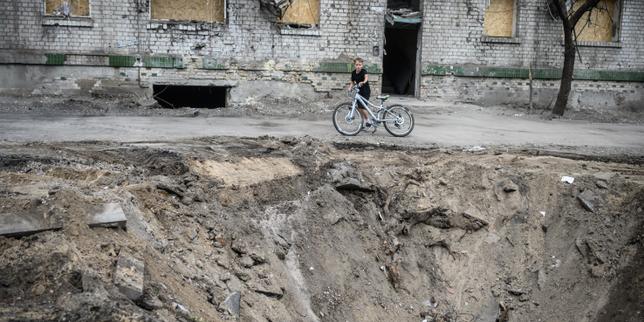
The details of the recent bombardment are grim. Kyiv Mayor Vitali Klitschko reported warehouses and non-residential buildings ablaze, while entire sections of apartment buildings collapsed in the historic Podil neighborhood. In the nearby city of Vyshneve, the situation turned chaotic when a strike on a weapons depot triggered secondary explosions, forcing the evacuation of 500 residents.
This wasn't an isolated incident. Just days earlier, another Russian barrage killed over 30 people in Kyiv. The Russian Defense Ministry claimed they targeted military-industrial enterprises and fuel facilities. The rubble of civilian housing says otherwise.
Zelensky openly admitted the core vulnerability. Ukrainian troops can shoot down cruise missiles and slow-moving suicide drones all day long. What they can't stop are high-speed ballistic missiles on steep trajectories. Ukraine lacks the interceptor missiles required to feed its US-made Patriot systems.
Allies have stockpiles of these interceptors sitting in warehouses. Zelensky's frustration is palpable. He noted that as long as those missiles remain unused by partners, Russia feels invited to keep destroying apartment complexes.
What Trump and Zelensky Are Actually Calculating
The Ankara meeting lasts exactly one hour on the official schedule. It comes right after a three-hour session of the North Atlantic Council. One hour isn't enough time to map out a complex peace treaty, but it's enough to establish the boundaries of Trump's proposed trilateral peace talks.
Trump wants a quick resolution. His administration has pushed the narrative that both sides are exhausted and want an out. He claims Putin feels massive pressure.
That pressure isn't entirely fictional. Ukraine changed its strategy this summer, focusing on a deep-strike drone campaign aimed directly at Russian oil refineries and fuel depots. Data shows these strikes caused Russia's worst fuel crisis in decades. Putin's war machine relies on energy exports, and those exports are burning.
Putin's response is to double down on brutality. By flattening residential sectors in Kyiv, the Kremlin wants to signal that no matter how bad its economic problems get, it can still inflict unbearable pain on Ukraine. It's an attempt to force Zelensky to accept a ceasefire on Russian terms before Trump can impose a different framework.
The Air Defense Trap
Western nations often announce massive aid packages with grand fanfare. NATO members are expected to pledge 70 billion euros in annual military assistance for 2026 and 2027 during this summit. The financial figures look impressive on paper.
The immediate issue isn't money. It's production capacity and political will.
A Patriot missile battery is useless without a steady supply of interceptors. European Commission President Ursula von der Leyen stated that Ukraine urgently needs reinforcements, but these statements have been repeated for years. The delay in delivering actual physical hardware to the front lines has created a window of vulnerability that Russian intelligence actively exploits.
Putin timed this offensive to hit right after America's Independence Day and directly before the Ankara summit. It aims to shock Western leaders into thinking that funding Ukraine is a lost cause, hoping they will press Zelensky to surrender territory.
The Diplomatic Friction in Ankara
Trump's team has a specific view of the conflict. Vice President JD Vance recently argued that Ukraine's defensive operations and long-range drone strikes are more effective than launching massive, bloody ground counteroffensives. The White House wants Ukraine to dig in, hold the line, and let economic sanctions and refinery strikes do the heavy lifting while negotiators talk.
Zelensky has to balance this advice with the reality on the ground. He can't simply freeze the front line while his capital gets systematically dismantled by ballistic missiles. If he enters negotiations from a position of weakness, Putin will demand the permanent annexation of the occupied eastern regions, including towns like Kostyantynivka where heavy fighting continues.
Trilateral talks involving Washington, Kyiv, and Moscow stalled previously. Reviving them requires a baseline of security that currently doesn't exist. If Trump wants to prove his deal-making capability, his first step must involve stabilizing Ukraine's skies.
Next Steps for Following the Ankara Summit
The political theater in Turkey will dominate the news cycle, but you need to look past the handshakes and joint press conferences to see if anything actually changed. Watch for these specific indicators over the next 48 hours.
First, check the wording of the final NATO summit declaration regarding air defense. Look for concrete timelines on missile transfers rather than vague promises of future support.
Second, monitor the scale of Ukrainian drone attacks on Russian soil. If Kyiv scales back its strikes on Russian energy infrastructure immediately after the meeting, it suggests Trump successfully pressured Zelensky to ease up as a condition for ongoing US support.
Third, keep an eye on the Kremlin's official statements following Trump's planned phone call to Putin after the summit. If Moscow maintains its aggressive tone, the Ankara talks likely failed to shift the status quo.
The conflict has reached a critical bottleneck where military strategy and international diplomacy collide. Russia strikes Kyiv because it believes the West will blink first. Whether the Ankara meeting changes that calculation depends entirely on what happens after the cameras are turned off.