The sea doesn't care about your weekend plans. It doesn't care if you paid thousands of dollars for a premium fishing trip out of Steveston. When things go wrong on the water, they go wrong in minutes.
On Sunday, June 28, 2026, a commercial fishing charter carrying ten people capsized and sank in the Strait of Georgia, right near the Roberts Bank area off the coast of Richmond, British Columbia. Four people were pulled from the freezing waters by a passing sailboat and emergency crews. Six others—four men and two women—are gone. They're missing and presumed drowned.
Now, the rescue mission is over. The Richmond RCMP has shifted entirely to a recovery operation. It's a grim, technical task because the vessel rests in what police describe as "really deep" water. We are talking about depths between 150 and 180 meters. To give you some context, that's nearly the height of Vancouver's tallest skyscraper, the Living Shangri-La.
This tragedy isn't just a freak accident. It's a harsh reminder of how quickly open water can turn deadly, and it exposes the gaps in how we approach marine safety.
The Chaos at Roberts Bank
The trouble started around midday on Sunday. The charter boat had departed from the Steveston area of Richmond, a historic fishing hub. By 11:45 a.m., a civilian sailboat cruising the Strait of Georgia spotted something horrifying. People were bobbing in the chop, screaming for help.
The sailboat crew did everything right. They threw out an inflatable dinghy they were towing, giving three survivors something to hold onto, and managed to reach a fourth. At the same time, they broadcasted a desperate Mayday call.
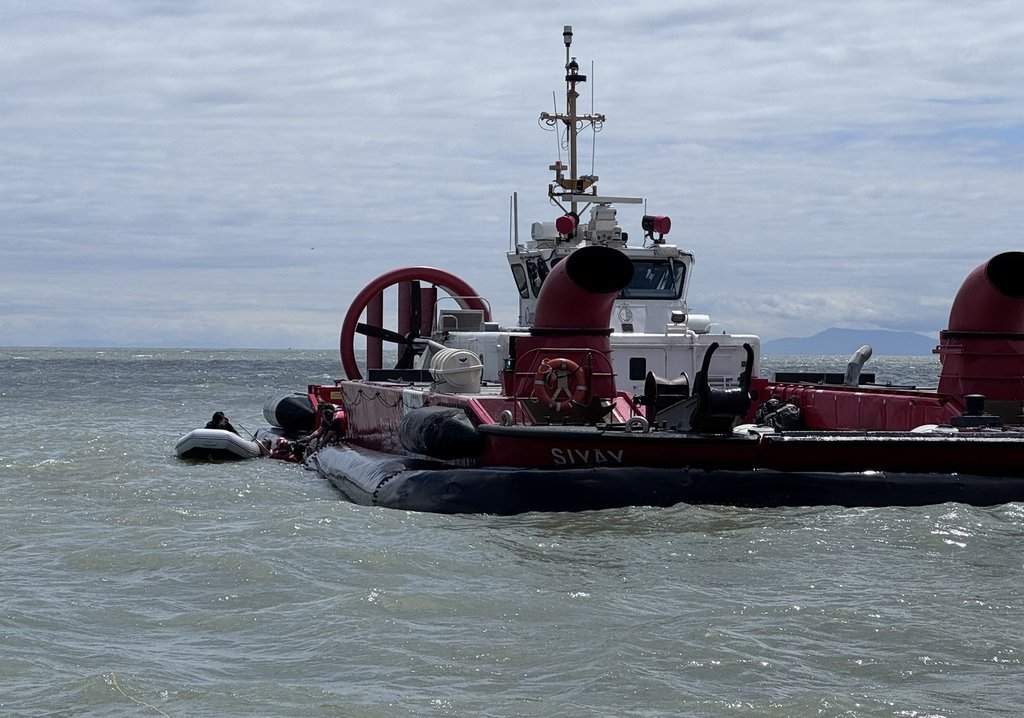
That call triggered a massive response. The Canadian Coast Guard hovercraft Siyay rushed out from Sea Island. Cormorant helicopters and Kingfisher aircraft scrambled into the sky. Royal Canadian Marine Search and Rescue and even passing BC Ferries vessels joined the grid pattern.
By early afternoon, the four survivors were out of the water and at the Sea Island Coast Guard Station. They were severely hypothermic. Today, two of them remain in critical condition, one is being held for observation, and one has been discharged.
But for the other six passengers, the clock ran out. The Joint Rescue Coordination Centre in Victoria kept the search active until 9:45 p.m. on Sunday night. By darkness, officials knew that if anyone else were on the surface, they would have found them. The search was suspended, leaving families to face the worst possible reality.
The Double Danger of the Fraser River Plume
A lot of people think the Strait of Georgia is a protected, calm waterway. It's not. The area where the boat went down, near Roberts Bank, is notorious among experienced local mariners.
This is exactly where the heavy, fresh water from the Fraser River collides with the colder, denser saltwater of the ocean. That mixing zone creates wild, unpredictable currents. When you combine those shifting currents with a bit of wind, the water becomes incredibly choppy very fast.
On the day of the sinking, the weather wasn't severe, but the water was described as turbulent and regular chop. In a heavy commercial vessel, that shouldn't normally be an immediate death sentence. This implies something else went catastrophically wrong.
Speculation among the local boating community points to a few possibilities. The boat might have hit a deadhead—a massive, semi-submerged log carried down by the Fraser River freshet. Hitting a floating log at speed can tear open a hull in seconds. If a boat takes on water from a hull breach while navigating the rough currents of a river plume, it can capsize before anyone even realizes they are sinking.
Another factor is the boat's design and load. Ten people on a fishing charter requires a stable, sizable vessel. If the boat was overloaded or if its bilge pumps failed, a few rogue waves over the stern could easily swamp it.
The Reality of 180 Meter Recovery Operations
The Richmond RCMP Underwater Recovery Team is taking charge of the next phase. They face an incredibly difficult environment.
Human divers can't operate effectively at 150 to 180 meters. The pressure at that depth is roughly 16 to 19 times greater than at the surface. Standard commercial dive teams rarely go past 50 meters without specialized gas mixes and days of decompression. For a police recovery team, sending divers down to a wreck that deep is completely off the table. It's too dangerous.
Instead, the recovery will rely heavily on high-tech marine gear.
Sonar Mapping
Before anyone can send equipment down, the RCMP needs to know exactly where the vessel is sitting. They will deploy side-scan sonar units towed behind police boats. These devices send out fan-shaped acoustic pulses to create a highly detailed 3D map of the ocean floor. Finding a boat in the vast, shifting silty bottom of the Fraser River mouth is like looking for a needle in a dark haystack.
Remotely Operated Vehicles
Once the sonar identifies the target, the team will drop an ROV into the water. These underwater drones are tethered to a surface ship and controlled by pilots using joysticks and video monitors. The ROVs are equipped with high-definition cameras, powerful floodlights, and robotic arms.
The underwater drone's job will be to inspect the hull, look for clues about why it sank, and attempt the harrowing work of recovering the remains of the six victims. If the currents at the bottom are strong, keeping an ROV steady enough to work is an absolute nightmare.
The Transportation Safety Board and Transport Canada are running parallel investigations. They will look at the vessel's maintenance records, its mechanical history, and whether the charter company was fully licensed and compliant with federal regulations.
The Life Jacket Mistake People Keep Making
We need to talk about the most frustrating detail of this entire tragedy. According to the Joint Rescue Coordination Centre, none of the passengers were wearing life jackets or personal flotation devices when they went into the water.
This single factor drastically cut down the chances of survival for the six missing people.
There's a common misconception that if you're a good swimmer, you don't need to wear a life jacket on a larger boat. That's a lie. When you fall into the coastal waters of British Columbia, the temperature is usually between 8 and 12 degrees Celsius.
The moment your body hits that cold water, you experience cold water shock. Your reflex is to gasp uncontrollably. If your head is underwater when you gasp, you inhale water and drown immediately.
If you survive the initial shock, physical incapacitation sets in within ten minutes. The cold water saps the blood from your arms and legs to protect your core. Your muscles stop working. You can't swim, you can't tread water, and you can't hold onto a rescue line. It doesn't matter how mentally tough you are. Your body simply shuts down.
A life jacket keeps your mouth out of the water when you can no longer move your limbs. It buys time for the Coast Guard to find you. The Life-Saving Society of BC noted that this incident happened during a year when BC has already seen 27 drownings. Having a PFD on board the boat is completely useless if it's tucked away under a bench or inside a cabin during a sudden capsize. You have to wear it.
What You Should Do Before Booking a Charter
If you plan to head out on the water this year, don't just assume a charter company is safe because they have a slick website or high ratings on social media. You need to verify their credentials yourself.
Start by asking the captain if the vessel is registered with Transport Canada as a commercial passenger boat. Ask to see their safety briefing procedures and verify that they have enough properly sized PFDs easily accessible for everyone on board.
More importantly, set a rule for your group. If the captain doesn't require everyone to wear a life jacket while the boat is in motion, put yours on anyway. Don't let social awkwardness or a false sense of security keep you from protecting your life. The ocean doesn't give second chances, and as we saw at Roberts Bank, it takes less than an hour for a pleasant fishing trip to become a permanent recovery operation.