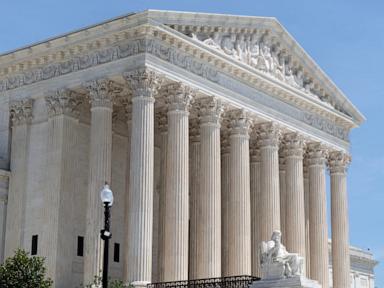
The highest court in America just finished a term that completely reshapes how this country treats voting, citizenship, and race. If you think these choices only matter to legal scholars, you are dead wrong. They hit the core of who gets to vote, who gets to stay in the country, and who counts as an American citizen.
The justices didn't hold back. They fought bitterly. They attacked each other's logic in their written opinions, exposing a deep ideological split. By stripping down voting protections and green-lighting the deportations of hundreds of thousands of refugees, the court's conservative majority made their vision clear. They want a colorblind legal standard, even if the real world is anything but colorblind. For a different view, read: this related article.
The Death of Voting Rights Under the Guise of Politics
The most devastating blow to civil rights came in April. The court effectively gutted a key part of the Voting Rights Act meant to stop states from diluting the power of minority voters. For decades, the law helped create majority-minority districts to ensure Black and brown communities had a voice in Congress.
Justice Samuel Alito wiped that out. Related coverage on this matter has been shared by BBC News.
Writing for the majority, Alito argued that because race and political party choices are so tightly linked, you cannot automatically call a partisan map racist. He claimed politicians are just trying to win elections, not discriminate.
It is a naive argument. Or a deeply cynical one.
Southern politicians wasted no time. Within weeks of the ruling, nearly a dozen states started rewriting their district maps. They are actively eliminating majority-Black districts. This means minority voters are being split up and scattered across white, conservative districts where their votes will no longer carry weight. It is a massive shift in political power, right before major national elections.
When Birthright Citizenship Faced the Chopping Block
We almost lost a century of legal tradition this term. The Trump administration pushed a radical theory to deny birthright citizenship to the children of undocumented immigrants and temporary visa holders. They wanted to rewrite how the 14th Amendment works.
Chief Justice John Roberts stopped them.
In a 6-3 ruling, Roberts traced the concept of birthright citizenship back to English common law. He made it clear that freed Black Americans did not get citizenship as some kind of gift after the Civil War. They received it because the 14th Amendment recognized their absolute right to it by being born on American soil.
"The Amendment recognized their rightful claim to birthright citizenship simply and solely by virtue of their having been born on American soil." — Chief Justice John Roberts
It was a major loss for the White House immigration agenda. But the victory for immigrant advocates is fragile. Justice Clarence Thomas wrote a troubling dissent. He argued that the 14th Amendment was designed uniquely for the descendants of enslaved people, not for the children of modern immigrants or tourists.
This narrow view has already energized anti-immigration groups. They are already pushing the State Department to add pregnancy questions to tourist visa applications to block pregnant women from entering the country.
Stripping Protections for Vulnerable Refugees
While birthright citizenship survived, hundreds of thousands of refugees lost their legal shield. The court ruled 6-3 to let the federal government end Temporary Protected Status (TPS) for migrants from Haiti and Syria who fled horrific violence and disasters.
This decision strips work permits and deportation protections from roughly 350,000 Haitians and 6,000 Syrians. It also cuts off legal options for over a million other immigrants living under similar temporary programs.
The liberal justices were furious. Justice Elena Kagan pointed directly at the racial bias behind the policy change. She noted that the descriptions used by officials—calling these developing nations places of filth and disease—were dripping with racial stereotypes. Kagan remarked that it is impossible to imagine anyone using that kind of language to describe a white community.
But anger does not change the law. The conservative majority decided that courts do not have the power to question how the executive branch handles these revocations. If the administration wants to send people back to a war zone, the courts will not stop them.
What You Should Do Right Now
The legal ground has shifted beneath our feet. Staying informed isn't enough anymore. You need to take concrete steps to protect your community and your rights.
- Check your voter registration immediately. With Southern states rapidly redrawing lines, your polling place or your congressional district might have changed without your knowledge. Do not wait until election day to find out.
- Support local mutual aid for TPS families. Families from Haiti and Syria are facing immediate panic. Local immigrant resource networks need funding and legal volunteers to help these families navigate their suddenly expired status.
- Pressure your state legislators. Since the federal courts are stepping back from protecting minority voting blocks, state-level voting rights acts are the only line of defense left. Demand that your state representatives pass local protections.
The Supreme Court is no longer a shield for vulnerable communities. It is rewriting history, and ordinary citizens have to deal with the fallout. Keep your eyes on local policies, because that is where the real fight is heading.