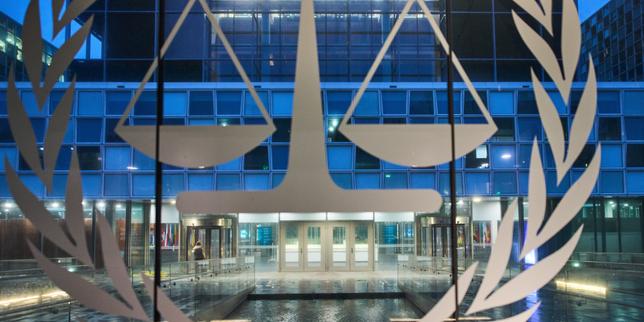
The military juntas running Mali, Burkina Faso, and Niger just made their split from the West official. By hand-delivering their formal exit papers to the United Nations, these three Sahel nations are walking away from the International Criminal Court. They call it a weapon of neo-colonialism. They claim it targets African leaders while ignoring Western overreach. But let's look past the fiery anti-imperialist rhetoric. This move is less about defending national sovereignty and much more about shielding military rulers from future prosecution.
The timing tells you everything you need to know. The United Nations registered the formal exit notifications at the end of June 2026. Niger led the charge by filing its paperwork on June 18, followed by Mali and Burkina Faso on June 24. Under the rules of the Rome Statute, the treaty that built the court, a country cannot just pack up and leave overnight. The exit takes exactly one year to become official. That puts the final departure date in late June 2027. Until then, they are legally bound to cooperate with investigators in The Hague. Whether they actually will do that is a completely different story. You might also find this related story useful: Why Joseph Aoun Is Betting Big On Trump To Fix Lebanon.
This decision did not happen in a vacuum. It represents the logical next step for the Alliance of Sahel States, a coalition formed by these three juntas after they kicked out French troops, sidelined Western diplomats, and turned to Russian military contractors for survival. They want to operate without international oversight. By removing the threat of international warrants, these regimes are locking down their hold on power.
The Shield Against Accountability
Human rights organizations are sounding the alarm. This collective exit threatens to pull the rug out from under thousands of civilian victims who have no other path to justice. For over a decade, the Central Sahel has been trapped in a brutal cycle of violence. Military forces are fighting entrenched jihadist insurgencies linked to Al-Qaeda and the Islamic State. As highlighted in latest articles by BBC News, the effects are significant.
Local judiciaries in Bamako, Ouagadougou, and Niamey are completely dominated by the ruling military councils. They do not investigate their own soldiers. Independent journalists are being systematically silenced. Over a hundred non-governmental organizations and civic associations have been dissolved by decree over the last year. When internal checks and balances are entirely wiped out, the International Criminal Court acts as the court of last resort. Removing that safety net leaves civilians completely exposed.
The scale of the atrocities in the region is staggering. Civilians are caught in a deadly vice between jihadist massacres and heavy-handed military counter-insurgency operations. Independent documentation reveals a steady rise in extrajudicial executions, forced disappearances, and drone strikes that hit markets instead of militant camps. Bringing in Russian paramilitary forces, previously known as the Wagner Group and now rebranded under state control, only added fuel to the fire. These forces operate completely outside domestic or international law. Leaving the court ensures that the commanders ordering these operations will never have to face a judge in Europe.
What Happens to Ongoing Investigations
Leaving the treaty does not instantly wipe the legal slate clean. The text of the Rome Statute is very clear on this point. Article 127 states that a country's withdrawal does not affect its financial or legal obligations incurred while it was a member. It explicitly does not prejudice any matter that was already under consideration by the court before the withdrawal became effective.
Mali represents the most complicated legal battleground in this divorce. The country has been under an active, formal investigation by the prosecutor since 2013. That probe was triggered by the government itself after Tuareg rebels and Islamic extremists overran the northern half of the country. The court has already successfully prosecuted individuals for destroying historic mausoleums in Timbuktu. It still has open files on multiple war crimes and crimes against humanity committed during the ongoing conflict.
The legal realities for each country show how complicated this exit will be.
Mali has open active cases and an active investigation file dating back over thirteen years. Its exit will become official on June 24, 2027, but past crimes remain under the court's jurisdiction.
Burkina Faso has no active open public investigation, but the court has been conducting preliminary examinations into military massacres of civilians. Its exit date is also set for June 24, 2027.
Niger has no active public prosecution file, though the overall regional security collapse has drawn scrutiny. Its exit becomes effective slightly earlier, on June 18, 2027.
Because Mali's investigation is already wide open, the prosecutor retains full legal authority to issue new arrest warrants for crimes committed up until June 2027. The real-world problem is enforcement. The court has no police force of its own. It relies entirely on national governments to execute its warrants. If Bamako refuses to hand over a commander, the warrant stays on paper. It effectively turns into an international travel ban, preventing that official from visiting any of the 120-plus countries that remain members of the court.
The Long History of African Friction With The Hague
The narrative used by the Sahel juntas resonates across parts of the continent because it taps into a deep, historical resentment. For the first decade of its existence, the court focused almost exclusively on African situations. Critics frequently pointed out that while global powers like the United States, Russia, and China stayed completely outside the court's jurisdiction, African leaders were the ones consistently ending up in the dock.
The friction reached a boiling point a decade ago when the African Union actively debated a mass bloc withdrawal. That collective walkout never materialized, but individual states began testing the waters. Burundi became the very first country to successfully leave the court in 2017. The Philippines followed suit in 2019 under Rodrigo Duterte after the court opened an inquiry into his violent war on drugs.
The Sahel nations are using this familiar playbook. They frame their departure as an act of pan-African defiance against a biased institution. They point to the fact that major global atrocities outside Africa often take years to reach the formal investigation stage, while African states face immediate scrutiny. It is an effective political talking point that wins support among local populations tired of Western interference. It conveniently ignores the fact that many African investigations, including Mali's, were explicitly requested by the African governments themselves when they needed international help to deal with rebel groups.
The Reality of Sovereign Justice Systems
The juntas claim they are perfectly capable of delivering justice through their own national courts. They argue that international trials are an insult to their domestic legal systems. In a healthy democracy, that argument holds weight. The International Criminal Court is built on the principle of complementarity, meaning it only steps in when national courts are genuinely unable or unwilling to prosecute the gravest international crimes.
The situation on the ground in the Sahel completely contradicts the claim of domestic capability. The judiciaries in these countries are not independent. Military magistrates handle sensitive political cases. Civilians are routinely tried in military tribunals. Defense lawyers face harassment, detention, or forced exile if they defend political dissidents or challenge state narratives.
When a state judicial apparatus is used primarily as a tool to lock up political opponents, it cannot be trusted to fairly investigate war crimes committed by its own top generals. The domestic courts simply will not hold the ruling elite accountable. By walking away from global oversight, the juntas are ensuring that the only law that matters in the Sahel is the law of the regime currently holding the guns.
Geopolitical Realities Shift the Sahel Map
This exit is not just a legal maneuver. It is a major geopolitical pivot. The Alliance of Sahel States is intentionally burning its remaining bridges with Western institutions. The departure from the court mirrors their earlier withdrawal from the Economic Community of West African States, a move that fractured regional integration in West Africa.
By cutting ties with international legal frameworks, these regimes are aligning themselves completely with global powers that reject the Western model of international accountability. Moscow and Beijing do not condition their military aid or diplomatic support on human rights records or cooperation with international tribunals. This makes them highly attractive partners for military rulers looking to secure their positions without answering uncomfortable questions about civilian casualties.
This shift reshapes security cooperation across the entire region. Neighboring West African states that remain committed to international treaties now face a massive, legally lawless zone right on their borders. It makes cross-border counter-terrorism operations significantly harder to coordinate. Intelligence sharing bogs down when one side operates under international legal constraints and the other side explicitly rejects them.
Immediate Action Steps for Regional Stability
The international community cannot simply sit back and watch this exit play out without changing its strategy. The one-year transition window provides a narrow opportunity to adjust how regional security and accountability operate.
First, regional bodies and international donors must shift their focus to supporting local, underground civil society networks that continue to document abuses. Even if the court loses direct access, verified data collection must not stop. This information will be vital for future accountability processes, no matter how long they take to materialize.
Second, neighboring countries within West Africa need to strengthen their own judicial cooperation frameworks. They must ensure that their territories do not become safe havens for individuals accused of major human rights violations in the Sahel. Universal jurisdiction laws within African states can be utilized to prosecute bad actors who travel outside the borders of the military alliances.
Finally, diplomatic engagement with the Sahel must look past the ruling military elites and focus on the civilian populations. Humanitarian aid and protection mechanisms must be decoupled from political relationships with the juntas to ensure that the most vulnerable people do not pay the price for their rulers' geopolitical maneuvers.
The next twelve months will reveal exactly how these regimes handle their remaining international obligations. Watch the court's prosecutor closely during this window. If new warrants are going to be issued for historic crimes in the Sahel, they will need to be unsealed before the June 2027 deadline strikes.