The skies over the National Mall on the Fourth of July are usually a carefully scripted theater of military power. You expect the standard heavy metal: B-2 bombers, F-22s, and maybe a roaring Navy flight team. You don't expect a billionaire government official flying his own private, 1970s-era fighter jet in direct defiance of the federal agency tasked with keeping the skies safe.
Yet that's exactly what went down during America's 250th birthday celebration in Washington D.C.
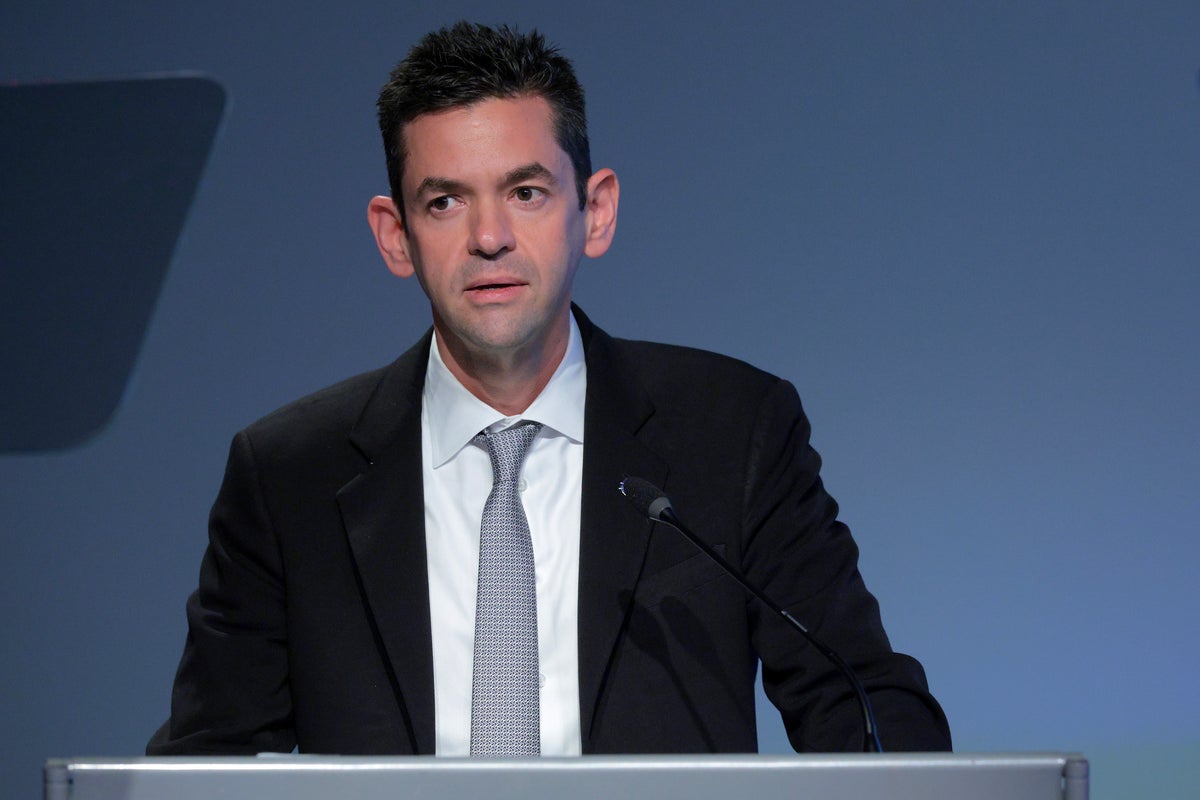
Jared Isaacman, the freshly minted NASA Administrator, tech billionaire, and decorated private astronaut, led a flyover featuring his personally owned Northrop F-5 Tiger II. He did this just days after the Federal Aviation Administration explicitly told him no. The agency deemed the flight too dangerous for a densely populated urban center.
This isn't just a story about a high-ranking bureaucrat pulling rank. It exposes a massive, systemic loophole in how American airspace is governed, demonstrating how quickly public safety rules can evaporate when billionaires wear government hats.
The June 30 Denial Letter That Meant Nothing
To understand how wild this situation is, you have to look at the paperwork. Late in June, a representative for Isaacman submitted a petition to the FAA. The request asked for permission to let four privately owned, 1970s-built F-5 fighter jets join the official "Freedom 250" air show over the National Mall.
The FAA looked at the request and immediately flagged it. On June 30, Hugh Thomas, a senior official in the FAA’s flight standards division, officially denied the petition.
The regulatory agency wasn't just being difficult. They cited specific, severe safety concerns:
- The aging mechanical infrastructure of 50-year-old experimental aircraft.
- The unreliability or lack of certified maintenance logs for privately held military hardware.
- The volatile nature of vintage ejection systems in low-altitude urban corridors.
- The extreme risk to life and property on the ground if a supersonic jet suffered a catastrophic flameout over the monuments.
The FAA made its stance perfectly clear. The risk profile was unacceptable for civilian aircraft flying over hundreds of thousands of spectators crammed into the National Mall.
So how did Isaacman end up in the cockpit over D.C. on Saturday anyway? He changed the vocabulary.
The Ultimate Bureaucratic Magic Trick
Isaacman didn't sneak past air traffic control or run a rogue mission. Instead, he utilized an aggressive legal pivot that essentially stripped the FAA of its veto power.
He told federal regulators that the whole situation was just a big misunderstanding about classification. Because his company, JDI Holdings, technically owned three of the F-5s, the FAA evaluated the request under civil aviation rules. Civil operations face intense scrutiny, especially when dealing with ex-military jets categorized as "experimental."
To bypass this roadblock, Isaacman placed his private jets under official NASA operational control right before the holiday weekend. The physical titles of the planes didn't change hands, but the operational designation did.
Suddenly, they weren't civilian aircraft subject to standard FAA safety oversight. They were "public aircraft."
Under federal law, specifically Title 49 of the United States Code, government agencies operating public aircraft enjoy sweeping exemptions from standard civil aviation regulations. If NASA says a flight is critical for an official mission, the FAA's civilian division has almost no grounds to block it.
"It never should have been a civil operation from the get-go," Isaacman later told reporters. He argued that because he leads NASA, and because NASA was participating in the federal celebration, his personal fleet should be treated as part of the state machinery.
The FAA was left holding a useless denial letter. They noted that they had conducted a standard safety review for private experimental planes, but once the aircraft shifted to government control, the civilian watchdog was effectively toothless.
Why the Northrop F-5 Tiger II Terrified Regulators
The aircraft at the center of this turf war isn't some modern, computer-stabilized corporate jet. The Northrop F-5 Tiger II is a Cold War relic. First designed in the late 1950s and widely produced throughout the 1970s, the F-5 is a highly maneuverable, supersonic light fighter.
The U.S. military heavily utilized the F-5 as an "aggressor" aircraft to simulate Soviet MiGs during training exercises. It's fast, twitchy, and loud. Because Isaacman founded Draken International—a private defense contractor that provides adversary air training to the U.S. military—he happens to own one of the largest private fleets of these tactical jets in the world.
While the F-5 has a solid reputation among military pilots, it operates under vastly different parameters when stripped of military logistical backing. When a private citizen buys one, the FAA registers it as an "Experimental-Ex-Military" aircraft.
Maintaining these machines requires specialized mechanics, rare spare parts, and deep pockets. If a hydraulic line blows or an engine surges over a cornfield in Ohio, the pilot ejects, and the plane crashes into dirt. If that same failure happens at 1,500 feet over the National Mall during a crowded public festival, you have a national tragedy.
The FAA's primary job is risk mitigation. From their perspective, allowing uncertified, privately maintained supersonic hardware to buzz the Capitol building was an unnecessary gamble. Isaacman dismissed these fears, pointing out that hundreds of F-5 variants are still flown by global air forces every day without incident.
The Secret VIP Passenger List That Got Axed
The flyover was meant to be an even bigger spectacle than what the public witnessed. According to inside reports, Isaacman didn't intend to fly solo or just with his wingmen. He planned to fill the rear seats of his twin-seat F-5 variants with high-ranking political figures.
The proposed passenger manifest included Treasury Secretary Scott Bessent alongside several key White House officials.
Imagine the optics. A newly appointed NASA administrator giving rides to the head of the Treasury in a privately owned, vintage fighter jet through the most restricted airspace on the planet, all while the FAA screamed about safety hazards.
Ultimately, cooler heads prevailed on the passenger front. The VIP rides were quietly canceled before the jets taxied onto the runway. While Isaacman won his battle to get the planes in the air, bringing political heavyweights along for the ride during an active regulatory dispute was a bridge too far even for this administration.
The Deep Double Standard of Washington Airspace
If you're a regular private pilot, you know that the airspace around Washington D.C. is an absolute minefield. Following the events of September 11, 2001, the government established the Special Flight Rules Area (SFRA) and the ultra-restrictive Flight Restricted Zone (FRZ).
The FRZ is a highly sensitive airspace ring that covers a roughly 15-mile radius around Ronald Reagan Washington National Airport. To enter it as a general aviation pilot, you need special background checks, a specific pilot identification number, an active flight plan filed hours in advance, and constant communication with NORAD and air traffic control.
If a typical civilian pilot accidentally clips the edge of the FRZ without permission, the response is immediate and terrifying:
- Black Hawk helicopters or F-16s intercept your aircraft within minutes.
- Air traffic control orders you to land immediately at the nearest airfield.
- Federal agents greet you on the tarmac for an aggressive interrogation.
- The FAA permanently revokes your pilot's license.
Regular pilots lose their livelihoods for simple navigational mistakes in this airspace. Yet Isaacman managed to get a formal denial from the FAA, override it by reclassifying his private property as government equipment, and fly directly through the heart of the restricted zone.
It highlights an uncomfortable truth about modern aviation policy. The rules are unyielding for the average aviator, but highly malleable if you possess enough capital and a government title.
A New Era of Private-Public Friction
This incident isn't an isolated spat between two agencies. It's a symptom of a massive shift in how the American government interacts with aerospace billionaires.
Isaacman isn't a traditional bureaucratic appointment. He’s an active commercial astronaut who commanded the Inspiration4 and Polaris Dawn spaceflights. He’s deeply embedded in Elon Musk’s SpaceX ecosystem. He represents a new breed of hyper-wealthy tech elites who view traditional government regulations not as protective guardrails, but as slow, inefficient obstacles to be engineered around.
When Trump appointed Isaacman to run NASA, it was a clear signal that the agency would lean hard into privatization and fast-paced commercial methods. The July 4th flyover dispute is that philosophy playing out in real-time.
On one side, you have the FAA: cautious, slow, hyper-focused on eliminating every fraction of a percent of risk, and bound by decades of civilian transport safety laws. On the other side, you have Isaacman: a mission-driven disruptor who looks at an aging jet, calculates the mathematical probability of a crash, decides it's acceptable, and uses a legal maneuver to keep moving forward.
How to Track This Evolving Regulatory Loophole
This clash will almost certainly trigger a quiet legislative reckoning in Washington. If you want to see how this playground fight affects the future of aviation safety and public aircraft status, keep your eyes on these specific regulatory fronts:
Watch the FAA Reauthorization Debates
Congress regularly updates the FAA's mandate. Look for upcoming amendments regarding the definition of "Public Aircraft Operations." Lawmakers who are concerned about executive overreach will likely try to tighten the language to prevent officials from declaring their private toys "government assets" for weekend events.
Monitor NASA Accountability Office Reports
Keep an eye on internal NASA Inspector General reports over the coming year. The IG will likely investigate whether any taxpayer funds, NASA logistics, or government personnel hours were used to facilitate, fuel, or maintain Isaacman’s private F-5 fleet during the holiday weekend.
Follow General Aviation Advocacy Groups
Groups like the Aircraft Owners and Pilots Association (AOPA) track these airspace issues closely. Watch their public statements. The general aviation community hates double standards, and if the FAA gets overly aggressive with regular pilots to overcompensate for losing face against Isaacman, you'll see a significant legal backlash.
The weekend show over the National Mall was a spectacular display of aviation history, but the real fireworks happened entirely behind closed doors. Isaacman proved that in the modern era of commercialized government, a clever legal reclassification beats an FAA safety directive every single time.