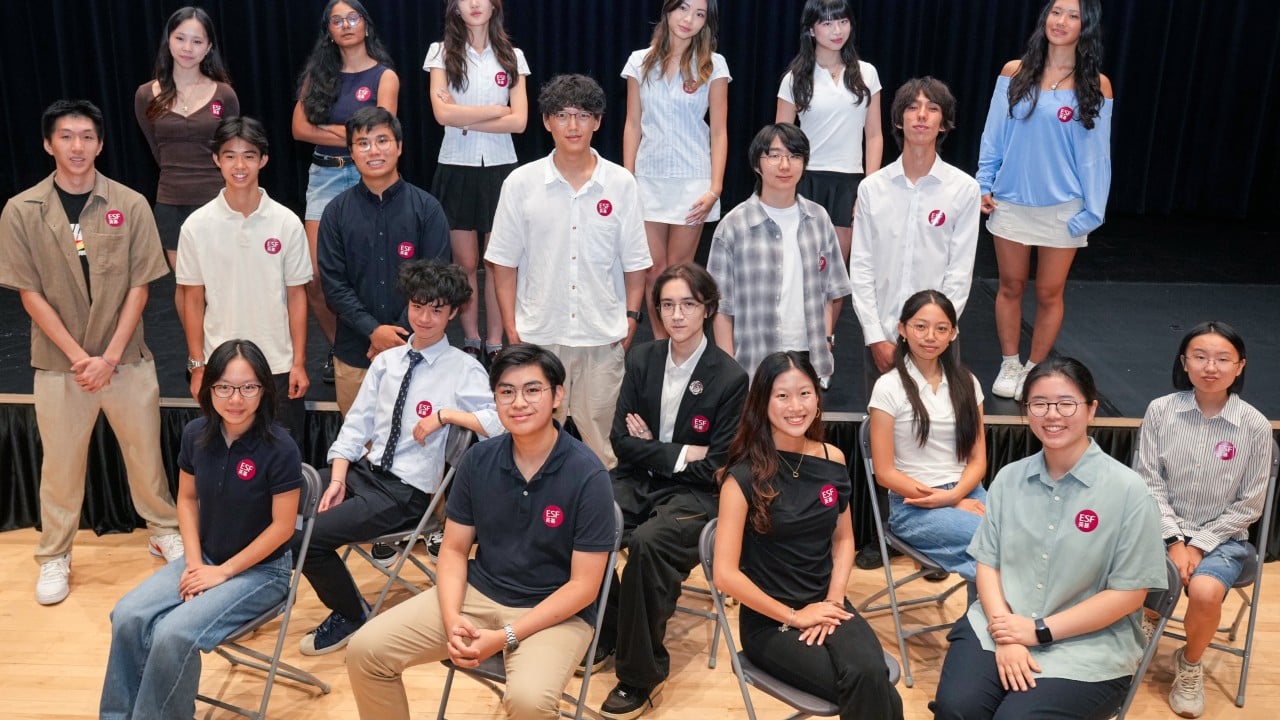
Every year when the International Baccalaureate results come out, a predictable ritual plays out across Hong Kong. Elite students who just scored a flawless 45 out of 45 stand in front of flashing cameras, holding their results slips. When reporters ask what they want to do next, the answer is almost always the same. They want to go to medical school.
This year is no different. The English Schools Foundation, the city's largest international school operator, just announced a massive haul of 27 perfect scorers. That is a massive jump from the 15 they recorded last year. Out of those 27 top achievers, a staggering 14 have already declared their intention to study medicine.
Think about that for a second. More than half of the absolute brightest minds in a single school cohort are tracking toward the exact same profession. Across the entire city, at least 65 students from 16 different schools achieved perfect marks this term, pushing Hong Kong's average IB score up to 37.02 from last year's 36.72. A huge chunk of these students are also looking at white coats and stethoscopes.
It makes you wonder why this specific obsession persists. In an era dominated by tech billionaires, startup founders, and artificial intelligence, why are the most academically gifted teenagers still choosing a grueling, decades-long path in local hospitals?
The answer isn't as simple as parental pressure or a desire to help people. It is a mix of cultural stability, local economic realities, and some deeply personal, sometimes quirky habits that got these kids to the top in the first place.
The Safety Net of a Medical Degree in Hong Kong
Let's be completely honest about the economic environment in Hong Kong. The city has long been obsessed with stable, high-earning professions. Finance and law used to share the crown with medicine, but the financial sector has felt increasingly volatile lately. Tech jobs in Hong Kong don't carry the same cultural prestige or guaranteed high starting salaries as they do in Silicon Valley.
Medicine stands out as the ultimate recession-proof career.
If you graduate from a medical program at the University of Hong Kong or the Chinese University of Hong Kong, you are virtually guaranteed a job. You enter a structured system with a clear pay scale that starts high and only goes up. For families investing millions in international school tuition, that guaranteed return on investment matters deeply.
But this path isn't a walk in the park. The reality waiting for these high achievers is notoriously brutal.
The Grim Reality of Public Hospital Burnout
While everyone celebrates the perfect scores, veteran doctors in the city are sounding the alarm about what happens after graduation. The local public healthcare system operates under extreme stress.
Data shows that burnout rates among training doctors and residents in Hong Kong sit above 70%. Think about that number. Nearly three-quarters of young doctors are physically and emotionally exhausted. The rate of clinical depression among these medical professionals is roughly three times the local baseline rate.
Young doctors routinely work shifts that stretch past 24 hours. They deal with overcrowded wards, endless paperwork, and a system that relies on their sheer endurance to keep from collapsing.
Many critics point out that entering medicine for the prestige or to please your family often backfires before you even hit 30. Giving up your social life, suffering from sleep deprivation, and battling mental health struggles aren't badges of honor. Yet, the allure of the title remains incredibly strong.
Old School Phones and Miso Soup
How do you even get a perfect 45 on the IB exam? The curriculum is infamous for its heavy workload, requiring students to balance six subjects, an extended essay, and community service requirements.
This year's top scorers from the English Schools Foundation shared some surprisingly grounded strategies for surviving the pressure. It wasn't about studying 18 hours a day. It was about brutal discipline and eliminating distractions.
One student made headlines by ditching their smartphone entirely during the revision period. They switched to an old-school Nokia phone. No Instagram. No TikTok. No group chats blowing up every five seconds. Just calls and basic texts. It sounds extreme to the average teenager, but it completely cut out the digital noise that derails most study sessions.
Other students relied on comforting routines to keep their anxiety at bay. One student swore by a daily bowl of miso soup. The warm, salty broth became a grounding ritual before tackling mountains of past papers. It gave them a sense of predictability when everything else felt chaotic.
Smart time management was the real secret weapon. The students who scored perfectly emphasized that nonstop studying is actually counterproductive. You need a healthy routine that leaves room for hobbies, exercise, and mindless television. Overthinking and feeling inadequate are the biggest traps in high-stakes testing. Staying calm matters just as much as memorizing facts.
The Ethical Use of Artificial Intelligence
You can't talk about academic success without mentioning technology. While some students used Nokia phones to block out social media, others leaned heavily into artificial intelligence to supercharge their revision.
Top achievers from elite institutions like Diocesan Boys' School, Victoria Shanghai Academy, and Po Leung Kuk Choi Kai Yau School openly credited AI for helping them ace the exams. The key was using it responsibly.
Lucas Chavez Mocan, a perfect scorer from Diocesan Boys' School who plans to study engineering at the University of Cambridge, highlighted how his teachers integrated technology into the classroom. His English teacher wrote highly detailed grading rubrics. Students fed these rubrics into AI tools along with their practice essays.
This allowed the students to get instant, accurate feedback on their writing late at night or over weekends when teachers weren't available to grade papers. It wasn't about getting the AI to write the essay for them. It was about using the tool as a tireless, 24/7 personal tutor.
Carrinna Tong Hoi-lam, a perfect scorer from Po Leung Kuk Choi Kai Yau School who is heading into medicine, agreed that AI is incredibly useful if you don't use it blindly. Copying answers from an AI won't teach you how to think under exam conditions. You have to treat it as a tool to test your own knowledge, not a shortcut to skip the hard work.
What Next for Aspiring Medical Students
If you are a student or a parent aiming for top marks and a seat in a medical lecture hall, you need a concrete plan that goes beyond simply staring at textbooks.
First, audit your screen time. You don't necessarily have to buy a Nokia brick phone, but you must find a way to lock down your apps during deep work sessions. Use software blockers or physically leave your phone in another room.
Second, build a feedback loop. If you use AI tools to study, ensure you feed them explicit, official IB rubrics. Ask the tool to critique your work based strictly on those parameters rather than asking for general writing advice.
Third, look closely at the reality of the medical profession. Talk to actual junior doctors working in local public hospitals. Understand the shift patterns, the emotional toll, and the systemic pressures before committing to the career line. High academic achievement gives you choices. Make sure you are choosing the path because you genuinely want the work, not just the status that comes with it.



:max_bytes(150000):strip_icc():focal(999x0:1001x2)/rishi-sunak-akshata-murthy-10-78981f8236984c69b70bc15bcb3d49e9.jpg)