The legal standard for a preliminary hearing in Utah is shockingly low. Prosecutors don't have to prove their case beyond a reasonable doubt. They just need to show a reasonable ground for belief. Basically, they need a shred of probable cause to push a defendant to a full trial. This week, the state is laying out its cards against twenty three year old Tyler Robinson, the man accused of assassinating conservative activist Charlie Kirk on a university campus last fall. If you've been following the headlines, you've probably heard about sniper pads and encrypted text messages. But mainstream coverage is completely missing the underlying strategy playing out in that Provo courtroom.
This isn't a mini trial to determine guilt. It's a strategic chess match where the defense is hunting for holes in the police work and the prosecution is trying to secure a path toward the death penalty.
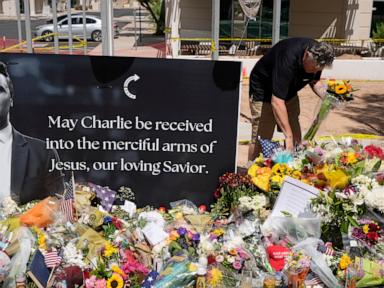
On Monday, the initial wave of evidence went public. The details are chilling. Charlie Kirk was addressing thousands of people at Utah Valley University on September 10 when shots rang out. The subsequent investigation moved with blistering speed, culminating in Robinson turning himself in the following day. Now, the court is sifting through hours of surveillance tapes, digital trails, and forensics.
But don't expect a sudden twist that sets the defendant free this week. Former prosecutors and legal experts agree that the odds of a judge dismissing charges at this stage are almost zero. The real battleground is elsewhere.
The Mirage of a Defense Victory at this Stage
Many observers wonder why defense attorneys bother cross examining witnesses so aggressively during a preliminary hearing when the bar for the prosecution is this low. The answer is simple. They are locking down testimony.
When a police officer or an investigator takes the stand right now, they are speaking under oath. Their words are recorded. If their story changes even slightly by the time the actual trial rolls around, the defense can use these early transcripts to destroy their credibility in front of a jury.
Look at how defense attorney Kathryn Nester handled the testimony of former university officer Christopher Bagley. Bagley testified about finding what he called a sniper pad on a nearby rooftop. He described indented gravel that suggested someone had been lying down in a prone shooting position with a direct line of sight to Kirk. It sounds like a slam dunk for the state.
Nester didn't try to prove her client wasn't on that roof. Instead, she attacked the thoroughness of the scene preservation. She got Bagley to admit on the stand that his body camera battery died while he was up there. He didn't return to the roof after charging it. He didn't find any spent casings on that specific surface.
Then came the hammer. Nester asked about an empty pistol holster found on the ground as the panicked crowd fled the scene. Bagley acknowledged that the police never took custody of that holster. They didn't test it for fingerprints. They didn't run DNA analysis on it.
In a state like Utah, where open carry is perfectly legal, an empty holster might mean absolutely nothing. But to a defense team, it's a gift. They are already planting the seeds of reasonable doubt. They want a future jury to believe that the police suffered from tunnel vision, rushing to pin the assassination on Robinson while ignoring other armed individuals who were running through the campus that afternoon.
The Roommate Statements and the Hearsay Loophole
The prosecution is relying heavily on digital footprints and confession notes. According to court documents, Robinson left a physical note under a keyboard for his roommate and romantic partner. The text was blunt. It stated that he had the opportunity to take out Charlie Kirk and was going to take it. Later, he allegedly texted the same individual, claiming he had had enough of Kirk's hatred.
This roommate is a critical link in the state's timeline. However, the prosecution isn't bringing them into the courtroom to testify live this week. They are using recorded statements instead.
The defense fought like hell to block this move. They argued that Robinson has a constitutional right to confront his accusers and that his legal team must be allowed to cross examine the roommate immediately. State District Judge Tony Graf shut that argument down, ruling that the prosecution can use the recorded hearsay for the purpose of establishing probable cause.
This is a massive tactical advantage for the state. It allows them to introduce devastating admission evidence without exposing their star witness to a grueling cross examination before the actual trial. The defense wants to question the roommate's motivations, the nature of their relationship, and whether there was any pressure from investigators during the initial interviews. For now, those questions will have to wait.
The Battle of the Video Feeds
We live in an era where every single public event is recorded from dozens of different angles. The campus shooting was no exception. Cellphone clips flooded social media within minutes of the gunfire. The state's lead investigator, David Hull, spent months piecing together a comprehensive visual narrative using university surveillance cameras, private Ring doorbells, and citizen cell videos.
On Tuesday, the court is diving much deeper into this digital record. The state already showed graphic videos of the actual shooting and the chaotic medical response that followed. The Kirks, along with Donald Trump Jr., sat in the courtroom to witness this presentation, though the family briefly stepped out twice when the footage became too intense.
The technical battle over these videos is crucial. On Monday, Judge Graf handed the defense a rare victory by blocking a specific compilation tape prepared by the prosecution. The state had taken various security feeds and edited them together, adding zoomed-in frames and drawing digital circles around specific individuals to track the suspect's movements.
The defense objected, arguing that these edits amounted to an alteration of evidence. The judge agreed, stating that in a capital murder case, even minor details are important. The prosecution had to take the tape back to the lab to strip out the digital annotations.
This tells us that the judge is going to hold the state to a strict standard regarding electronic evidence. It also shows that the defense is hyper-vigilant about how the state visualizes its narrative. They don't want the prosecution to guide the judge’s or a future jury's eyes with pre-made graphics and highlights. They want the raw, ambiguous footage to speak for itself, because ambiguity favors the accused.
Why the Death Penalty Hinges on the Crowd
The state of Utah isn't just seeking a murder conviction. They want the death penalty. Capital punishment requires specific aggravating factors under state law. In this instance, the prosecution isn't just focusing on the political nature of the target or the alleged premeditation. They are leaning heavily on the venue.
Kirk was speaking to an audience of thousands when he was killed. By firing a rifle from a rooftop into a dense crowd, the shooter didn't just target one man; he actively endangered every single human being in that courtyard.
This is why the hours of video footage are so critical for the prosecutors. They aren't just using the tapes to identify Tyler Robinson. They are using them to document the proximity of the bystanders, the trajectory of the bullets, and the sheer panic that could have resulted in a deadly stampede. They need to establish that the act was inherently indiscriminate in its danger, even if the choice of target was highly specific.
The defense has tried to get capital punishment taken off the table early on, but those efforts have failed so far. Expect the defense to argue later that a single, targeted shot from a high precision vantage point does not constitute a reckless endangerment of a crowd in the same way a random mass shooting would. It is a grim, clinical legal distinction, but it is the line between life in prison and a lethal injection.
What to Watch Next
The preliminary hearing is scheduled to run through the end of the week. Do not look for a dramatic acquittal here. Instead, keep your eyes on three specific elements as the week unfolds.
First, watch how the defense handles the introduction of the forensic DNA evidence. The state claims to have Robinson's genetic profile on the rifle's trigger, a towel wrapped around the weapon, and multiple cartridge casings. The defense will likely scrutinize the chain of custody for these items. They want to know exactly who handled the rifle from the moment it was recovered in the campus woods until it reached the state lab.
Second, pay attention to the timeline of Robinson turning himself in. Court documents suggest his parents confronted him after seeing a suspect photo released by law enforcement. They then utilized a family friend, a retired sheriff's deputy, to broker his surrender. The specific details of what Robinson said to his parents and that retired deputy could be devastating if they are ruled admissible.
Finally, look at the unedited video playbacks. The prosecution will try to present the clean, unannotated security clips that the judge demanded. How smoothly those videos connect Robinson's known vehicle movements to the scene of the crime will determine just how airtight this prosecution really is heading into the winter.