Three guards. Eighty-eight inmates. If you know anything about correctional safety, those two numbers should immediately make your stomach drop.
When an inmate uprising erupted at the Bertie-Martin Regional Detention Center in Windsor, North Carolina, it wasn't just a random act of chaos. It was the predictable result of a math problem that local jails across the country have been trying to ignore for years. Early in the morning on Monday, June 29, 2026, that math problem finally caught up with Bertie County.
Inmates overpowered the skeleton crew on duty, took total control of parts of the facility, and held two guards hostage for hours. While the situation ended without fatalities, it exposed a fragile reality in rural law enforcement. We aren't just looking at a security breach. We're looking at a structural failure.
The Dawn Raid in Windsor
The crisis began at roughly 5:00 a.m. inside the 90-bed facility, which sits about 120 miles east of Raleigh. The detention center houses pretrial detainees and short-term inmates for both Bertie and Martin counties. It is supposed to be a secure, controlled environment. Instead, it turned into a tactical nightmare in a matter of minutes.
A group of inmates coordinated an attack, quickly assaulting the on-duty staff. One guard managed to break away and escape the building to sound the alarm. The other two weren't so lucky. They were captured and held as leverage.
The first sheriff's deputy arrived on the scene within two minutes of the initial distress call. By then, it was already too late to simply walk through the front door. The inmates had barricaded the section and locked down their perimeter. A local jail had become a fortress against the very law enforcement officers who run it.
A Formula for Disaster
To understand how this happens, you have to look at the severe staffing ratios. Having three guards responsible for 88 inmates means each officer is managing nearly 30 individuals simultaneously. In a facility housing pretrial detainees—where tension is high and backgrounds vary wildly—that ratio is flat-out dangerous.
When questioned about these operational levels during an afternoon news briefing, Bertie County Sheriff Tyrone Ruffin noted that his office doesn't handle the direct administrative oversight of the regional facility. It's a common bureaucratic shield, but it doesn't change the ground reality.
Jail administrators frequently run shifts on absolute minimums to save money or because they simply can't find people willing to take the jobs. When you pay low wages for high-risk work, you get empty shifts. When you get empty shifts, you get events like this.
Inside the Standoff
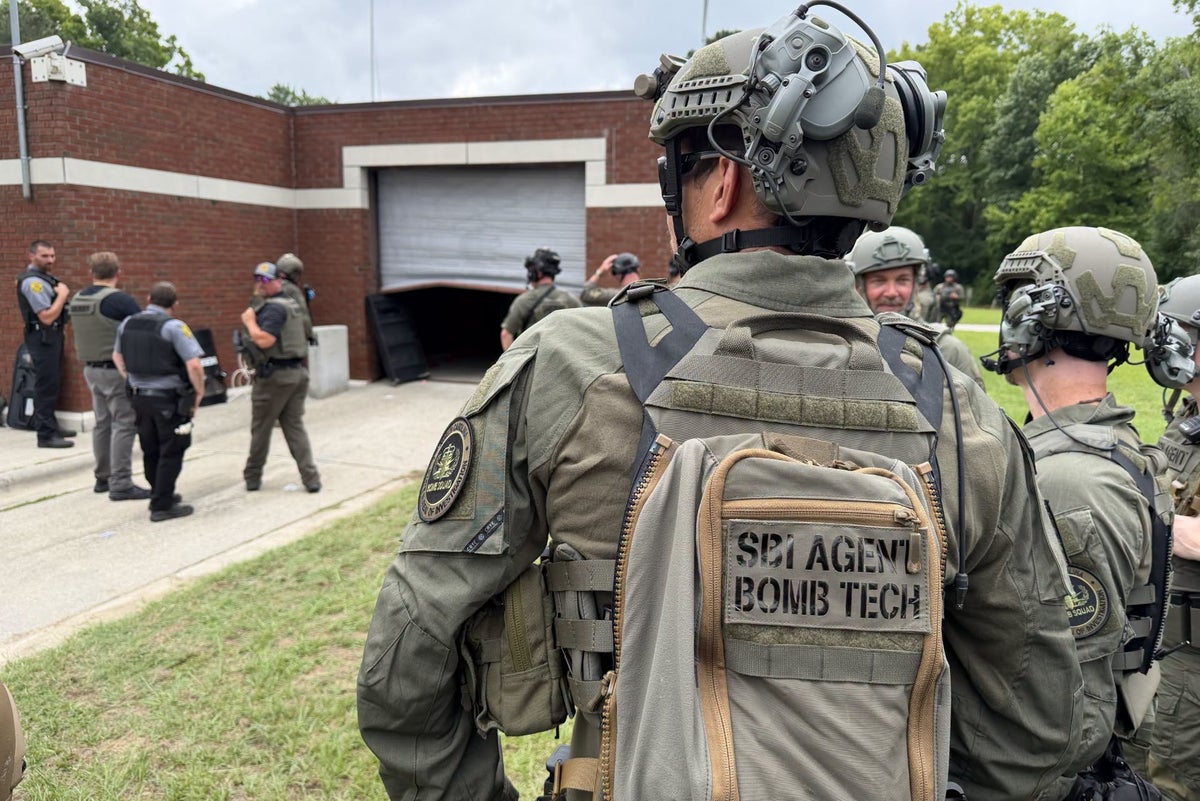
The response from law enforcement was swift and massive. Over 15 different agencies flooded the rural area, including the North Carolina State Highway Patrol, the State Bureau of Investigation (SBI), and tactical teams from the FBI. They locked down the surrounding perimeter, treating the facility like an active combat zone.
Negotiators went to work immediately. Dealing with a barricade situation inside a prison requires a delicate balance. You can't just storm the building with flashbangs and tear gas unless lives are in immediate danger, because tight spaces mean a high risk of accidental death.
The strategy focused on splitting the inmate population through calculated dialogue. The negotiators succeeded.
- 9:30 a.m. Negotiators secured the release of the two hostage guards along with a group of 18 inmates who wanted no part of the continued riot. The guards were rushed to local medical personnel for treatment of their injuries.
- 9:50 a.m. A second, much larger group of roughly 60 inmates exited the facility under escort. This left only a handful of hardliners inside.
- 1:45 p.m. SBI and FBI tactical units made entry into the remaining sectors. The last eight inmates complied and surrendered without further bloodshed.
By early afternoon, the facility was completely cleared. The remaining inmates were loaded onto transport buses and scattered to alternative county and state facilities across North Carolina. The physical jail building remains closed, undergoing a comprehensive forensic and structural damage assessment.
The Real Friction Behind the Walls
While authorities worked to clear the scene, a different kind of tension bubbled outside. Family and community members gathered at a gas station near the jail property, pointing to a different spark for the riot: abysmal living conditions.
Local residents reported that inmates had been subjected to systemic neglect. Local accounts claimed the jail wasn't feeding inmates properly, denying them baths, and forcing many to sleep directly on the concrete floors due to overcrowding.
Sheriff Ruffin dismissed these specific claims as misinformation during his press interactions. He promised a full investigation into the facility's operations once the criminal case settled. North Carolina Governor Josh Stein also weighed in, stating that the perpetrators must be held fully accountable, while acknowledging the deeper issue at play. Stein stressed the urgent need to recruit, retain, and properly compensate county and state correctional officials to keep these spaces safe.
The clash between official statements and community claims highlights a persistent truth. Inmates rarely risk the heavy federal charges of a hostage situation just for fun. Uprisings are almost always born out of desperation, poor conditions, or a complete breakdown of internal discipline caused by an invisible staff.
What Needs to Change Right Now
If counties want to prevent their regional facilities from becoming tactical zones, they must change how they approach local corrections. Relying on luck and small crews is a strategy bound for failure.
First, states need to mandate strict, enforceable staff-to-inmate ratios that cannot be bypassed for budget reasons. If a facility lacks the staff to safely manage 88 inmates, it shouldn't be allowed to hold 88 inmates.
Second, the funding model for regional jails needs a complete overhaul. Merging county resources sounds great on a spreadsheet, but if it creates a underfunded dumping ground away from major state oversight, it solves nothing.
Finally, the state must address the localized complaints of neglect immediately. Independent oversight bodies—not local sheriff departments investigating themselves—need to conduct unannounced audits of food, sanitation, and bedding conditions. Transparent conditions reduce the friction that leads to violence.
The Bertie-Martin standoff ended peacefully by some miracle, but it serves as an explicit warning shot for the entire state.
For a closer look at the local community's reaction and footage of the inmate transfers directly from the scene, you can view this local news coverage of the Bertie-Martin detention center riot, which captures the perspectives of families waiting nearby.