The ink on the Islamabad Memorandum of Understanding was barely dry. Signed electronically on June 18, 2026, by US President Donald Trump and Iranian President Masoud Pezeshkian, the deal promised a 60-day window to negotiate a lasting peace after months of destructive conflict.
It lasted exactly nine days.
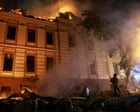
Early Saturday morning, a wave of Iranian drones targeted Bahraini territory. Hours earlier, the United States military carried out heavy overnight airstrikes on Iranian missile positions, drone launch sites, and coastal radar stations. Simultaneously, a commercial oil tanker came under fire directly inside the Strait of Hormuz.
This is not just another minor flare-up. It is a fundamental collapse of the most high-profile diplomatic framework in years, and it exposes exactly who holds the leverage in the world's most vulnerable chokepoint.
The Saturday Morning Escalation
Bahrain’s Foreign Ministry didn't mince words. They called the early morning drone strike a "blatant violation" of international law and their national sovereignty. While Manama hasn't released a full list of casualties or structural damage from this specific wave, the political message from Tehran was unmistakable.
Iran targeted Bahrain for two reasons. First, the small island kingdom hosts the US Navy’s Fifth Fleet, the primary naval fist of American power in the Persian Gulf. Second, Bahrain recently hosted US Secretary of State Marco Rubio and ministers from the Gulf Cooperation Council (GCC), who collectively demanded Iran completely reopen the Strait of Hormuz.
Iran’s Islamic Revolutionary Guard Corps (IRGC) quickly issued a statement via state media, claiming they targeted multiple locations belonging to the "US terrorist army in the region."
The logic behind the timing is straightforward tit-for-tat military strategy.
- Thursday, June 25: An Iranian drone hits a commercial cargo ship trying to exit the Strait of Hormuz.
- Friday Night, June 26: US Central Command launches heavy retaliatory airstrikes on IRGC missile batteries and coastal radar stations in southern Iran.
- Saturday Morning, June 27: Iran responds by launching drones at Bahrain and striking another commercial tanker inside the Strait.
Britain’s UK Maritime Trade Operations (UKMTO) confirmed that the Saturday tanker strike damaged the ship's bridge, though the crew escaped unharmed.
The Battle for the Strait of Hormuz
You have to look at what's happening behind the scenes to understand why this ceasefire shattered so quickly. The real war isn't just about drones or missiles; it is about who controls the flow of global energy.
During the height of the recent war, Iran effectively shut down the Strait of Hormuz, through which roughly twenty percent of the world's oil and natural gas passes. The resulting global energy crunch has kept prices punishingly high—a massive political liability for the Trump administration with the US midterm elections just months away.
Under the fragile ceasefire, international organizations tried to clear the bottleneck. The International Maritime Organization succeeded in evacuating roughly 115 stranded ships over the past week. But they suspended all operations on Friday, stating they won't send crew members back into the waterway without absolute guarantees of safety.
Iran wants to leverage its geographic position to dictate terms during the 60-day negotiation window. Tehran announced plans to enforce strict rules on the waterway, including forcing ships to seek Iranian permits and even charging arbitrary transit tolls. Ebrahim Azizi, head of the Iranian parliament’s national security commission, laid it out clearly on social media: "The Strait of Hormuz is governed by Iran, so: Respect the rules."
The US and its Gulf allies completely reject this. They view the Strait as an international waterway governed by global transit rights.
A Dangerous New Shipping Route
The immediate catalyst for Iran's weekend fury might actually be a quiet move made by a US-supervised naval coalition. On Saturday, the Joint Maritime Information Center announced it would expand a designated shipping route near Oman, effectively creating a wider inbound and outbound corridor through the Strait.
This move directly threatens Tehran's primary negotiating chip. If the US Navy can successfully secure and expand an alternative routing system that bypasses Iranian-controlled checkpoints, Iran loses its chokehold on the global economy.
US Vice President JD Vance took a hardline stance just before the bombs started falling on Friday night, warning that the US holds all the cards and that "violence will be met with violence." But looking at the reality on the water, that looks like political theater. If commercial shipping companies refuse to sail because their ships are getting hit by drones, it doesn't matter how many radar sites the US blows up—Iran still wins the economic argument.
What Happens Next
The Islamabad Memorandum is functionally dead, even if diplomats refuse to admit it yet. If you are tracking the stability of global markets or regional security, ignore the political speeches and watch these specific indicators over the next 48 hours.
- Maritime Insurers: Watch whether international maritime insurance syndicates completely withdraw coverage for the Persian Gulf. If they do, commercial traffic stops entirely, regardless of what the US Navy promises.
- GCC Air Defenses: Monitor whether Saudi Arabia or the UAE activate their own air defense networks. Amnesty International recently documented that earlier Iranian drone strikes in June killed civilians across Gulf states. If regional powers enter the fray directly, the conflict expands far beyond a US-Iran dispute.
- The Oman Route: Watch how aggressively the US Navy attempts to escort ships through the newly expanded Omani corridor. If the IRGC targets a ship inside that specific route, a direct, sustained naval war in the Gulf becomes almost inevitable.