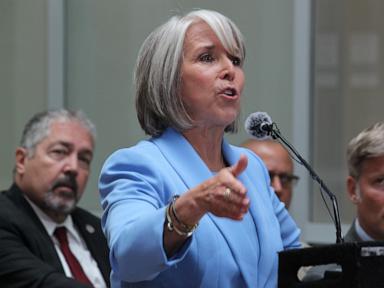
Federal drug agents watched major shipments of fentanyl enter New Mexico and did absolutely nothing to stop them. That is the explosive reality behind a massive legal clash brewing between New Mexico Governor Michelle Lujan Grisham and the U.S. Drug Enforcement Administration. The state is now preparing to sue the federal government for billions of dollars in civil damages.
If you think federal law enforcement always works to keep deadly drugs off the streets, this situation completely upends that belief. Between 2023 and 2025, DEA agents repeatedly tracked large quantities of fentanyl flowing directly into vulnerable local communities. Instead of seizing the pills immediately, they let them go. The goal was to build bigger criminal cases against high-level drug kingpins.
New Mexico officials say this high-stakes strategy backfired entirely. It left a trail of addiction and death across the state. Now, the state is demanding financial accountability for what leaders call an undisciplined and deadly experiment.
The Stunning Failure of the Big Case Strategy
Law enforcement agencies sometimes monitor illegal shipments to trace them back to the source. It is an old tactic. But when it comes to synthetic opioids, a few milligrams can kill a person instantly. Letting millions of these pills hit the streets is a massive gamble with human lives.
An Associated Press investigation blew the lid off this practice. Whistleblower David Howell, a veteran DEA agent, exposed how the agency routinely tracked major drug shipments but let them pass through. In one documented incident from 2023, agents watched a delivery of 74,000 fentanyl pills arrive at a mobile home park in Albuquerque. They did not seize them.
The numbers only grew larger from there. Even as administrations changed in Washington, the practice continued. The largest single unintercepted shipment occurred two months into the current presidential term, where agents monitored a massive haul of 1.8 million pills without taking them off the market.
Federal prosecutors defended the practice by arguing that chasing every single street-level transaction does not stop the cartels. They believed that taking down an entire trafficking organization has a larger, more permanent impact. But for residents of New Mexico, that long-term strategy meant immediate danger.
Dissecting the Texas Size Spike in New Mexico Overdoses
The human cost of this investigative strategy is written clearly in state health data. Nationwide public health efforts have started to see some glimmers of success. Across the United States, overall drug overdose deaths actually dropped by 14% last year.
New Mexico did not share in that relief. Instead, government data shows that New Mexico suffered a staggering 21% spike in overdose deaths during the exact same period.
Local leaders argue these two numbers are directly linked. While the rest of the country started to turn the tide, New Mexico was being flooded with unseized pills under the watchful eyes of federal agents. Towns like Española, already struggling with deep economic poverty and systemic addiction, were hit the hardest. The state recently pointed to the tragic death of a 15-month-old toddler in Española who swallowed fentanyl pills left in her home.
While it is legally difficult to connect a specific fatal overdose to a precise shipment that the DEA failed to seize, the statistical correlation is impossible to ignore. The volume of drugs flowing through the state increased because the federal safety net failed.
A Blatant Contradiction of the One Pill Can Kill Message
The revelation of these unseized shipments exposes a deep hypocrisy in federal public relations. For years, the DEA has run a massive public awareness campaign titled One Pill Can Kill. This initiative aims to educate teenagers, parents, and schools about how synthetic opioids are frequently disguised as legitimate prescription medications. The core message is clear and uncompromising: a single pill can contain a lethal dose, and there is zero room for error.
Yet behind closed doors, internal Department of Justice guidelines were quietly altered. In 2024, internal protocols shifted away from urging agents to seize fentanyl whenever practical. Instead, the changes granted field agents far more personal discretion to let shipments pass so they could keep their long-term investigations alive.
This created a bizarre double standard. On one hand, the government warned citizens that a single pill was an existential threat. On the other hand, federal agents allowed millions of those exact same pills to enter neighborhoods undocumented and unhindered. Advocacy groups representing the families of drug victims have expressed deep heartbreak over these policy choices, noting that the agency failed to follow its own urgent warnings.
The Legal Blueprint for Seeking Billions in Civil Damages
Suing a federal law enforcement agency is an incredibly steep uphill battle. The federal government is generally protected by sovereign immunity, which prevents citizens and states from filing lawsuits against federal agencies unless the government explicitly allows it. However, New Mexico is mapping out a specific legal pathway to bypass these standard protections.
The state is focusing on federal tort claims and civil damages based on extreme negligence. The legal argument hinges on the fact that federal agents knowingly created a public hazard. By choosing not to intercept a known lethal substance, the agency breached its fundamental duty to protect public safety.
New Mexico Attorney General Raúl Torrez has already launched a formal criminal investigation to determine if federal officials broke specific state laws by knowingly exposing residents to a weapon of mass destruction. If the state can prove that federal agents actively violated explicit Department of Justice safety regulations, the federal government may lose its immunity protections in court.
The billions of dollars New Mexico is targeting would not simply go into a general treasury fund. The state intends to use any potential settlement to fund long-term infrastructure changes, including:
- Building regional addiction treatment facilities in rural counties
- Expanding emergency medical response capabilities in high-overdose areas
- Funding local police departments that were overwhelmed by the influx of cartel activity
- Providing long-term mental health and foster care support for children affected by the opioid crisis
Urgent Actions Needed to Fix Federal Drug Enforcement
The crisis in New Mexico shows that the current balance between building major criminal cases and protecting local communities is completely broken. To prevent this dangerous strategy from being used in other states, several immediate policy changes must occur at the federal level.
First, Congress needs to mandate a strict life-safety override for all federal drug investigations. Federal agents must be legally required to interdict and seize any synthetic opioid shipment the moment they establish probable cause and physical surveillance. Long-term investigations should never take precedence over an active public poisoning threat.
Second, the Department of Justice must immediately reverse its 2024 internal guidelines. The previous protocol requiring seizures whenever practical must be reinstated to strip field agents of the discretion to gamble with community safety.
Finally, independent oversight is required. The Office of Inspector General must launch a comprehensive audit of all active DEA field divisions nationwide. We need to know exactly how many millions of fentanyl pills were permitted to flow into American cities over the last five years under the guise of controlled operations. Only total transparency can begin to rebuild the trust that has been shattered between local communities and federal law enforcement.