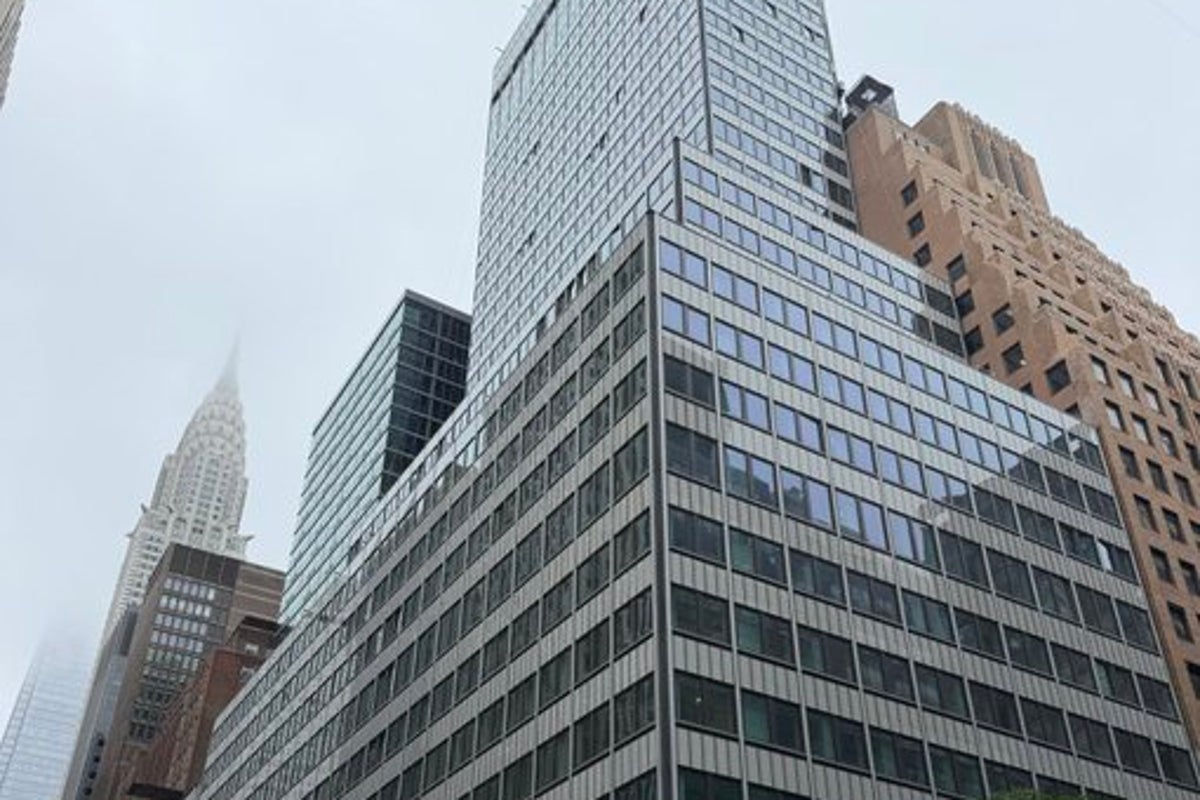
You don't expect a 38-story skyscraper in the middle of Manhattan to just start giving way on a Tuesday morning. But that's exactly what happened at 235 East 42nd Street, the massive 1970s-era building formerly known as the global headquarters of Pfizer.
Around 8 a.m., things went sideways fast. Construction workers on-site noticed bricks raining down and support beams warping under massive stress. Within hours, the New York City Fire Department swarmed the area, establishing a strict "collapse zone" around a building that suddenly looked terrifyingly unstable.
This isn't just a localized emergency or a random construction mishap. It's a loud, flashing warning sign for the future of urban real estate. As cities across America try to save failing commercial districts by turning empty offices into luxury apartments, this midtown scare forces us to confront a harsh reality. Turning a massive steel-framed corporate monolith into a residential apartment building is a lot harder, and a lot more dangerous, than developers want you to think.
What Went Wrong Inside 235 East 42nd Street
The details coming out of the FDNY and the Department of Buildings paint a grim picture of structural failure. This wasn't a minor cosmetic issue. Two massive structural columns completely buckled on the 21st and 22nd floors.
Think about the physics of a skyscraper. When core support columns fail, the weight doesn't disappear. It shifts. That sudden redistribution of immense weight caused multiple floors—specifically from the 21st straight up to the 26th floor—to visibly sag and begin caving in.
[ Floors 23 - 26 ]  --> Sagging under shifted weight
[ Floors 21 - 22 ]  --> Two critical structural columns buckled
[ Below Floor 21 ]  --> Massive load stress on lower frame
Fortunately, nobody died. There are zero reported injuries, and every single construction worker on the site was accounted for. But the scale of the emergency response tells you how close this came to a catastrophe. Over 150 fire and EMS personnel rushed to the scene near Grand Central Terminal.
The risk was severe enough that Mayor Zohran Mamdani and Fire Commissioner Lillian Bonsignore ordered the immediate evacuation of the surrounding blocks. They didn't just empty the tower itself. They evacuated a nearby hotel and a school packed with about 400 children. Streets were completely locked down between 1st and 3rd Avenues along 42nd and 43rd Streets.
Fire officials threw cold water on fears of a Hollywood-style catastrophic footprint. Because the building uses a heavy steel frame rather than pure concrete, an outright progressive collapse of the entire tower was unlikely. Instead, any collapse would likely be localized to those middle floors. But if several floors pancake down into Midtown Manhattan, the destruction to the surrounding neighborhood would still be devastating.
The Hidden Complexity of the Office-to-Residential Trend
To understand why this happened, you have to look at what workers were trying to accomplish. Led by the prominent architectural firm Gensler, this project is billed as the single largest office-to-residential conversion in New York City history. The goal? Turn a pair of outdated 1970s corporate office blocks into a sprawling, luxury residential complex featuring more than 1,600 apartments.
The developer wasn't just remodeling the interior. The blueprint called for adding more than a dozen entirely new stories right on top of the original 38-story tower.
That is where the math gets incredibly tricky.
Commercial office buildings from the 1970s are built like tanks, but they were never engineered to hold substantial vertical additions decades later without meticulous, flawless reinforcement. When you add twelve or more stories of dead weight onto an aging steel frame, you are dancing on the edge of structural limits. Add to that the heavy equipment, concrete pouring, and shifting loads inherent in a massive reconstruction, and you create a perfect storm for structural failure.
Engineers have been warning about this for a while. Office buildings have completely different structural layouts than apartment buildings. Offices have massive, open floor plates with columns spaced far apart to allow for cubicles and conference rooms. Apartments require dense plumbing networks, individual ventilation, and heavy compartmentalized walls. Striking a balance between the two requires hacking away at the original building anatomy while simultaneously asking it to carry more weight.
What This Means for the Future of Midtown
If you think this is just a single bad day for one developer, you're missing the bigger picture. Cities across the country are leaning heavily into conversions to solve the post-pandemic commercial real estate crisis. Empty offices don't pay taxes, and they don't bring foot traffic to local businesses. Turning them into housing seems like the ultimate win-win.
But the 42nd Street incident exposes the structural and financial gamble of these megaprojects.
- Skyrocketing Insurance Costs: Expect insurance premiums for high-rise conversions to go through the roof. Actuaries are going to look at those buckled columns and realize these projects carry a much higher risk profile than standard new construction.
- Aggressive Regulatory Oversight: The NYC Department of Buildings is going to scrutinize every single conversion proposal with a magnifying glass. Expect longer approval bottlenecks and mandatory structural audits.
- The Weight Limit Reality: Developers might have to scale back their ambitions. Adding fifteen stories to the top of an old building to make the profit margins work might no longer be a viable option if city engineers refuse to sign off on the weight load.
The project at 235 East 42nd Street was originally slated for completion in 2027. Now? That timeline is completely shattered. Inspectors and structural engineers will be crawling over that steel frame for months just to determine if the building can even be saved, let alone expanded.
Next Steps for Property Managers and City Residents
If you live, work, or manage property in an area undergoing heavy commercial redevelopment, you can't just ignore this incident. Safety protocols need an immediate upgrade.
First, if you are a building manager near an active high-rise conversion site, demand a copy of the developer's vibration monitoring and structural impact reports. Heavy construction next door can cause minor shifts in your own foundation or facade.
Second, if you work or live near a designated collapse zone, know your evacuation routes. The FDNY proved today that they will shut down entire city blocks in minutes. Do not wait for a formal announcement if you see falling masonry, severe drywall cracking, or hear unexplainable popping noises from a neighboring construction site. Report it to 311 or emergency services immediately.
The Midtown evacuation is a stark reminder that the concrete and steel surrounding us isn't invincible. If we are going to rebuild our cities for the next century, we have to respect the physical limits of the buildings we already have.
This detailed breakdown on the FDNY response to the Midtown high rise evacuation provides excellent visual context regarding how city emergency crews methodically manage large-scale structural stabilization events in dense urban environments.