Disney+ wants to bring back the biggest talent incubator in pop culture history. The streaming giant just ordered a pilot for a brand-new iteration of The Mickey Mouse Club, tapping Fulwell 73—the production team behind Hulu’s The Kardashians—to steer the ship.
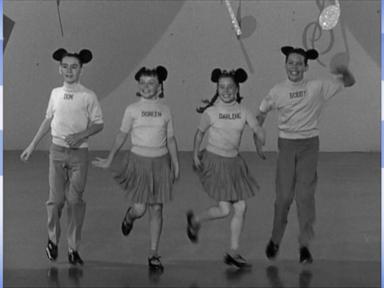
It sounds like a slam dunk on paper. The original franchise famously birthed the careers of Britney Spears, Justin Timberlake, Ryan Gosling, Christina Aguilera, and Keri Russell during its late-eighties and nineties run. Before that, the 1950s original turned Annette Funicello into an American icon. You might also find this connected article insightful: Why The Obsession With Timmy The Whale Explains Modern Germany.
But let's be entirely honest. The media ecosystem of 2026 isn't the television environment of 1993. Disney isn't just trying to reboot a variety show; they're trying to replicate a system of star-making that simply cannot exist in the current entertainment marketplace.
The Myth of the Manufactured Superstar
People look back at the nineties All-New Mickey Mouse Club with a sense of awe. How did one youth variety show scout, train, and launch four of the biggest pop icons of a generation simultaneously? As highlighted in detailed coverage by Entertainment Weekly, the effects are widespread.
It wasn't magic. It was a monoculture.
Back then, if a kid had elite triple-threat talent—singing, dancing, and acting—the path to mainstream stardom ran through a few major gatekeepers. Disney Channel was the golden ticket. The network could gather these kids in Orlando, put them through a rigorous boot camp of daily performances, and beam them into millions of living rooms on basic cable.
When the show ended, the corporate machine effortlessly transitioned them into record deals with Jive Records or massive movie roles. You watched them grow up on one screen, then bought their CDs at the mall.
That pipeline is dead.
Today, a talented thirteen-year-old doesn't wait for a Disney casting director to visit their hometown. They download an app, record a singing video in their bedroom, upload it to social media, and rack up millions of views overnight. The gatekeepers lost their keys a long time ago.
Fulwell 73 and the Reality TV Problem
Choosing Fulwell 73 to produce this pilot tells us exactly what Disney+ wants this project to be. This is the company that knows how to package modern fame. They understand how to film high-end, sleek docuseries content that thrives on short-form video apps.
They're likely planning a show that acts part variety hour, part behind-the-scenes reality experiment. We won't just see the new Mouseketeers perform sketches; we'll see their rehearsals, their personal dramas, and their individual social media feeds integrated directly into the programming.
Disney tried a version of this in 2017 with Club Mickey Mouse. They bypassed traditional television entirely and launched the show strictly on Facebook and Instagram.
You probably don't remember it.
Hardly anyone does. It sank without a trace because it lacked the focused attention span of a captive television audience. When content lives everywhere, it feels like it lives nowhere. Fulwell 73 has to figure out how to make a group of teenagers look cool and aspirational on a streaming platform to an audience that prefers raw, unedited content from independent creators.
Why Today's Kids Don't Care About Corporate Branding
The biggest hurdle for this new project is a fundamental shift in how Gen Z and Gen Alpha view celebrity.
Nineties kids loved the Mickey Mouse Club because the performers felt like the elite varsity squad of teenagers. They wore matching ears, sang synchronized pop covers, and represented the ultimate clean-cut Disney ideal. It worked because the audience accepted corporate curated gloss.
Modern youth culture despises corporate curation.
The kids dominating the cultural conversation right now are independent. They build their audiences through authenticity, or at least the illusion of it. The moment you put a teenager in a branded corporate varsity jacket and tell them to read a script written by a room of forty-year-old television executives, you lose the very audience you're trying to attract.
Look at what happened to the traditional Disney Channel sitcom pipeline. The era of Miley Cyrus, Selena Gomez, and Zendaya transitioning from kids' shows to global superstardom has effectively closed. Olivia Rodrigo was the last true anomaly from that system, and even she had to break away from the Disney mold with an explicit, raw debut single to solidify her status as a serious artist.
The Scouting Dilemma
How do you cast a modern Mouseketeer?
If you cast kids who are already famous on social media, you run into an immediate ego and contract nightmare. These kids already have their own brands, their own monetization, and their own styles. They don't need the Disney machine, and they certainly don't want to sign away their likeness or music rights to a corporate conglomerate.
If you cast complete unknowns, you face an uphill battle to build an audience from scratch on a streaming service hidden behind a paywall. Netflix, Disney+, and Max all struggle with the same problem: discovery. A kid scrolling through social media apps isn't going to exit their favorite platform, open Disney+, and search for a variety show unless the cultural hype is already overwhelming.
The original show worked because it was an apprenticeship. The kids spent years honing their performance skills under extreme pressure. They learned how to handle live vocals, complex choreography, and teleprompter reads. It was a literal trade school for pop stars.
Streaming television production schedules don't allow for that kind of development. A pilot is shot, a season of eight episodes is dumped all at once, and if the metrics don't look stellar in the first twenty-four hours, the show gets quietly canceled. You can't cultivate the next Ryan Gosling in an eight-episode streaming window.
How to Actually Make This Work
If Disney wants this pilot to turn into a cultural phenomenon, they have to abandon the old playbook entirely. They can't repeat the mistakes of past reboots that relied purely on nostalgia for adults while offering nothing substantial for kids.
First, they need to stop treating the program as a kid's show. The nineties version succeeded because the musical numbers and sketches leaned into contemporary R&B and pop trends of the era. It felt mature enough that teenagers actually wanted to watch it. The new show needs to lean heavily into the current sonic world of alternative pop, indie rock, and hip-hop.
Second, ditch the stage constraints. The variety show format is ancient history. Instead of a theatrical stage with a live studio audience laughing at scripted jokes, format the show like an elite music residency or a collaborative creative collective. Think less Lawrence Welk and more of a high-budget, behind-the-scenes look at an artistic warehouse where young creators collaborate on real projects.
Finally, give up total control. This is the hardest part for a company like Disney. If they micro-manage every outfit, every line of dialogue, and every political stance of these kids, the project will die a quick death. The new Mouseketeers must be allowed to possess distinct, flawed personalities.
What to Watch Next
The entertainment world will be watching how this pilot develops over the next few months. If you want to track whether this project has a legitimate chance at success, watch these specific indicators:
- Check the casting calls: Look at whether Disney pulls talent from established digital spaces or searches for raw talent in community theaters and vocal coaches.
- Monitor the format leaks: See if Fulwell 73 leans toward a reality competition style or sticks to a traditional variety performance structure.
- Watch the social media integration: Keep an eye on whether Disney creates standalone accounts for the show or attempts to build the brand through the individual personal accounts of the cast members.
The Mickey Mouse Club holds a sacred place in Hollywood history. Trying to resurrect it in an era defined by decentralized media is a massive gamble. It might just prove that the era of the manufactured studio superstar is gone for good.