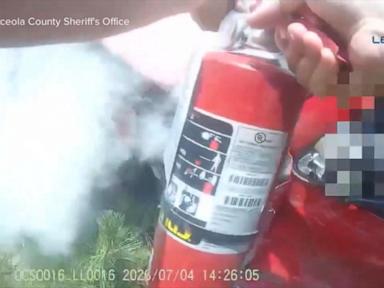
You have probably seen the footage by now. A vehicle sits smashed on a Michigan highway, black smoke billowing into the sky before orange flames violently erupt from the engine bay. Inside, a human being is trapped. Outside, ordinary people and state troopers are running toward the fire, not away from it.
It makes for a gripping headline. It gets millions of clicks on news sites. But behind the dramatic video lies a terrifying reality about what happens when a vehicle catches fire on the highway, and how narrow the window for survival actually is.
Hollywood gets car fires completely wrong. In the movies, a car crashes, sparks fly, and there is an instant, clean explosion. In reality, it is much worse. It is a slow, suffocating burn that turns into an inferno within seconds. If you don't get out immediately, your chances drop to near zero.
The recent dramatic rescue in Michigan reminds us that survival isn't about luck. It's about split-second decisions, sheer human will, and knowing exactly what to do when metal starts melting around you.
The Terrifying Physics of a Modern Highway Car Fire
Most people think cars are mostly made of steel. That used to be true decades ago. Today, your car is a rolling block of plastics, synthetic foams, rubber, and highly flammable fluids.
When a severe crash happens on a highway like I-94 or I-75 in Michigan, the forces involved are massive. Fuel lines rupture. Electrical systems short out. Engine blocks, which operate at hundreds of degrees, suddenly come into contact with leaking oil or gasoline.
Once ignition happens, the clock ticks fast.
Synthetic materials inside the cabin produce thick, toxic black smoke when they burn. This isn't regular wood smoke. It contains hydrogen cyanide and carbon monoxide. Inhaling this smoke just a few times can knock a person unconscious. That is often what kills people in fiery wrecks before the flames even reach them.
The heat is another beast entirely. A fully involved vehicle fire easily reaches temperatures over 1,500 degrees Fahrenheit. That is hot enough to melt aluminum wheels and weaken the structural steel of the vehicle frame. When a car gets that hot, rescuers cannot get within ten feet of it without sustaining severe burns, even with specialized gear.
In the Michigan rescue, every second mattered because the fire was rapidly moving from the engine compartment into the passenger cabin. The rescuers were fighting against a literal chemical wall of heat and poison.
Seconds Count and the Psychology of Bystander Intervention
Why do some people run toward a burning car while others pull out their phones to record?
Psychologists call it the bystander effect. When a crowd forms, individuals assume someone else will take action. But in high-speed highway crashes, there is no time to wait for a committee meeting. Someone has to step up.
In the Michigan incident, we saw a mix of law enforcement and everyday drivers working together. This is crucial. Police officers carry basic tools like fire extinguishers and window breakers, but they cannot be everywhere at once. Good Samaritans frequently fill the gap during those first three to four critical minutes before fire trucks arrive.
Pulling someone from a wrecked car is incredibly dangerous. You don't know if the fuel tank is about to rupture completely. You don't know if the vehicle is stable.
Rescuers face immense physical hurdles during these moments.
- Smashed doors that are jammed shut by the impact.
- Deploying airbags that block access to the driver.
- Intense heat that burns bare hands on contact with the door handles.
The people who saved that driver had to bypass their own survival instincts. They broke through the glass and physically yanked the victim through the window frame because the doors were completely useless. It was raw, unpolished, and completely chaotic. But it worked.
What to Do if You Are Trapped in a Burning Vehicle
Let's talk about what you need to do if you ever find yourself on the inside of a burning wreck. You cannot rely on someone being there to pull you out. You have to be your own first responder.
First, do not panic. Panic paralyzes. You need your brain operating at full capacity.
The impact of a crash often jams the door frames. If you try the handle and the door won't budge, move to the windows immediately. Do not waste time throwing your shoulder against a jammed metal door.
Power windows usually stop working the moment the electrical system shorts out in a crash. You will need to break the glass. You cannot break a car windshield with your feet or fists. Windshields are made of laminated glass designed to hold together. You must break the side windows, which are made of tempered glass.
Keep an emergency escape tool in your center console or glove box. A simple tool with a seatbelt cutter and a tungsten carbide window spike costs less than twenty dollars. It can save your life.
If you don't have a tool, look for anything metal inside the cabin. The removable headrest from your seat has two long metal prongs at the bottom. Pull the headrest completely out, jam one of the prongs into the lower corner of the side window, and pry hard. The glass will shatter into thousands of tiny pieces.
Once the window is clear, scramble out face down, feet first. This protects your face and chest from any remaining glass shards or jagged metal edges on the window frame.
How First Responders Handle the Chaos of Burning Metal
When Michigan State Troopers or local fire departments roll up to a scene like this, they are processing a massive amount of data in a fraction of a second. They have to assess the situation while moving at a dead sprint.
Their first priority is life safety. If a victim is inside, property damage doesn't matter. They will use specialized tools like the Jaws of Life to shear through reinforced steel pillars in seconds.
But when the fire is active, they have to manage the fire threat simultaneously. Standard police fire extinguishers are usually small dry chemical units. They are meant to suppress a small engine fire for a few seconds to buy time, not put out a fully engulfed vehicle.
Rescuers also have to watch out for modern vehicle hazards that didn't exist a couple of decades ago. Gas struts that hold up hoods and trunks can become heat-seeking missiles when exposed to extreme fire. They can explode and launch metal rods right through a rescuer.
Then there is the issue of hybrid and electric vehicles. While we don't know the exact powertrain of every vehicle in these viral clips, lithium-ion battery fires require thousands of gallons of water to extinguish and can experience thermal runaway, reigniting hours after the initial fire is put out.
The coordination seen in these rescues is a testament to rigorous training and sheer adrenaline. It is messy, loud, and incredibly violent to witness.
Practical Steps to Prepare for Highway Emergencies
You drive on the highway every day. You think it won't happen to you. It happened to the driver in Michigan, too.
Stop assuming you are immune to mechanical failures or reckless drivers. Take three concrete steps today to ensure you aren't helpless if things go sideways.
- Buy a dedicated vehicle escape tool right now. Don't put it in the trunk. Put it somewhere you can reach while tightly strapped into your seatbelt, like the driver's side door pocket or Velcroed to the center console.
- Check your seatbelt release regularly. Make sure it doesn't stick. If you have kids, know exactly how to unbuckle their car seats in pitch darkness or heavy smoke.
- Keep a small, rated fire extinguisher in your vehicle. Secure it properly so it doesn't become a flying projectile during a crash. A small extinguisher can mean the difference between a minor engine sputter and a total loss inferno.
Get these items into your vehicle this week. Don't wait until you see another viral video on the news to remind you that highway conditions change in a heartbeat. Protect yourself before the smoke starts clearing.