You can't win a war of attrition when your enemy has unlimited deep pockets and yours are tied to the political whims of Western capitals. Kyiv finally leaned into this brutal reality. The massive mid-June drone strikes that choked the Moscow oil refinery in Kapotnya weren't about revenge. They represent a fundamental shift in how Ukraine intends to survive.
For over two years, the conventional wisdom said Ukraine needed to hold the line in the Donbas and wait for high-tech Western armor to save the day. That strategy is dead. With Russia grinding out minor territorial gains and systematically dismantling Ukraine's domestic power grid, Kyiv has turned its focus toward a grim, highly pragmatic target: the systematic degradation of Russia's internal refining capacity.
This isn't "morale bombing" designed to terrify civilians. It's a calculated economic chokehold. By bringing the physical and financial costs of the war directly into the Russian heartland, Ukraine is trying to force a math problem on the Kremlin that Vladimir Putin cannot easily solve.
The Kapotnya Blueprint and the Fuel Crisis Inside Russia
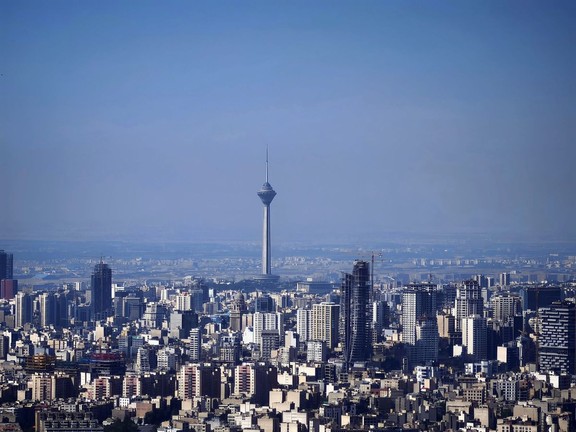
The June 18 air raid on the Kapotnya refinery, located just 15 kilometers from the Kremlin, shattered the illusion of safety that Moscow residents enjoyed. More than 555 Ukrainian drones, including the newly deployed Bars hybrid drone-cruise missiles, swarmed Russian airspace. While Moscow claimed it downed dozens, the reality played out across Russian Telegram channels in real time. Plumes of thick black smoke blanketing the south-eastern edge of the capital don't lie.
The Kapotnya facility isn't just any refinery. It supplies roughly 40% of Moscow's gasoline and half of its diesel fuel. When Ukraine struck the primary ELOU-AVT-6 refining unit earlier that week, and followed up by hitting the remaining processing installations, it effectively paralyzed the facility.
Ironically, a peacetime modernization back in 2020 consolidated the refinery's older processing units into two highly efficient, tightly packed installations. In a war zone, that efficiency became a fatal vulnerability. A single well-placed drone strike can now knock out an entire region's fuel supply chain.
This isn't an isolated incident. The strategic impact of these strikes spreads far wider than Moscow.
- Deep Strike Capability: Ukraine expanded its targeting to facilities like Tatneft's TANECO refinery and units deep in Bashkortostan.
- Production Drops: Attacks in mid-June wiped out roughly 600,000 barrels per day of Russian refining capacity.
- Gasoline Deficits: Localized fuel shortages forced Russia to orchestrate sea-borne fuel imports to patch up its domestic supply holes.
Turning the Kremlin Coercion Strategy Upside Down
To understand why Kyiv is risking the wrath of escalation by striking Moscow, look at what's happening to Ukraine's own infrastructure. Throughout early 2026, the Kremlin shifted its strategy from attritional frontline warfare to what analysts call coercive state degradation. Russia used faster, highly autonomous saturation drones to cripple Ukraine's power sector. By February 2026, Ukraine could only meet 60% of its electricity needs, forcing nationwide rolling blackouts during the bitter winter freeze.
Putin's goal is simple: make Ukrainian cities uninhabitable, break public trust, and freeze the population into submission.
Ukraine's response is an asymmetrical counter-punch. Kyiv cannot match Russia's raw missile volume, but it can target the economic organs funding those missiles. Russian budget data reveals that oil and gas revenues plummeted by 30% from January to May 2026 compared to the previous year. The widening budget deficit forces the Kremlin to make hard choices between financing its frontline military operations and subsidizing domestic fuel prices to keep its population quiet.
When residents in towns east of Moscow report "black rain" coating their vehicles in oily residue, the war ceases to be an abstract television broadcast. It becomes a immediate local crisis.
Shifting Air Defenses and the Frontline Calculus
There is a secondary, purely military benefit to making Moscow bleed fuel. Russia's air defense network, centered around the S-400 systems, is dense but finite. When Ukraine demonstrates that it can repeatedly penetrate the airspace of the capital, the Kremlin is forced to make a tactical choice.
Does it leave its critical industrial hubs unprotected, or does it pull air defense batteries away from the frontlines in Ukraine to form a protective ring around Moscow?
Every Pantsir or S-400 unit dragged back to guard a refinery in Kapotnya or Yaroslavl is one less system protecting Russian troops on the ground in Zaporizhia or the Donbas. This structural dilemma creates exactly the operational gaps that Ukrainian forces need to exploit. Ukraine's Presidential Commissioner for Sanctions Policy, Vladyslav Vlasyuk, directly tied these infrastructure vulnerabilities to Russia's brewing internal economic crisis.
Holding territory along a static, heavily mined frontline is a recipe for slow exhaustion. Striking the economic engine that refines the fuel powering Russia's tanks, logistics trucks, and bomber fleets is the only viable path Ukraine has to alter the conflict's trajectory.
What Happens Next
The success of Ukraine's energy strategy over the coming months depends on two factors. First, Kyiv must scale up domestic production of its long-range strike weapons. The drone manufacturer Firepoint has already ramped up output of its FP-1 models to nearly 100 units a day. Even with an interception rate of 90%, sending dozens of drones into Russian territory every single day guarantees that some will find their mark.
Second, Ukraine must resist Western diplomatic pressure to halt these infrastructure strikes. Early in the campaign, Washington expressed anxieties over global oil prices. Kyiv pushed back, arguing that hitting refined product infrastructure—like gasoline and diesel units—hurts Russia's domestic war machine without severely choking the global supply of unrefined crude oil.
Expect Ukraine to maintain this high-tempo pressure. By targeting the highly complex isomerization and catalytic cracking units that Russia cannot easily repair due to Western technology sanctions, Kyiv is playing a long, cold game of economic math. It's a grim strategy, but under current battlefield realities, it's the only one left that matters.