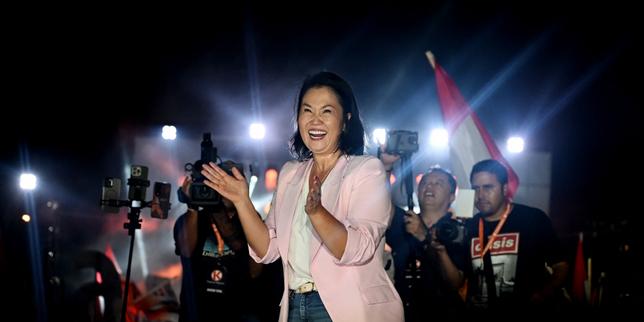
Peru just finished counting every single ballot from its June 7 runoff election, and the result is a political earthquake. Keiko Fujimori won. After three consecutive losses in runoff elections, decades of polarization, and over 500 days spent in pretrial detention, she finally secured the presidency. The final count from the National Office of Electoral Processes (ONPE) shows her beating left-wing rival Roberto Sánchez by fewer than 50,000 votes. Out of 18 million ballots cast, that's a razor-thin margin of about 50.13% to 49.86%.
If you think this is just another standard election shift, you're missing the bigger picture. This victory represents the ultimate political redemption for one of the most controversial figures in Latin America. It also guarantees that Peru will face intense political friction over the next five years.
The Tightest Election in Modern Peruvian History
I've watched Latin American elections for years, but this one was brutal. For three weeks after the June 7 vote, Peruvians held their breath while election officials meticulously reviewed every contested tally sheet. Sánchez, an ally of former President Pedro Castillo, drew immense support from the rural, poorer southern regions. He questioned the very foundation of Peru's economic model. Fujimori dominated urban areas like Lima and captured the votes of Peruvians living abroad.
The division isn't just political. It's deeply geographic and economic. Sánchez has already hinted he won't accept the results quietly, demanding an annulment of foreign votes and leading street protests in Lima. This creates an immediate crisis of legitimacy before Fujimori even takes the oath of office on July 28.
You don't govern a country easily when half the population views your victory as a theft. Fujimori knows this. She's faced this exact scenario from the other side when she lost by tiny margins in 2011, 2016, and 2021.
From Teenage First Lady to the Presidency
To understand why people either love or hate Keiko Fujimori, we have to look back to 1994. She was only 19 years old when her parents went through a highly publicized, messy divorce. Her father, Alberto Fujimori, was ruling Peru with an iron fist. He stripped his wife, Susana Higuchi, of the First Lady title after she accused his administration of corruption.
In a bizarre move, Alberto appointed his teenage daughter Keiko to take over the ceremonial role.
Imagine being a college student at Boston University while simultaneously serving as the official hostess for a regime that was secretly dismantling democratic institutions. That early exposure gave her unparalleled political instincts. It also cursed her with a toxic political inheritance.
Her father's government collapsed in 2000 amidst tape-recorded bribery scandals. He fled to Japan, resigned via fax, and was eventually extradited back to Peru, where courts sentenced him to 25 years in prison for corruption and death squad massacres. For the last two decades, Keiko's entire political life has been an effort to rescue her family name while building her own independent political machine, Fuerza Popular.
What Fujimorismo Actually Means for the Economy
People often ask what Fujimorismo actually stands for today. It rests on two main ideas. The first is an aggressive, tough-on-crime approach to public safety. The second is a fierce defense of the free-market economic model introduced in the 1990s.
Peru has suffered through incredible political instability recently, cycling through multiple presidents in just a few years. Yet, the economy stayed remarkably stable because the central bank remained independent and the market model stayed intact. Fujimori ran her 2026 campaign on protecting that model against Sánchez’s state-led proposals.
Affluent voters and business leaders flocked to her because they feared Peru would turn into the next Venezuela or return to the chaos of the Castillo era. They chose what they viewed as a known, predictable conservative leader over a radical shift left.
The Ghost of Alberto Fujimori and Legal Battles Ahead
Let's talk about the elephant in the room. Keiko Fujimori isn't just carrying her father's political legacy; she's dealing with her own massive legal problems. For years, prosecutors have pursued her over the "Cocktails" campaign finance scandal. They allege her party took millions in illicit funds from the Brazilian construction giant Odebrecht, masking the money through fake fundraising events.
She spent months in pretrial detention while prosecutors investigated. This election victory doesn't clear her name, but it gives her presidential immunity. Under Peruvian law, a sitting president can't be tried while in office.
Critics argue her entire run for the presidency was a desperate strategy to stay out of prison. Now that she's won, her legal troubles are frozen until 2031. This reality infuriates her detractors, who see her victory as a triumph of impunity.
Next Steps for a Fractured Nation
The electoral authority plans to officially proclaim Fujimori the winner on July 3. If you want to watch how this plays out, watch the streets of Lima and the mining regions of the south over the next month.
First, Fujimori must appoint a cabinet that can survive a divided congress. Her vice presidents, Luis Galarreta and Miguel Angel Torres, are experienced political operators, but they'll need to reach across the aisle immediately to prevent total gridlock.
Second, she needs to address the immediate threat of protests. If Sánchez carries out his threat to challenge the election internationally, expect prolonged social unrest that could paralyze major sectors of the economy, particularly mining.
If you are invested in Latin American politics or emerging markets, prepare for a volatile transition. Focus on her early cabinet picks, particularly the Minister of Economy and Finance, to see if she can calm the markets while managing a deeply angry opposition. The era of Keiko Fujimori has arrived, but the fight for Peru is far from over.