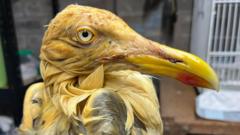
A dozen herring gulls coated in thick, sticky sludge shouldn't be a regular summer sight. Yet, here we are again.
Over the last three weeks, volunteers at Manx Wild Bird Aid have pulled at least 13 heavily contaminated herring gulls from the area around the Food Park on Mill Road in Peel. Many more are flying around, completely coated but impossible to catch. The substance smells strongly of fish oil.
While a non-toxic food byproduct might sound less severe than an industrial crude oil spill, the physical reality for the birds is exactly the same. It is a death sentence if left untreated.
The worst part? This isn't a new emergency. It's a recurring environmental failure that happens year after year in the west of the Isle of Man, and the authorities still haven't stopped it.
The Mechanical Trap of Oiled Feathers
When a bird gets coated in any heavy oil, the damage is structural, not just chemical.
Avian plumage works because of a complex micro-structure. Microscopic barbs and barbules interlock like Velcro, trapping a layer of air next to the skin. This provides total waterproofing and vital thermal insulation.
[Healthy Feathers] -> Interlocking Barbs -> Trapped Air -> Waterproof & Warm
[Oiled Feathers]   -> Matted Structure   -> Water Enters -> Hypothermia & Drowning
When fish oil mats these feathers, that structure collapses completely. Cold seawater penetrates straight to the skin. In the middle of summer, a waterlogged gull will rapidly lose its core body heat and succumb to hypothermia. If they try to rest on the water, they sink and drown.
The Devastating Impact on Breeding Season
The timing of this recurring pollution makes it significantly worse. July is the peak of the breeding season.
Herring gulls are fiercely dedicated parents, sharing incubation and feeding duties. When an adult bird is incapacitated or dies from oil contamination, the impact ripples through the nest:
- Starvation: If one parent disappears, the remaining adult must choose between guarding the chicks or hunting for food.
- Exposure: Untended chicks are vulnerable to predators or harsh weather.
- Double Contamination: In some cases, both adult birds visit the same food source, leading to total nest failure.
It's not just gulls paying the price, either. Back in 2022, rescuers recovered a rare peregrine falcon from the exact same area, coated in the same mystery substance. Predators that target vulnerable gulls end up transferring the oil directly onto their own plumage.
Why Finding the Source Matters Right Now
Manx Wild Bird Aid has been incredibly vocal about the frustration of dealing with this year after year. The Isle of Man proudly holds UNESCO Biosphere status, a designation meant to celebrate and protect its unique relationship with wildlife and the environment.
Allowing a known pollution hotspot to compromise local wildlife year after year directly contradicts that status.
Finding the source of a fish oil leak in an industrial food park shouldn't require complex forensic science. It requires accountability and regular inspections of waste containers, storage facilities, and processing runoff. When businesses fail to secure their waste oil, local volunteer groups are left to clean up the mess, funded entirely by public donations.
What It Takes to Save an Oiled Gull
Rehabilitating these birds is a grueling, resource-intensive process. You can't just throw a wild, stressed gull into a sink and start scrubbing.
First, the birds must be stabilized. The rescue team provides rehydration fluids and allows the birds to rest in a quiet environment to lower their stress levels. An active, panicked gull can easily injure itself or the handlers.
Once stable, the decontamination process begins. It takes up to an hour to wash a single bird. Rescuers use specific dish soaps and warm water, carefully working through the feathers to break down the heavy oils without destroying the delicate skin underneath. Most birds require multiple washes over several days before they are entirely clean. Even then, they cannot be released immediately; they must stay in recovery pools until their feathers regain their natural waterproofing.
Immediate Action Needed
If you live in or visit the Peel area, you can directly help contain this situation.
If you spot a gull or any other bird that appears wet, matted, or unable to fly, do not attempt to chase it. Chasing a stressed bird forces it to expend its remaining energy, making it harder to rescue. Note the exact location and contact Manx Wild Bird Aid immediately.
Pressure also needs to be placed on local authorities to monitor the Mill Road Food Park closely. If you see open commercial waste containers or oil slicking into nearby drainage channels, report it to the Department of Environment, Food and Agriculture (DEFA). Public accountability is the only thing that will break this cycle.