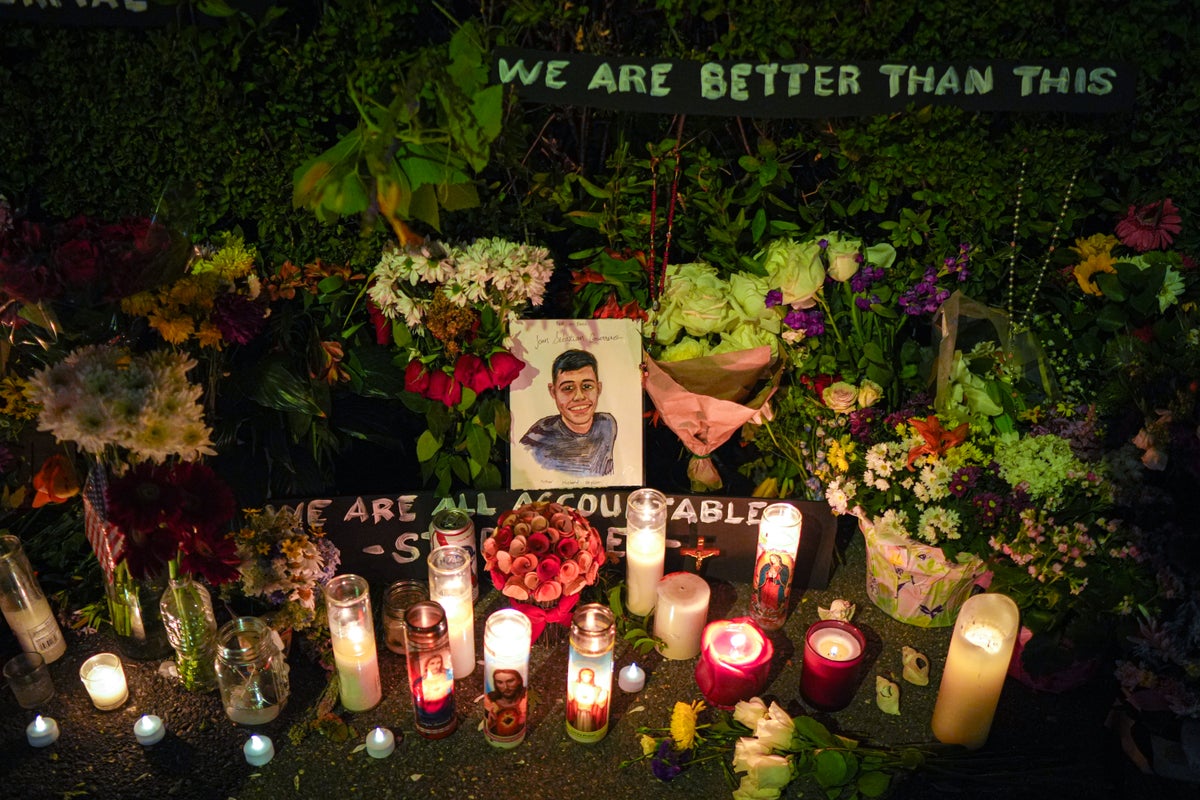
You’re looking at a textbook example of systemic failure. On July 13, 2026, Johan Sebastián Durán Guerrero, a 25-year-old Colombian national, was shot and killed by an Immigration and Customs Enforcement (ICE) officer in Biddeford, Maine.
The officer involved was 37-year-old David Brouillette. While federal agencies often hide behind "protective custody" and refusal to confirm identities, Brouillette’s own family members stepped forward to confirm his identity. They did so for a chilling reason: they knew he was capable of this violence long before he was handed a government-issued firearm.
Why the vetting process failed
ICE claims this officer had "nearly a decade of federal law enforcement experience" and underwent required training. That might look good on a resume, but it completely ignores the reality of his personal life.
Records and accounts from his two ex-wives paint a disturbing picture of a man who repeatedly demonstrated volatility, aggression, and targeted malice toward women and children. If a standard background check was performed, the sheer volume of documented allegations in the family court system should have been an immediate disqualifier.
Instead, the agency hired him late last year—the same time he was leaving voicemails suggesting his ex-wife and her "bloodline" should have their throats cut.
The pattern of documented violence
Brouillette didn't just have a "temper." He had a documented history of behavior that screams instability:
- Physical Abuse: His first ex-wife, Ashley Brouillette, reported that he threw boiling water at her while she held their child. She also alleged he once kicked in a bathroom door and pointed a gun at her.
- Stalking and Harassment: A second ex-wife secured multiple temporary protection orders, detailing years of stalking, physical abuse toward a daughter, and outbursts where he tackled a teenager and smeared food in her hair.
- Psychiatric Struggles: Family members noted he suffered from serious mental health issues since childhood, exacerbated by military service in Afghanistan. His own daughter recalled him sitting on a tree stump with a gun to his head.
Despite this, he moved from job to job—including a stint as a VA police officer—collecting disability pay and eventually landing at ICE.
The cost of rapid hiring quotas
This isn't just about one bad actor. It's about how the system handles pressure. The Department of Homeland Security has been on a massive hiring spree to meet the demands of the current administration’s deportation agenda. When you prioritize speed over safety, you lower the floor.
Lawmakers are rightfully demanding answers. When you rush to fill quotas, you skip the deep, uncomfortable work of psychological evaluation and long-term behavioral history. You get agents like Brouillette, who reportedly told his own family he acted in "self-defense" after the killing—the same justification he used to minimize his past abuse.
Real accountability requires change
If you want to know why these incidents keep happening, look at the lack of transparency. ICE’s standard response is to claim that identifying officers "puts their lives and the lives of their families at serious risk".
This is a shield for accountability. It prevents the public from knowing who is policing their streets. It stops victims from coming forward until it is too late.
What needs to happen now
We are past the point of "better training." The system is fundamentally broken. Here is what real oversight looks like:
- Mandatory Domestic Violence Screenings: Federal law enforcement must integrate family court records into their standard background checks. A restraining order shouldn't be a "red flag"—it should be an immediate bar to employment.
- Independent Oversight: Investigations into shootings by federal agents cannot be handled solely by the agency itself. External, non-partisan oversight is required to eliminate the "blue wall" of silence.
- Transparency Mandates: Agencies should not be allowed to hide the history of officers involved in fatal shootings under the guise of officer safety. If you have the power to take a life, the public has the right to know your professional and behavioral history.
The death of Johan Sebastián Durán Guerrero was preventable. His life was lost because a broken system valued a warm body in a uniform more than the safety of the people that uniform is supposed to protect. It’s time to stop treating these tragedies as isolated incidents and start calling them what they are: systemic negligence.