Shipping lanes are burning on both sides of the Arabian Peninsula, and the global energy market is running out of escape routes.
When Houthi forces launched missile and drone strikes against two Saudi-flagged crude carriers in the southern Red Sea on Wednesday, they didn't just target isolated commercial ships. They systematically shut down Saudi Arabia's primary workaround for avoiding the crippled Strait of Hormuz. With American forces executing their twelfth consecutive night of retaliatory bombardment against targets inside Iran, the Middle East energy war has expanded from a regional crisis into a total maritime chokehold.
If you thought oil markets could simply route around Persian Gulf volatility, think again. The simultaneous disruption of both the Bab al-Mandeb Strait and the Strait of Hormuz creates an unprecedented squeeze on global crude distribution that will hit gas pumps and utility bills worldwide in short order.
The Double Chokepoint Trap Threatening Global Crude Flow
For weeks, global oil trade depended on a single, fragile workaround. As Iranian naval forces restricted traffic through the Strait of Hormuz—the narrow waterway that normally carries roughly 20 percent of world petroleum—Saudi Arabia adapted. The kingdom ramped up flow through its east-west East-West Pipeline, pumping millions of barrels of crude across the desert to its Red Sea port terminal at Yanbu. From Yanbu, supertankers loaded up to sail south past Yemen toward Asian markets or north through the Suez Canal into Europe.
That bypass route collapsed on Wednesday.
Yemen's Houthi movement declared a full maritime blockade against Saudi ports, warning commercial ships that any vessel attempting to dock or load cargo in Saudi Arabia would be targeted. They backed up the threat almost immediately.
The Saudi-flagged product tanker Encelia was hit by an unknown projectile roughly 70 nautical miles southwest of Al Shuqaiq, sparking an onboard fire that forced the crew into damage control. Hours later, the Houthis claimed a secondary strike against the Very Large Crude Carrier (VLCC) Layla, owned by Saudi state shipping firm Bahri.
The immediate result was panic across maritime traffic systems. Marine tracking data from Kpler showed at least nine laden oil tankers instantly aborting their passage through the Bab al-Mandeb Strait. Three tankers carrying Saudi crude intended for buyers in China and India made complete U-turns in the middle of the Red Sea to retreat toward safer waters.
When both Hormuz and Bab al-Mandeb are compromised at the same time, there's nowhere left for Middle Eastern oil to go. You can't simply build a pipeline overnight to bypass an entire continent.
What Most Observers Miss About Houthi Naval Tactics
Many political analysts initially treated the Houthi blockade threat as mere posturing. That was a mistake.
The Houthis aren't acting in a vacuum. Their move against Saudi shipping represents a tightly coordinated strategy aligned with Tehran's campaign across the Gulf. By threatening vessels entering or exiting Yanbu, the group effectively deprives Riyadh of its primary export relief valve.
Look at how the pressure builds across three specific vectors:
- Financial Strain on Riyadh: Saudi Arabia relies on uninterrupted energy sales to fund its massive domestic infrastructure programs. Blocking Yanbu hits state revenues directly at a time when budget projections require reliable export volume.
- Forced Cape of Good Hope Rerouting: Fully loaded supertankers unable to pass south through the Bab al-Mandeb or east through Hormuz can't use the Suez Canal efficiently either due to draft restrictions. They're forced to sail all the way around the African continent, adding 10 to 14 days to transit times and sending shipping freight rates skyrocketing.
- Insurance Market Shock: Marine underwriters are already raising war-risk premiums to prohibitive levels for any vessel operating anywhere near the Arabian Peninsula, making commercial passage financially toxic even for unflagged vessels.
The Houthi Humanitarian Operations Coordination Center explicitly emailed global shipping companies warning that vessels loading or unloading at Saudi ports face direct military targeting within range of Yemeni ballistic missiles and naval drones. That broadcasted warning was enough to spook commercial fleets across the globe.
American Air Power Hits Limits Against Decentralized Targets
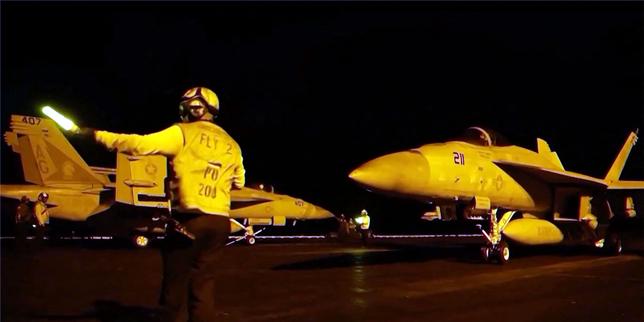
While the Red Sea flared up, the United States military continued its campaign against Iranian infrastructure. U.S. Central Command (CENTCOM) confirmed that American aircraft and naval assets completed a twelfth straight night of strikes inside Iranian territory, targeting missile sites, command posts, and coastal radar installations.
Yet military action hasn't quieted the waters. If anything, the conflict keeps spreading outwards.
President Donald Trump warned on social media that the U.S. would destroy an Iranian power plant or bridge for every attack on commercial shipping in Hormuz. Iranian Foreign Minister Abbas Araghchi responded directly, citing an "eye for an eye" defense doctrine and promising symmetric strikes against regional infrastructure.
The operational reality on the ground shows clear limitations to pure air campaigns:
- Iran's Asymmetric Defense: Iranian Revolutionary Guard (IRGC) naval units have used minefields, mobile shore-based missile batteries, and swarming attack craft along the Omani coast to force commercial ships into regulated Iranian channels.
- Gulf Ally Exposure: Middle Eastern nations hosting U.S. forces face daily aerial bombardment. Air defenses in Kuwait were active early Thursday intercepting hostile attack drones, while Jordan downed incoming missiles and drone formations. Air sirens sounded across Bahrain as explosions rocked local defense sectors.
- Supply Chain Vulnerability: Even with continuous U.S. carrier strikes, neutral commercial crews won't sail into high-risk zones. Naval escorts can't protect every individual tanker across thousands of square miles of ocean.
The U.S. energy stance adds another layer of complexity. While domestic American production remains near record highs, global energy pricing remains tied to worldwide supply balances. High crude prices hit European and Asian allies immediately, driving up inflation and straining trade alliances despite domestic U.S. oil abundance.
Real World Numbers Driving the Crisis
Understanding the scale of this maritime shutdown requires looking at the actual daily flow of global crude through these specific corridors:
- 20 Million Barrels per Day: The typical volume of crude and refined petroleum products that passes through the Strait of Hormuz under normal operations.
- 7.4 Million Barrels per Day: The average volume transiting through the Bab al-Mandeb Strait prior to the latest round of Houthi strikes.
- 2.5 Million Barrels per Day: The estimated Saudi crude capacity redirected through the East-West Pipeline to Yanbu that is now trapped or forced into high-risk transit.
- 12 Consecutive Days: The duration of sustained U.S. airstrikes against Iranian military installations across the Gulf region.
When you take nearly 25 percent of global maritime oil traffic out of standard rotation, global inventories drain at unsustainable rates. Refineries in Europe and Asia are already re-evaluating run rates as delayed cargoes force them to draw down domestic emergency reserves.
Common Misconceptions About the Conflict
Navigating news coverage during a fast-moving military conflict is tough. A lot of faulty assumptions are floating around market circles right now that deserve direct correction.
Misconception 1: The Red Sea and Hormuz Crises Are Separate Events
They aren't. While the Houthis operate as an autonomous Yemini movement, their military campaign directly complements Iranian naval operations in the Strait of Hormuz. Closing Bab al-Mandeb eliminates the exact alternative route Iran's adversaries created to soften the impact of a Hormuz closure. It's a single coordinated pressure strategy.
Misconception 2: Naval Escorts Can Instantly Fix Commercial Shipping Trajectory
Naval warships provide deterrence against piracy and simple surface attacks, but they can't fully shield massive commercial tankers from distributed anti-ship cruise missiles, low-altitude attack drones, and naval mines. Private ship operators won't risk a hundred-million-dollar hull and a multi-million-dollar cargo on the hope that an Aegis destroyer intercepts every incoming threat.
Misconception 3: High U.S. Oil Production Protects Western Consumers
The U.S. produces a massive amount of oil, but crude oil is a global fungible commodity. If European and Asian buyers lose access to Middle Eastern barrels, they bid up prices for Atlantic Basin, North Sea, and American crudes. Gasoline prices at domestic pumps rise regardless of where the physical oil was pumped out of the ground.
Practical Steps for Energy Markets and Logistics Operations
The current double chokepoint scenario isn't going to resolve overnight. If you manage supply chains, oversee energy procurement, or trade commodities, waiting for a formal peace agreement is a dangerous plan. Take these direct steps immediately to protect your operations:
- Audit Transit Routes: Map every tier of your physical supply chain to identify dependencies on goods passing through the Suez Canal or the Red Sea. Shift commitments to air freight or West Coast entry points where possible.
- Factor in Cape Routing Costs: Re-calculate transit budgets assuming a 14-day delay for ocean freight traveling around Africa. Build extra lead time directly into inventory buffers to prevent factory stockouts.
- Review War-Risk Marine Insurance Policy Clauses: Verify whether your cargo policies contain active war-risk exclusion clauses or geographical restrictions covering the Red Sea, Persian Gulf, and Gulf of Aden.
- Hedge Fuel Exposure: Utilize energy futures and options contracts to cap floating energy costs over the next two quarters as global refining margins adjust to higher crude procurement expenses.
- Secure Western Hemisphere Sourcing: Establish secondary agreements with suppliers based in South America, North America, or non-conflicted Asian hubs to insulate core operations against ongoing Middle Eastern escalation.
The reality on the water is clear. With the Red Sea burning and the Strait of Hormuz blocked, the global energy map has been fundamentally redrawn. Those who adapt their operational logistics today will survive the supply shocks coming tomorrow.