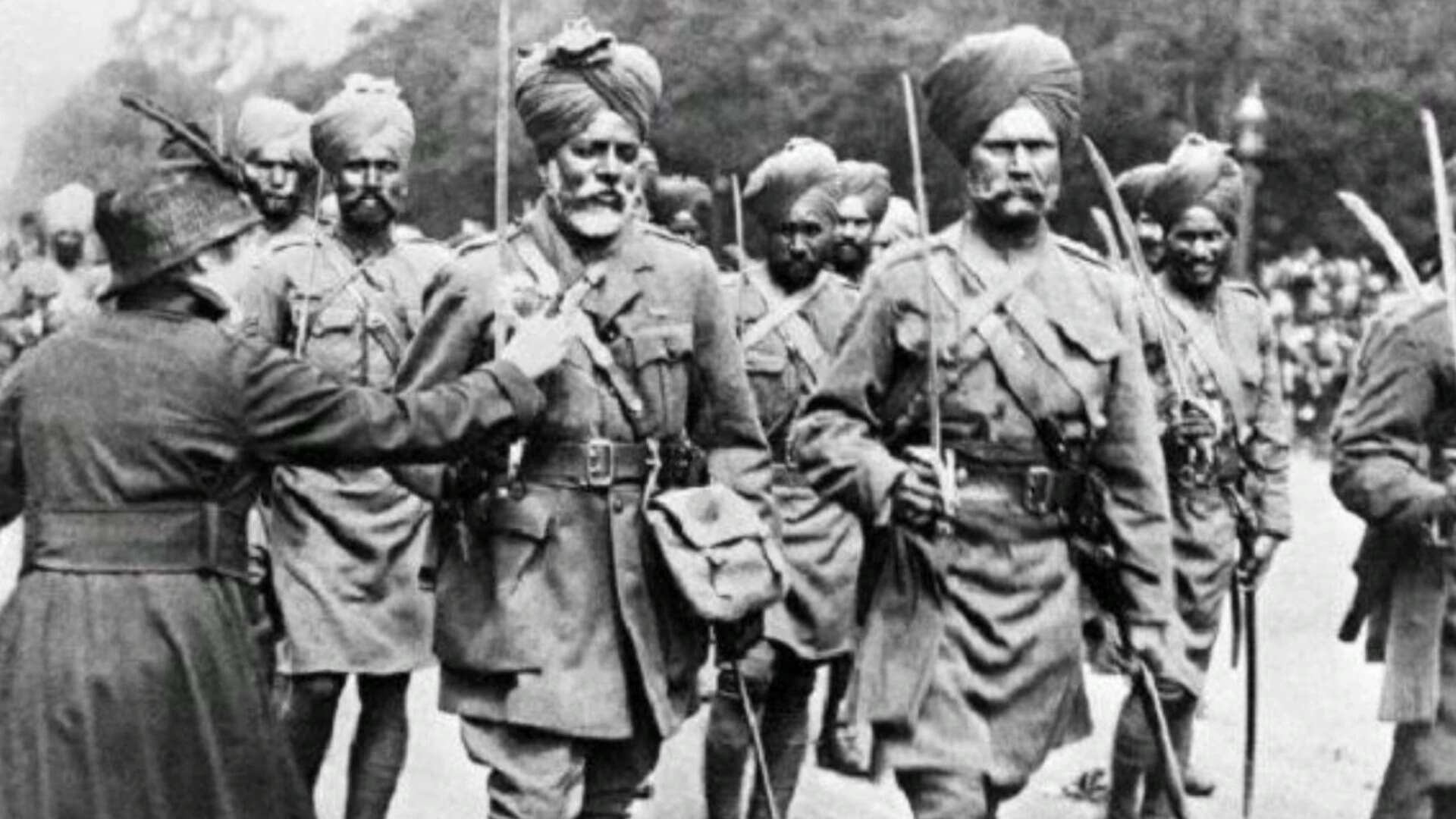
The history of World War I that you read in school is missing a massive chunk of reality. If your textbooks look anything like mine did, the global conflict is painted as a purely European affair. You see muddy trenches in France, British tommies, and German lines.
That narrative is flat-out incomplete.
More than a century after the guns fell silent, a major historical wrong is finally getting corrected. The Commonwealth War Graves Commission updated its database to add 9,909 forgotten Punjabi soldiers and other British Indian Army servicemen. For decades, these men were scrubbed from official commemoration because of bureaucratic technicalities and colonial-era biases. Now, their names are finally being etched into the official history of the Great War.
This is not just a tiny archive update. It is a massive shift in how we remember global history. Let's look at what actually happened, why these men were ignored, and why it matters to anyone trying to understand the modern world.
The Massive Scale of Punjab's Untold Sacrifice
When the war broke out in 1914, Britain needed bodies. It turned to its global empire, and specifically to undivided Punjab, a region now split between India and Pakistan.
The numbers are staggering. Around 300,000 Punjabi men left their villages, families, and fields. They boarded ships to fight in environments they could barely comprehend. They fought in the mud of France, the scorching deserts of Mesopotamia, the rocky cliffs of Gallipoli, and across East Africa, Egypt, Palestine, Persia, and Salonika.
Think about that for a second. These were young men who had often never left their districts. Suddenly, they were dropped into industrialized slaughter on the other side of the planet. Official records show that nearly 13,000 Punjabis lost their lives during the conflict.
Yet, for a century, thousands of them vanished from the official ledger of honor.
The Commonwealth War Graves Commission recently made the biggest revision to its records in more than 80 years. This massive correction did not happen because government officials suddenly had a change of heart. It happened because citizen historians and researchers refused to let these names die in obscurity.
How local village records beat official British archives
The breakthrough came from an unexpected place. Researchers from the UK-based Punjab Heritage Association spent years digitizing and analyzing fragile, handwritten registers. These documents had been left unread in the basements of the Lahore Museum in Pakistan for nearly a century.
Compiled by the Punjab government in 1919 right after the war ended, these Punjab Registers span 34 volumes and roughly 26,000 pages. They contain village-by-village data on over 320,000 individuals who served. They list individual names, fathers' names, castes, regiments, ranks, and what happened to them.
When you look closely at these pages, you realize why they were created. The colonial authorities were actually terrified. They were nervous about hundreds of thousands of demobilized men returning to Punjab. These were men trained in violence who had just witnessed European societies. The British feared hardship, unemployment, and anti-government protests. So, they created local Indian Soldiers' Boards to track these men and administer rewards like pensions or land to keep them quiet.
In doing so, they inadvertently created the most thorough record of Punjabi service in existence.
By cross-checking these dusty spreadsheets with official war graves records, researchers found a massive gap. Thousands of names simply did not match any official war graves. The British government had drawn a line between those who died on the battlefield and those who died of their injuries or diseases away from the front lines, often back in their home villages or in transit. If a soldier survived the trenches of France but died of gas-induced lung failure or influenza six months later in a Punjabi village, the colonial administration basically wiped its hands of them. They were not given official war graves. They were excluded from the history books.
The human cost behind the data points
Statistics can feel cold, but the individual stories are deeply emotional. The newly recognized list includes people like Kesar Singh. He is the great-grandfather of a Leicester-based dentist named Sunney Palahey. Palahey had spent years trying to dig up details about his ancestor's service, hitting brick walls at every turn. Now, Kesar Singh is officially entered into the Commonwealth database. The sacrifice finally has official recognition.
Then there is Jasmin Basra, a PhD student at the University of Greenwich. While working on the project, she discovered the names of her own great-great-grandfather and his brother in the registers. For her, it transformed a dry academic exercise into a direct emotional link between her Punjabi heritage and British wartime history.
The diversity of the list also shatters common misconceptions. People often assume the British Indian Army was a monolith. The data shows that of the newly recognized soldiers, about 40 percent were Muslims, 25 percent were Sikhs, and 25 percent were Hindus. They fought side-by-side, sharing the same miserable conditions, the same diseases, and the same tragic ends.
Moving past Eurocentric war memory
For decades, the standard remembrance of World War I has been overwhelmingly Eurocentric. We have been taught to visualize a very specific demographic when we think of the Allied war effort.
The reality is that around 1.4 million men from the Indian subcontinent served in the British Indian Army during the First World War. It was the largest volunteer army in the world at the time. Military historians have openly stated that without the Indian army reinforcing the front lines during the critical early stages of the war, the Western Front might have collapsed entirely.
Ignoring this contribution does not just do a disservice to the dead. It distorts the present.
A survey by the think tank British Future found that only about half of the British public even knows that Indian soldiers fought for Britain in the world wars. When history is taught with such a massive blind spot, it creates a false sense of cultural division today. It makes minority communities feel like outsiders in a history they literally helped write with their blood.
True remembrance requires historical justice, not just poppies and ceremonies. It means correcting the record when administrative policies of the past intentionally minimized the sacrifices of non-white troops.
Your next steps to connect with this history
History is not something that just sits in a textbook. It is active, and you can participate in it. If you want to move beyond passive reading and engage with this piece of global history, here are concrete things you can do right now.
First, explore the data yourself. The UK Punjab Heritage Association and the University of Greenwich have made significant portions of these records searchable online. If you have roots in the Punjab region, search your family's ancestral villages. You might find names of relatives you never knew existed.
Second, re-examine your reading list. If you want to understand the true scale of the British Indian Army, step away from standard Western textbooks. Pick up books that use actual letters and primary sources from these soldiers. Excellent starting points include "Indian Voices of the Great War" by David Omissi or "The Indian Empire at War" by George Morton-Jack. They give a voice to the men who were silenced for a century.
Third, change the way you talk about these events. When discussing world history with friends or family, remind them of the global nature of these conflicts. The trenches of France were filled with voices from Jalandhar, Ludhiana, and Sialkot.
The historical record is finally catching up to reality, but it is up to us to make sure these names stay remembered.