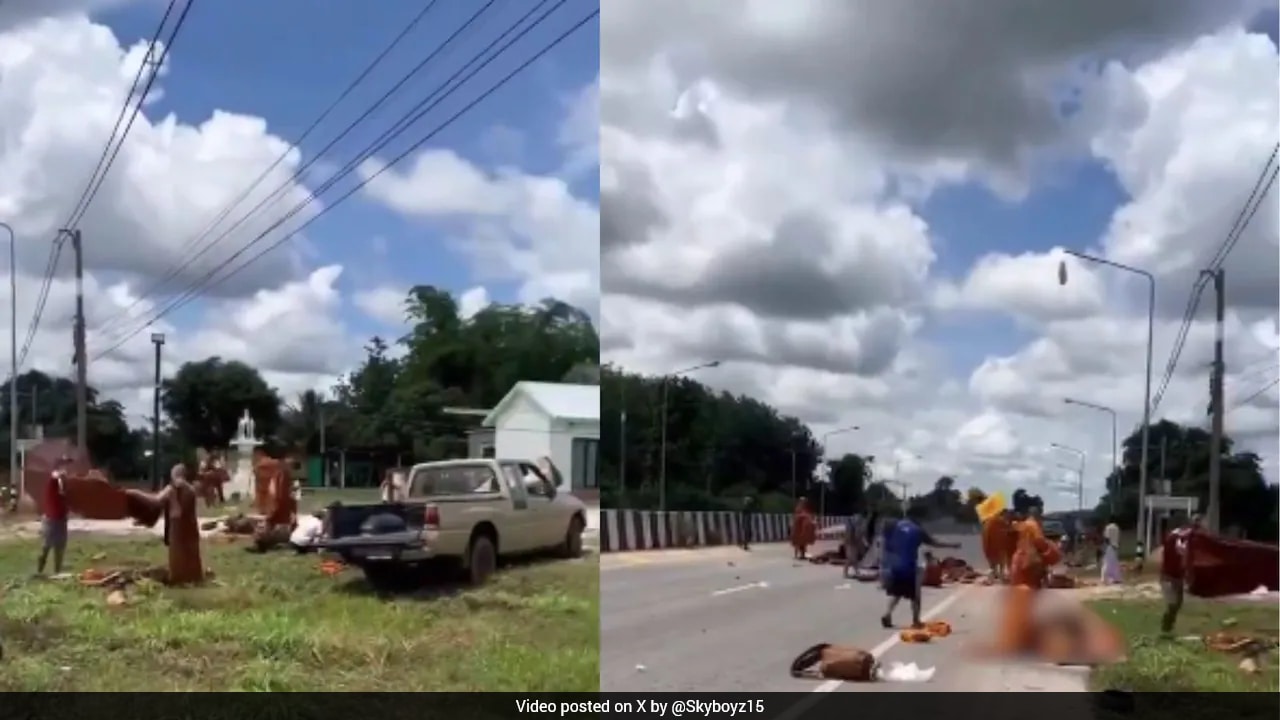
A peaceful morning pilgrimage turned into an absolute nightmare along a highway in northeastern Thailand. On Thursday, July 2, 2026, an eleven-year-old boy took his parents' pickup truck without permission and plowed directly into a group of Buddhist monks walking along the roadside. The devastating crash left eight Thai monks killed and at least ten others injured, sending shockwaves through a nation where monastics are deeply revered. This was not just a freak accident. It is a stark, painful reminder of structural failures in traffic enforcement, vehicle security, and parental supervision that happen far too often.
When we look at breaking news stories like this, the tendency is to focus solely on the immediate shock value. An eleven-year-old behind the wheel of a heavy pickup truck sounds unbelievable. Yet, the details coming out of Mukdahan province reveal a chain of missed opportunities and systemic gaps that turned a regular morning into a mass casualty event. The public deserves to understand exactly how this happened and what must change to prevent another community from enduring this kind of grief.
The Sudden Terror on a Pilgrimage Highway
The pilgrimage had barely begun when disaster struck. A group comprising 35 Buddhist monks and five lay followers had set out on a grueling 260-kilometer spiritual walk from Mukdahan toward Ubon Ratchathani province. They were walking in a orderly, single-file line along the edge of the road, keeping to the shoulder to stay clear of moving traffic. They were only thirty minutes into their journey.
Survivors recalled a scene of absolute peace instantly shattered by a roaring engine and twisting metal. Phra Sompong, one of the surviving monks, related his experience to local rescue workers while still visibly shaken. He was focused on his meditation, quietly chanting his mantras as they moved along the roadside. Out of nowhere, he spotted a pickup truck hurtling toward them at full speed.
Phra Sompong and another monk managed to throw themselves into the ditch just in time. The first nine monks in the line were miraculously spared. Those walking further back had zero time to react. The impact was catastrophic, throwing bodies into the air and scattering spiritual items across the pavement. Five monks died on the hot asphalt right then and there. Three more succumbed to their traumatic injuries after being rushed to Mukdahan Hospital, bringing the death toll to eight. Ten other individuals remain hospitalized, with several fighting for their lives in critical condition.
How an Interception Failure Led to a Disaster
As investigators piece together the timeline, the story becomes even more frustrating because it could have been stopped. This was not a case of a child going on a quick joyride around the block. According to statements obtained by local news outlets, the young boy's grandmother noticed the child and the family's pickup truck were missing early in the morning.
The grandmother knew the situation was dangerous, particularly noting to authorities that the child has special needs and had absolutely no business operating a motor vehicle. She did the right thing. She immediately called the police, pleading for them to intercept the vehicle before her grandson hurt himself or someone else.
Somehow, the system failed. The boy managed to navigate the heavy vehicle out of his residential area and onto major thoroughfares. Records indicate the truck actually passed directly through the Na Kham Noi police checkpoint while heading toward Mukdahan town. The vehicle was not stopped. It kept going until it slammed into the pilgrimage procession near the village of Ban Na Wiang Kae.
Why was a vehicle driven by an eleven-year-old able to pass through an active police checkpoint? This is the critical question local authorities must answer. Police Major General Pairoj Thaiphutsa, commander of the Mukdahan Provincial Police, has stated that the vehicle has been seized for forensic examination to rule out mechanical issues. But the human element—the failure to stop a child driving a massive piece of machinery down a public highway—is the glaring issue staring everyone in the face.
The Harsh Reality of Traffic Safety in Thailand
To understand the weight of where eight Thai monks killed in a single morning leaves the community, you have to look at the broader context of Thai roads. Thailand routinely ranks among the highest in the world for traffic fatalities per capita. The World Health Organization has repeatedly pointed out that vulnerable road users, including pedestrians, motorcyclists, and cyclists, bear the brunt of this crisis.
Pilgrimage walks by monks are a time-honored tradition in Thailand. Monks walk for days or weeks across provinces to practice mindfulness, connect with rural communities, and fulfill spiritual vows. Because they travel on foot, they rely entirely on the safety of vehicle shoulders and the alertness of passing drivers. When a driver loses control, these processions are completely defenseless.
Mukdahan provincial governor Worayan Bunnarat spoke out following the crash, asserting that the incident must serve as a harsh lesson for the entire country. He claimed that local administrations have tried to be strict on road safety, but this tragedy proves that current measures are simply not enough. It is easy to blame a child or look at this as an isolated incident, but the ease with which minors access vehicles is a cultural and systemic issue that requires a heavy hand to fix.
Who Bears the Legal Blame When a Child Drives
The eleven-year-old suspect is currently in custody, waiting to be questioned by state child protection officers and juvenile specialists. Under Thai law, a child of that age cannot face standard criminal prosecution or jail time in the way an adult would. The legal system focuses heavily on rehabilitation and protective custody for minors.
The real legal battle will center around the parents and guardians. Police Major General Pairoj Thaiphutsa confirmed that the boy's parents have been summoned to the police station to establish legal responsibility for the child's care.
In cases like this, prosecutors look closely at negligence. Did the parents leave the car keys in an easily accessible location? Did they have reason to know the child might attempt to drive? Under the Civil and Commercial Code of Thailand, parents can be held strictly liable for the damages caused by their minor children unless they can prove they exercised all reasonable care in supervising them. Given the immense tragedy and the loss of eight lives, the financial and legal pressure on the family will be unprecedented.
Why the Status of Monks Amplifies This National Trauma
This incident hits the Thai psyche much differently than a standard traffic accident. In Thailand, Theravada Buddhism is deeply woven into daily life, and monks are seen as the spiritual pillars of society. They are the keepers of the culture, the counselors for the grieving, and figures of ultimate respect.
Seeing images of saffron robes stained with blood on a highway shoulder provokes deep communal grief and moral outrage. The local rescue group, Ruam Jai Mukdahan Rescue Association, faced an incredibly difficult task managing the scene and documenting the aftermath for forensic purposes. The fact that these monks were explicitly engaging in a merit-making pilgrimage when their lives were cut short makes the tragedy feel deeply unfair to the local population. It forces a difficult conversation about how the state protects its citizens, even those engaged in sacred practices.
Moving From Grief to Concrete Preventative Action
Grieving is necessary, but it does nothing to prevent the next crash. If Thailand wants to honor the memory of the monks lost in Mukdahan, the government and local communities need to implement changes immediately.
First, secure your keys. This is the most basic, immediate step every parent and vehicle owner must take. Heavy machinery requires strict access control. If you have a child in the house, especially a child with special needs or behavioral challenges, car keys must be locked away, not left sitting on a kitchen counter or a coffee table.
Second, checkpoint protocols must change. Police checkpoints in rural provinces cannot just be passive visual filters or random stops for registration tags. If a vehicle passes through with a driver whose head barely clears the steering wheel, that vehicle must be stopped immediately. The failure at the Na Kham Noi checkpoint requires an internal investigation and disciplinary action for the officers on duty who allowed that truck to pass.
Third, we need better protection for walking processions. If religious or community groups are planning long-distance walks along major highways, they must coordinate directly with local highway police to ensure a trailing escort vehicle with warning lights accompanies them. Relying on the goodwill and alertness of passing traffic on Thai highways is a gamble that nobody should take anymore.
The tragedy in Mukdahan is a heartbreaking wake-up call. We cannot undo the loss felt by the families of those eight monks or the trauma carried by the survivors. We can, however, tighten vehicle security in our own homes, demand better accountability from law enforcement at checkpoints, and ensure that our roads stop being a place where innocent lives are discarded. Lock up your keys today. Demand better from your local precinct tomorrow.