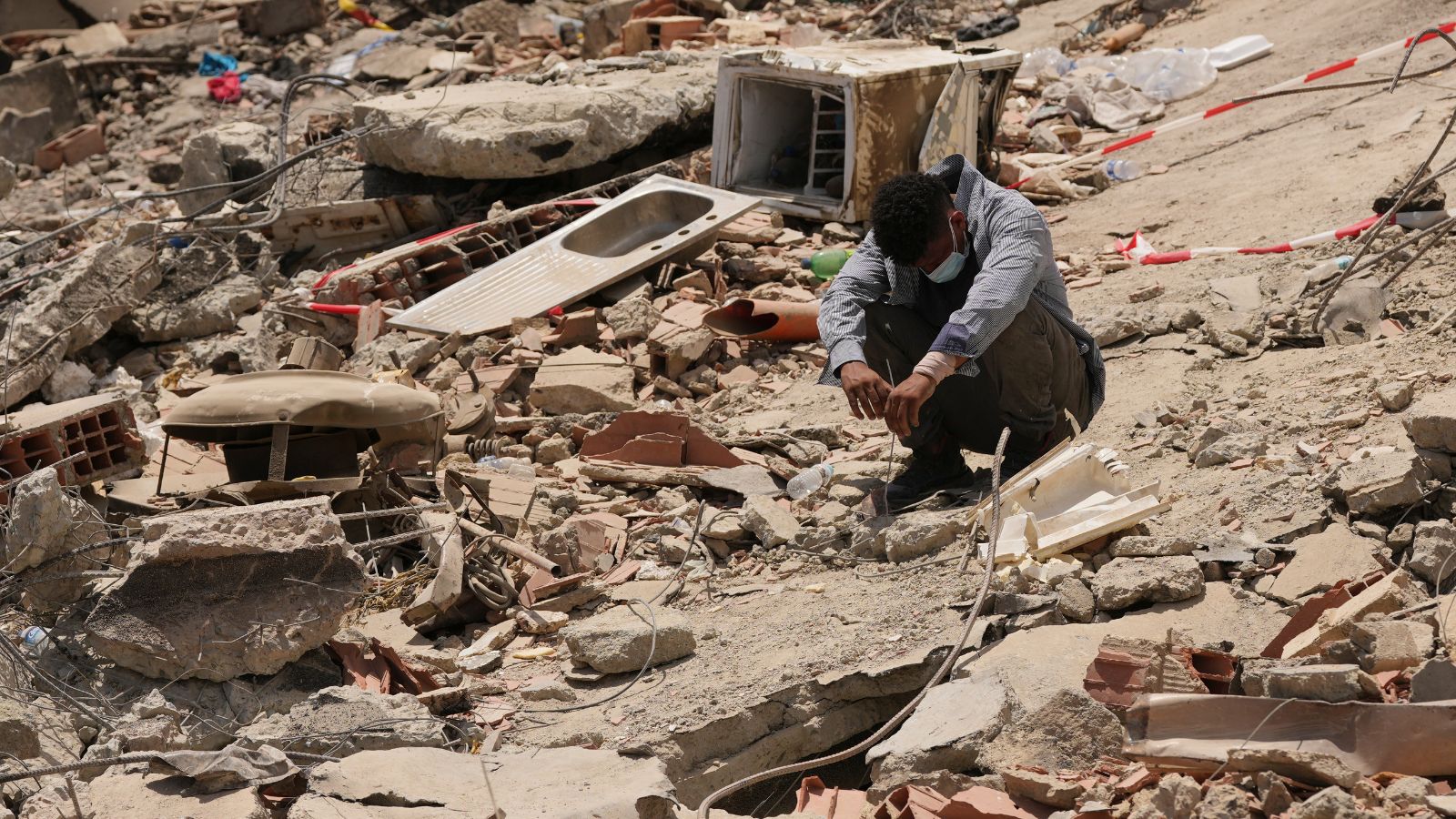
Imagine spending years fleeing a broken economy, surviving a brutal overland journey, and trying to build a new life in South Florida, only to find yourself forced onto a plane back to the place you ran from. Now imagine landing there, being placed in a government-selected hotel, and watching the walls pancake on top of you just hours later.
That is the horrifying reality for a group of 146 Venezuelans deported from Miami. Their flight landed right before a massive double-earthquake hit the coastline, registering at 7.2 and 7.5 magnitudes. Today, over 100 of those deportees remain completely missing under the debris of their temporary housing in La Guaira.
This isn't just a story about a natural disaster. It's a look at how administrative policies and terrible timing can seal someone's fate before they even have a chance to figure out their next move.
The Relentless Hours Before the Earthquakes
The sequence of events sounds like a script from a disaster movie, but it happened in plain daylight. Human Rights First tracks these movements through their ICE Flight Monitor initiative. Their data tells us exactly how this group ended up in the direct path of a catastrophic geological event.
Voices From the Concrete
The only reason we know the depth of this tragedy is because a few survivors managed to claw their way out. Their stories give a raw look at what happened when the shaking started.
Lisbeth Portillo, a 58-year-old woman who had spent more than four years living in South Florida, was caught up in the current administration's mass deportation actions. She had crossed the Mexican border back in November 2021 and had a pending asylum claim when she was detained and sent back.
Portillo was placed in a second-floor room with 16 other women. She recalls looking out from the balcony at a strangely black sky and feeling intense heat right before the ground gave way.
"I fell and ended up buried and covered by a beam," Portillo recalled during a frantic phone call home. "But the shaking shifted everything where I was buried and I was able to get out."
She escaped with about 20 other deportees. They emerged into a nightmare scenario. People were running through the streets naked and barefoot, screaming for loved ones amidst total communications blackouts. Portillo and her small group walked five kilometers on foot until they reached a National Guard building where they could finally call their families.
Another survivor, 24-year-old Jenny Rodriguez, shared a similarly terrifying account. Trapped deep under heavy debris, she saw another passenger from her flight navigating the wreckage. She managed to free one hand, grabbed his trousers as he passed, and begged for help. He pulled her free. Most of the other 146 people on that plane weren't so lucky.
The Cold Reality of the Enforcement Machine
While families scramble for any shred of information, official answers are non-existent. U.S. Immigration and Customs Enforcement has not provided specific details regarding the status of the individuals they put on that plane. If you ask the detention centers, like the one in El Paso where some passengers were held prior to the flight, they simply tell family members that the individual was deported. The paperwork is filed, the case is closed on the American side, and the human being is no longer their responsibility.
This disaster happened right as deportation operations scaled up significantly. To understand the scale, look at the numbers tracked by independent watchdogs during this period.
- 288 deportation flights were executed by ICE in a single month, heading to 38 different countries.
- 12 direct flights went straight to Venezuela during that same timeframe, running three days a week.
- These operations follow a resumption of flights that began in February 2025 after a 13-month diplomatic pause.
When governments treat deportation as a purely statistical logistics game, people end up in environments where their safety cannot be guaranteed. Venezuela is currently dealing with deep systemic struggles, and this earthquake, which has claimed more than 1,700 lives nationwide, has pushed local infrastructure past its breaking point.
What Families Can Do Right Now to Locate Missing Relatives
If you have a family member who was on a recent deportation flight or was detained in Texas or Florida and suddenly went silent, you cannot wait for official agencies to call you. The chaos on the ground means tracking down survivors requires immediate, proactive steps.
Check Independent Flight Trackers First
Do not rely on the government to tell you when a flight landed. Organizations like Human Rights First maintain active logs of flight numbers, departure times, and passenger manifests via their flight monitoring programs. Confirming that your relative was actually on the Wednesday flight from Miami is your first baseline fact.
Use Local Emergency Networks in La Guaira
Because central telephone lines are down in the hardest-hit parts of Venezuela, traditional calls won't go through. Local volunteer search teams and regional civil defense units are using messaging apps and localized radio networks to post lists of survivors brought to nearby medical stations. Target your search specifically around the La Guaira port region and the ruins of the Hotel Santuario La Llanada.
Tap Into Regional Human Rights Coalitions
Non-governmental organizations operating inside Venezuela are currently trying to bridge the gap left by state confusion. Groups that monitor migrant returns are working on the ground to identify individuals who walked away from the collapse but have no way to contact their families abroad. Reach out to active legal aid networks in Caracas to see if your relative's name has surfaced on shelter registries.
The search for the missing deportees is a race against time, complicated by politics and ruined infrastructure. Families don't need boilerplate statements from immigration officials. They need clear data, rescue access, and accountability for the lives caught between policy and catastrophe. Every hour that passes with silence from immigration authorities makes finding the remaining passengers alive less likely. Focus your efforts directly on the local ground teams who are actually moving the rubble.