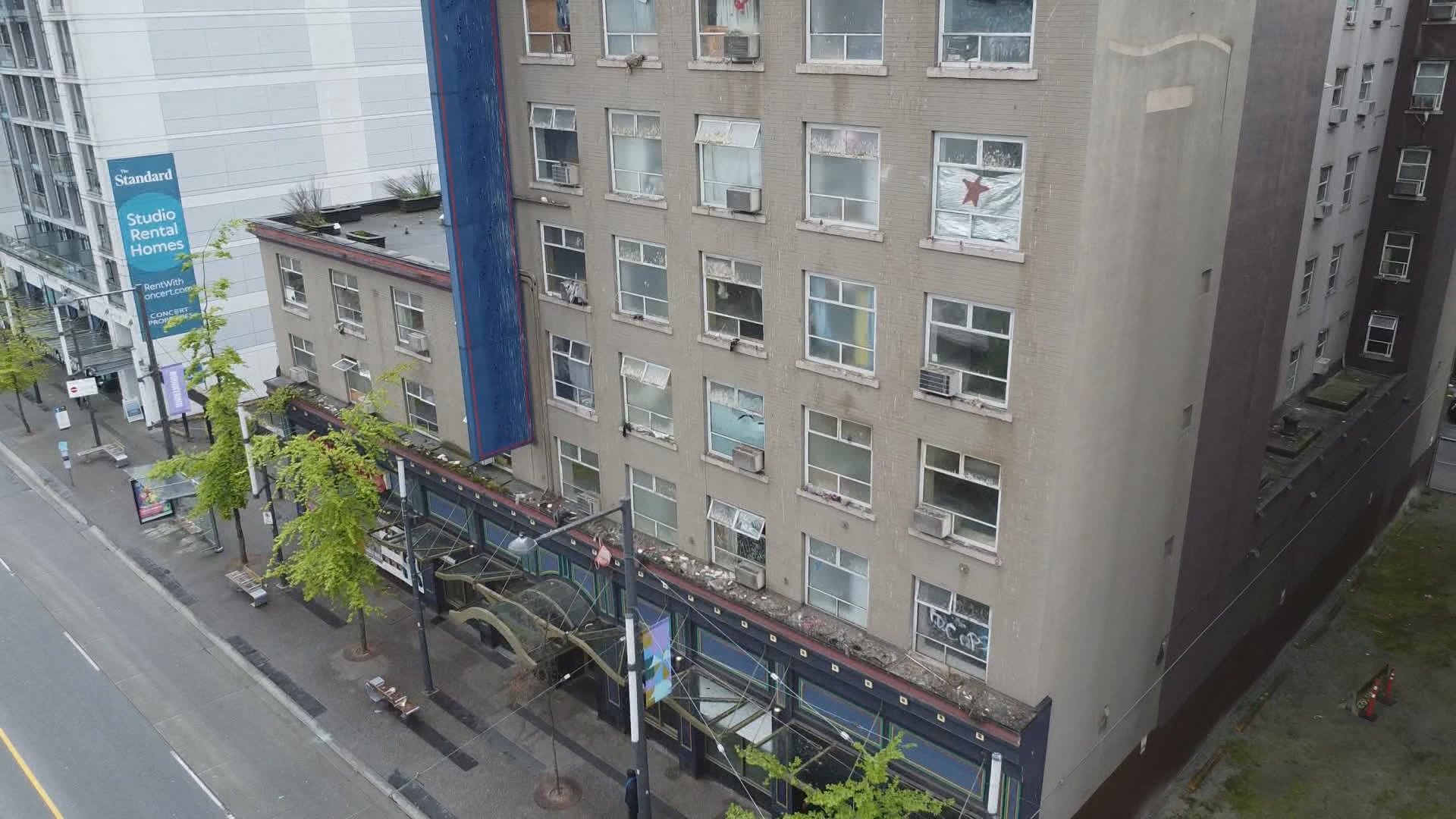
Vancouver promised the party strip would be clean by July. The B.C. government set a hard line for June 30 to empty out the Luugat, a controversial single-room occupancy hotel on Granville Street. The deadline came and went. Three residents are still living inside the former Howard Johnson Hotel, proving that shutting down supportive housing is a lot harder than buying it.
If you're wondering why a major housing transition is dragging behind schedule, you aren't alone. Neighbors want the street back. Business owners are tired of the broken windows. Meanwhile, housing officials are playing a game of musical chairs with vulnerable people, trying to find spots that actually fit. It's a mess.
The province says those final three residents have either accepted or have pending housing offers. They insist nobody is getting kicked to the curb without a roof. But if you look closer at how the Luugat emptied out, the reality on the ground contradicts the tidy government press releases.
The Granville Street Experiment That Went Sideways
Taxpayers spent millions during the pandemic to convert commercial hotels into supportive housing units. The Luugat was supposed to be a temporary fix to get people off the streets during a global health emergency. Instead, it became a focal point for neighborhood friction.
Back in the fall of 2025, the building housed roughly 80 people. By late April 2026, that number dropped to 36. June started with 12 residents left. Now we are down to the final three.
The rapid wind-down stems from intense pressure by the Granville Entertainment District business community. Bar owners and retailers documented a sharp rise in property damage, open drug use, and safety threats. They argued that putting dense supportive housing in the middle of a nightlife district was a fundamental mistake. The government eventually agreed, announcing the Luugat and two other nearby SROs would close.
But clearing a building doesn't solve homelessness. It just moves it around.
Broken Promises and the Eviction Dilemma
BC Housing claims nobody faces eviction due to the building closure. They state every single person gets an alternative housing offer. Yet, family members of former residents tell a different story.
Take the case of Phoenix McTavish. His father lived at the Luugat for over four years. According to McTavish, his dad ended up on the street in a tent because he couldn't find a place that accepted his two large pit bulls. BC Housing denies these claims, maintaining that standard procedures prevent residents from being forced into homelessness during closures.
This gap between official policy and lived experience shows the cracks in the system. When a building closes, finding an exact match for someone with specific needs—like pets, mental health supports, or physical disabilities—is incredibly difficult. If a resident rejects an offer because it doesn't fit their life, or if they have barriers like pets, they often slip through the cracks.
Taxpayer Millions and the Secretive SRO Conditions
One of the most frustrating parts of the Luugat shutdown is the lack of transparency. In May 2026, BC Housing blocked media cameras from entering the building's common areas and empty rooms. They claimed they needed to protect the privacy of the remaining residents.
Critics see it differently. They believe the government is hiding the physical state of the property.
Some former residents have spoken out about the internal conditions. One tenant noted before moving that the building was essentially ruined in less than a year. Rooms were trashed, plumbing failed, and common spaces became hazardous. This was a property purchased with millions of taxpayer dollars, intended to be a stepping stone toward stability. Instead, it deteriorated rapidly.
Not all stories are negative. Some tenants moved into vastly superior spaces. One former resident reported moving into a proper bachelor suite with a full kitchen and a real fridge, a massive upgrade from the tiny, cramped room at the Luugat. But for every success story, there are people left behind or displaced back into the alleyways.
What Happens to the Rest of Granville Street
The Luugat is just the first domino. The B.C. government previously stated that the shutdown process for the other two Granville Street SROs would begin immediately after the Luugat fully closed.
With three residents still occupying the building past the June 30 deadline, the timeline for the entire district facelift is stalled. You can't start boarding up or repurposing the block while people are still living inside.
The neighborhood remains in limbo. Business owners are waiting for the promised drop in street disorder, while housing advocates worry about where the residents of the next two hotels will actually go. The housing supply in Vancouver is already suffocatingly tight. Finding 80 spots for the Luugat residents stretched the system to its limit. Finding hundreds more for the remaining hotels will be an uphill battle.
Real Steps Needed for Housing Transitions
Emptying an SRO requires more than setting an arbitrary date on a calendar. If the province wants to avoid these exact same delays with the next two buildings, they need to change their approach.
Audit the Remaining Housing Inventory Privately
Officials must stop guessing which units are available. A real-time, transparent ledger of supportive housing vacancies that accept pets and couples needs to exist before a building closure is announced.
Create Flexible Pet Policies in Supportive Housing
The biggest barrier for many unhoused individuals is their animals. Forcing someone to choose between a roof and their dog means they will choose the dog every single time. BC Housing needs dedicated pet-friendly transitional units if they want to clear buildings efficiently.
Allow Media Accountability
Stop locking the doors when journalists ask to see inside taxpayer-funded buildings. If the SRO model failed at the Luugat, the public deserves to see the physical reality so the same architectural and structural mistakes aren't repeated in future projects.
The deadline has passed. The building is still open. Vancouver is learning the hard way that housing policy requires long-term planning, not just quick fixes and sudden closures.