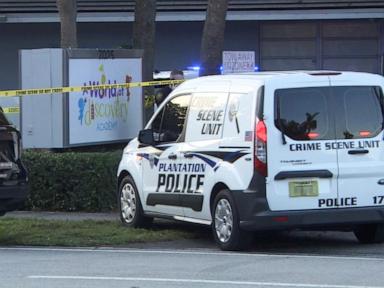
On a typical Monday afternoon, a loving father pulled into the parking lot of A World of Discovery Academy in Plantation, Florida. He was there for a routine task. He wanted to pick up his young son. Instead, he stepped into every parent's absolute worst nightmare. He opened the door of his SUV and realized he had never dropped his child off that morning.
The 23-month-old boy spent the entire day trapped inside the hot vehicle. First responders rushed to the preschool at 7025 NW 4th Street around 5:39 p.m. after the academy's owner, Leslie Novoa, dialed 911. It was already too late. Emergency crews pronounced the toddler dead right there in the parking lot.
It is easy to look at a horror story like this and judge. People immediately shout about bad parenting or criminal neglect. But that reaction completely misses the terrifying reality of how these tragedies happen. The family had been part of that preschool community for years. This was their third child to attend. They were a loving, attentive family. This was not a case of malicious abandonment. It was a catastrophic failure of human memory.
We need to talk about why this happens. It can happen to anyone.
The Anatomy of a Hot Car Tragedy in Plantation
The details coming out of Broward County paint a heartbreaking picture of how easily routines can turn fatal. The father drove to work in the morning, completely unaware that his son was still sitting in the backseat. His brain told him the drop-off had already happened. He went through his regular workday, came back to the school at dismissal time, and only discovered the truth when he went to pick up a child who had never arrived.
According to data tracked by Kids and Car Safety, this devastating incident marks the ninth hot car fatality in the United States this year. It is also the third in Florida alone within just a few months. Earlier this year, a child died on March 31 in Winter Haven. Another tragedy struck on June 20 in Riverview. Florida's brutal heat turns vehicles into literal ovens in minutes, making the state one of the deadliest locations for vehicular heatstroke.
When the outside temperature sits in the 80s or 90s, the inside of a car spikes rapidly. The greenhouse effect traps solar radiation through the glass windows. Dashboard plastics and leather seats absorb the heat and radiate it back into the cabin. Within ten minutes, the internal temperature can rise by twenty degrees. A child's body heats up three to five times faster than an adult's body. They cannot efficiently sweat or regulate their core temperature, leading to heatstroke and organ failure remarkably fast.
Why Your Brain Can Play Crucial Tricks on You
Psychologists call this phenomenon "Forgotten Baby Syndrome." Dr. David Diamond, a professor of psychology at the University of South Florida, has studied these cases extensively for decades. His research shows that human memory is split into different systems that sometimes fight each other.
You have the prospective memory system. This is the part of your brain that plans to do something in the future, like dropping your kid off at daycare. Then you have the habit memory system. This handles automatic behaviors, like driving your daily commute to the office.
When you are exhausted, stressed, or experiencing a sudden change in routine, the habit system takes over the wheel. If a father normally goes straight to work but is supposed to stop at the preschool first, a distracted mind can seamlessly execute the drive to the office. The brain creates a false memory. It convinces you that you already completed the task. You vividly believe the child is safe inside the building.
- Stress and sleep deprivation degrade the prefrontal cortex, which manages prospective memory.
- Rear-facing car seats place infants out of the driver's direct line of sight.
- A quiet or sleeping child provides no auditory cues to snap a parent back into awareness.
It sounds impossible until it happens to you. Experts emphasize that this memory glitch does not care how much you love your kids. It bypasses love entirely. It treats the child like a forgotten cell phone or a left-behind laptop.
The Fatal Flaw in Our Early Education System
Leslie Novoa mentioned that the school sent a letter to parents explaining that the emergency did not involve school operations. That is technically true. The child never entered the building. But this points to a massive gap in how daycares and preschools handle attendance.
Why did the school not call when the child failed to show up in the morning?
Many early childhood education centers do not have an automated system to alert parents when a student is absent. If a child does not arrive by 9:00 a.m., the day simply moves forward. A simple, mandatory phone call or text notification could save lives. If the preschool had reached out to the mother or father at mid-morning to ask why the boy was absent, the father would have realized his error immediately.
Some states have started pushing for laws requiring childcare providers to notify parents within a strict window if a child is unexcused. But widespread adoption is slow. Relying on paper attendance sheets and busy teachers to make manual phone calls leaves too much room for error. We need to standardize digital check-ins that trigger instant alerts to both parents.
Practical Steps to Prevent Vehicular Heatstroke
You cannot rely purely on your memory. It fails. You must build physical overrides into your daily routine so you never find yourself standing in a parking lot facing an unimaginable loss.
Put Your Left Shoe in the Backseat
This sounds ridiculous, but it works. When you arrive at your destination, you cannot physically walk away from your vehicle without putting your shoe on. By placing an item you absolutely need to function in the back floorboard, you force yourself to open the rear door every single time you park. You can also use your wallet, your phone, or your employee ID badge.
Keep a Stuffed Animal in the Car Seat
When the car seat is empty, keep a large, brightly colored stuffed animal sitting in it. When you buckle your child into the seat, move that stuffed animal to the front passenger seat right next to you. It serves as a visual reminder that your child is behind you. If you look down and see the bear on your dashboard, you know your kid is in the back.
Establish a Mandatory Check-in Circle
Create a hard rule with your spouse, partner, or a grandparent. The person dropping off the child must send a text or a photo confirming the drop-off happened. If the other parent does not receive that text by a specific time, they must call immediately. Do not wait. Do not assume everything went fine.
Demand Action From Your Daycare
Talk to your childcare provider about their absence policy. Ask them directly what happens if your child does not show up. If they do not have a policy to call you within an hour of missed attendance, demand that they implement one. Offer to help look into apps like Brightwheel or Procare that automate these notifications for staff.
Technology is Moving Too Slowly
The Hot Cars Act was passed to force automakers to install rear-seat reminder systems in all new passenger vehicles. These systems use auditory and visual alerts to tell the driver to check the back seat when the engine turns off. Some advanced systems even use radar to detect the movement or breathing of a child left behind.
But millions of older vehicles remain on the road without this technology. Retrofitting older cars falls entirely on the consumer. Even when new cars have these sensors, drivers sometimes grow habituated to the chimes and ignore them. Technology helps, but it requires human backup.
The tragedy in Plantation is a stark reminder that our internal wiring has flaws. We build guardrails for our finances, our homes, and our digital data. We must start building aggressive physical guardrails for our children's safety in the car. Stop assuming it could never be you. Assume your brain can fail you tomorrow, and set up your safety net today.