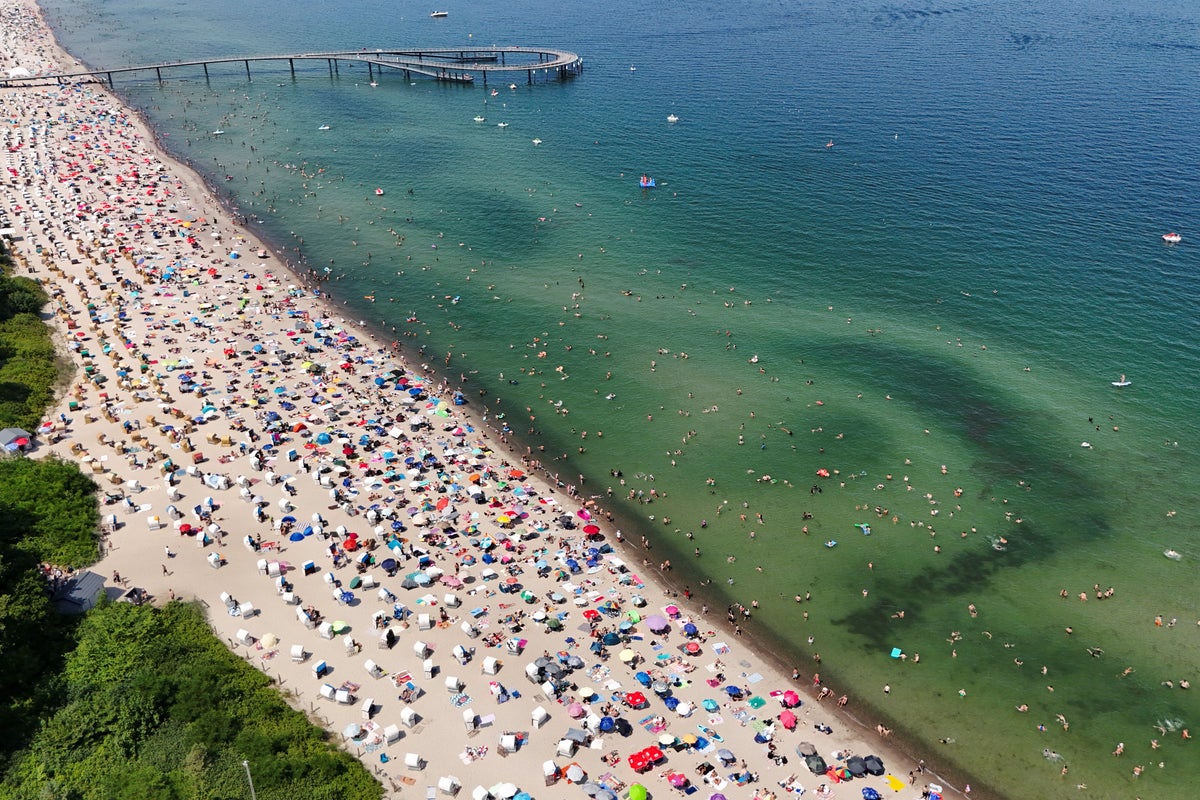
Germany built its world-famous Autobahn network to handle terrifyingly high speeds, but it didn't build them to handle regular exposure to 40-degree Celsius heat. Right now, a brutal heatwave is crawling across Central Europe, and the physical infrastructure is quite literally tearing itself apart.
If you think a heatwave just means uncomfortable train rides and crowded public pools, you're missing the terrifying structural reality happening on the ground. Several lanes of the A2 highway outside Berlin recently exploded upward in what engineers call a blow-up. Concrete slabs, cooked by days of uninterrupted solar radiation, expanded until they ran out of room, shattering and launching into the air. Over 30 vehicles were damaged in a single incident, leaving multiple people injured and shutting down one of the country's most vital transit arteries.
This isn't an isolated mishap. It is a fundamental engineering crisis that exposes how deeply unprepared European infrastructure is for rapid climate shifts.
The Science Behind the Autobahn Blow Ups
To understand why a major highway suddenly transforms into a ramp, you have to look at how Germany built these roads decades ago. Large portions of the older Autobahn network rely on concrete slabs rather than asphalt. Concrete is incredibly durable under the heavy, repetitive pounding of high-speed semi-trucks, but it has a massive weakness. It expands when it gets hot.
Engineers account for this by leaving small expansion joints between the slabs, filling them with a flexible material like bitumen. Under normal summer temperatures, the concrete expands slightly, squeezes the joints, and stays flat.
But when temperatures hover around 40 degrees Celsius for days, that calculation breaks. The concrete expands beyond the capacity of the joints. The slabs jam into each other with immense kinetic force. With nowhere else to go, the pressure builds until the weakest point gives way, forcing the massive slabs to buckle upward or shatter into dangerous debris.
Asphalt has different issues. Instead of exploding, it softens. When heavy trucks roll over overheated asphalt, they create deep ruts that permanently warp the road surface, making it incredibly dangerous for passenger vehicles traveling at high speeds later on.
Disruption Off the Highway
The transportation nightmare doesn't stop at the highway exit ramp. The rail network is buckling under the exact same pressure. National train operator Deutsche Bahn recently issued an unprecedented weekend warning, urging travelers to cancel or postpone all nonessential journeys across long-distance and regional lines.
Steel rail tracks face the same thermal expansion laws as highway concrete. When rail lines warp out of alignment, trains risk derailing if they travel at full speed. To prevent disasters, operators have to implement severe speed restrictions, causing cascading delays that paralyze the entire network.
To make matters worse, traditional European passenger trains aren't designed to handle these environmental extremes. Air conditioning systems on older models frequently fail when outside temperatures breach the high thirties. Rather than trapping passengers inside steel ovens, rail companies are actively paying out full refunds to anyone willing to stay home.
A Creeping Health Crisis in Uncooled Cities
The lack of cooling infrastructure extends far beyond transit. Unlike regions in North America or Asia where air conditioning is standard, less than 20% of European households own cooling systems, according to recent data from the International Energy Agency. Buildings were traditionally designed to trap heat to survive freezing winters, not shed it during tropical summers.
This architectural reality is turning tragic. In the western city of Dormagen, emergency workers had to evacuate dozens of elderly residents from a local nursing home after indoor temperatures soared past 35 degrees Celsius. For vulnerable populations, these uncooled indoor spaces become quiet death traps.
While Germany braces for the peak of the system, neighboring France is dealing with the immediate aftermath of the same weather pattern. French emergency rooms treated nearly 3,000 patients in a single 24-hour window, marking a massive surge in heatstroke, severe dehydration, and cardiovascular emergencies. Public hospital systems in Paris activated emergency contingency plans across dozens of facilities to manage the influx of critically ill citizens.
The human instinct during these events is to find water, but even that has proven dangerous. Authorities have reported a troubling spike in drowning incidents as people flock to unsupervised rivers and lakes to cool down, underestimating currents or suffering cold shock after jumping into deep water while overheated.
The Omega Block Locking in the Heat
Meteorologists point to a specific weather phenomenon known as an Omega block to explain why this heat is so intense and persistent. The jet stream has formed a massive, stable curve that resembles the Greek letter Ω. This structure essentially traps a giant dome of high pressure and scorching air over Central Europe, preventing cooler Atlantic air from moving in to break the cycle.
Climate scientists from groups like the World Weather Attribution network note that while summer heat waves are natural, the sheer intensity of this event would be virtually impossible without systemic global warming. Nights offer little relief. Stifling nighttime temperatures prevent both the human body and concrete infrastructure from cooling down, ensuring that each subsequent day starts with a higher baseline of heat and stress.
Real Steps for Navigating Infrastructure Meltdowns
If you absolutely must travel across Central Europe during a major thermal event, relying on old habits will leave you stranded or worse. You need an active plan to mitigate risk.
Reduce your speed on older concrete highways, even if you are driving on a section of the Autobahn without an official speed limit. Keep a massive following distance. Road buckles happen instantly, and if the car in front of you suddenly hits a raised concrete slab, you need enough time to react.
Carry far more water than you think you need. A highway closure caused by a road blowout can trap you in your vehicle for hours under direct sunlight. Without a working cooling system in your car, dehydration sets in rapidly.
Check for temporary speed limits issued by state road authorities. In states like Saxony-Anhalt, officials frequently drop limits to 100 or 120 kilometers per hour on vulnerable stretches to minimize the impact force of heavy vehicles on expanding slabs. Pay attention to these digital signs, they are usually the only warning you will get before a road section fails completely.