We have a massive obsession with peatland restoration. It makes perfect sense on paper. Wet bogs trap carbon, fight climate change, and bring back rare mosses. But when you look closer at the ground, a major conflict appears.
In the rush to block drains and flood degraded bogs, we are on the verge of drowning some of Scotland's most vulnerable species.
I am talking about native reptiles. Adders, slow worms, and common lizards.
For decades, these creatures managed to carve out a life on the drier, degraded edges of commercial forestry plantations. Now, as heavy machinery rolls in to restore places like Longbridge Muir near Dumfries, these animals face a double threat. They risk being crushed by giant excavators or flooded out of their winter homes.
Historically, conservation projects ignored the small things crawling in the heather. But a major project by Forestry and Land Scotland (FLS) at the Lochar Mosses is changing the playbook. They are proving that you can heal a bog without wiping out its oldest residents.
The hidden conflict of rewetting Scotland bogs
To understand why restoration is dangerous for reptiles, you have to understand what we did to the bogs in the first place.
During the mid-to-late twentieth century, the UK government paid landowners to plant commercial conifers on deep peat. To make trees grow on a wet bog, you have to drain it. Foresters dug deep parallel ditches, piled the peat into ridges, and planted rows of Sitka spruce.
It was an environmental disaster for carbon storage. The peat dried out, cracked, and began releasing carbon dioxide instead of trapping it.
Yet, for reptiles, this damaged environment became a strange kind of sanctuary.
The dry ridges, open clearings, and piles of leftover branches created the perfect habitat. Reptiles are cold-blooded. They need sunny, dry patches to warm up, and they need deep, dry air pockets to survive the freezing winters. When forestry plantations are felled, the leftover timber stacks and decaying brash mats become prime real estate for adders and common lizards.
Now, fast-forward to the restoration phase. The goal of peatland restoration is to reverse this drying process. Operators use massive tracked excavators to flatten the ridges, pack the peat back into the ditches, and raise the water table right to the surface.
If you do this without thinking, you flood the dry burrows. You crush the hibernating snakes. You turn a thriving reptilian refuge into a watery grave.
The three species caught in the crossfire
Scotland is not exactly packed with reptile species. We only have three native ones, and all of them live in these peatlands.
The Adder (Vipera berus)
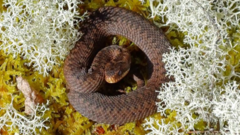
The adder is our only venomous snake. They are gorgeous, thick-bodied creatures with a distinctive zig-zag pattern running down their backs. Males are typically silver-grey with black markings, while females are a softer brown or ginger. They are incredibly shy. If you hear one, it is already trying to get away from you. Adders can live for over thirty years, but they are declining rapidly across the UK due to habitat loss and fragmentation.
The Common Lizard (Zootoca vivipara)
These quick little reptiles love to bask on dry wooden boardwalks or old heather stems. Unlike many reptiles that lay eggs, common lizards give birth to live young. This is a crucial adaptation for surviving the cold Scottish climate.
The Slow Worm (Anguis fragilis)
Do not let the name fool you. Slow worms are not worms, and they are not snakes. They are legless lizards. You can tell them apart from snakes by their smooth, metallic skin and their ability to blink. They love hiding under rotting wood, sheets of corrugated iron, and loose peat.
All three species share a critical vulnerability. They cannot survive the winter if their hibernation spots freeze or fill with water.
How to flood a bog without drowning the snakes
The work at Longbridge Muir, led by FLS Peatland Restoration Officer George Hemstock, shows how to handle this delicate balance. The key is planning. You cannot just send excavators into a bog and hope for the best.
The FLS team broke the restoration down into a three-year phased plan. This timeline is not about slow bureaucracy. It is a biological necessity. By restoring the site in phases, you give the resident reptiles time to naturally migrate away from active construction zones.
Timing is everything.
During the winter, reptiles enter a state of dormancy called brumation. Their heart rates drop, their body temperatures plunge, and they cannot move. If an excavator rolls over their hibernation site in January, they die.
To prevent this, the restoration teams split their tasks by the seasons.
In the late summer, when the weather is warm and the reptiles are highly active, workers clear the non-native scrub and self-seeded conifers. Because the snakes and lizards are warm, they can easily slide out of the way of the machinery.
In the winter, the heavy restoration work begins. Excavators move in to block the ditches and smooth the ground. But they only work in areas that have been thoroughly surveyed and marked as safe.
Areas containing potential winter shelters are completely off-limits during the cold months. These refuge areas, typically dry, south-facing bog edges, are protected by seasonal buffer zones.
Low tech tricks for counting hidden reptiles
You cannot protect a reptile population if you do not know where they are. Spotting an adder in a vast sea of heather and cottongrass is incredibly difficult. They are masters of camouflage.
To solve this, ecologists use a beautifully simple, low-tech trick. They lay out corrugated metal roof sheets and heavy roofing felt across the site.
These sheets are called refugia.
Because the dark metal and felt absorb the sun's heat quickly, they become much warmer than the surrounding ground. Reptiles find them irresistible. They crawl underneath the sheets to heat up or shelter from the wind.
This allows surveyors to simply walk the site, lift the sheets, and count the animals hiding underneath. They get an accurate picture of the population size and movement without having to disturb or handle the animals.
Building the ultimate winter hotel for adders
One of the coolest parts of the Longbridge Muir project is the creation of artificial hibernacula. These are essentially custom-built winter hotels designed to keep reptiles dry and safe from frost.
If you are restoring a bog and raising the water table, you are naturally going to destroy some existing dry winter burrows. To make up for this, the team builds new, permanent structures along the high, dry edges of the restoration site.
Building a successful hibernacula is an art form. You cannot just pile up some dirt.
First, you need a sunny, south-facing location that sits well above the new, higher water table.
Workers dig a shallow pit and fill it with a loose mix of logs, tree root balls, stones, and brash. This creates a network of empty chambers and air pockets below the frost line.
Next, they cover the pile with a layer of peat and turf, leaving small entrance holes at the bottom.
The result is a warm, dry, predator-proof bunker. When the temperatures drop in autumn, adders, slow worms, and lizards use their internal compasses to find these structures. They will often share the same hibernaculum, packing in together to survive the harsh Scottish winter.
The real test of ecological restoration
Peatland restoration is often judged solely by how much carbon we lock away or how many hectares of sphagnum moss we plant. Those metrics are simple to track.
The real test of a healthy ecosystem is much more complex. A truly restored bog should be a chaotic, diverse home for a wide variety of life.
By taking the time to build hibernacula, set up buffer zones, and work in phases, the project at Lochar Mosses is setting a new standard. It proves that we do not have to sacrifice biodiversity on the altar of carbon capture.
As the water levels rise at Longbridge Muir, early signs show the plan is working. The wet areas are filling with dragonflies, damselflies, and amphibians. This explosion of life means more food for the reptiles basking on the dry, protected edges.
If you want to help, support local wildlife trusts that monitor reptile populations. Keep your eyes open when walking on peatland boardwalks. And if you are lucky enough to spot an adder basking in the morning sun, give it some space. It has worked incredibly hard to survive our changing world.